
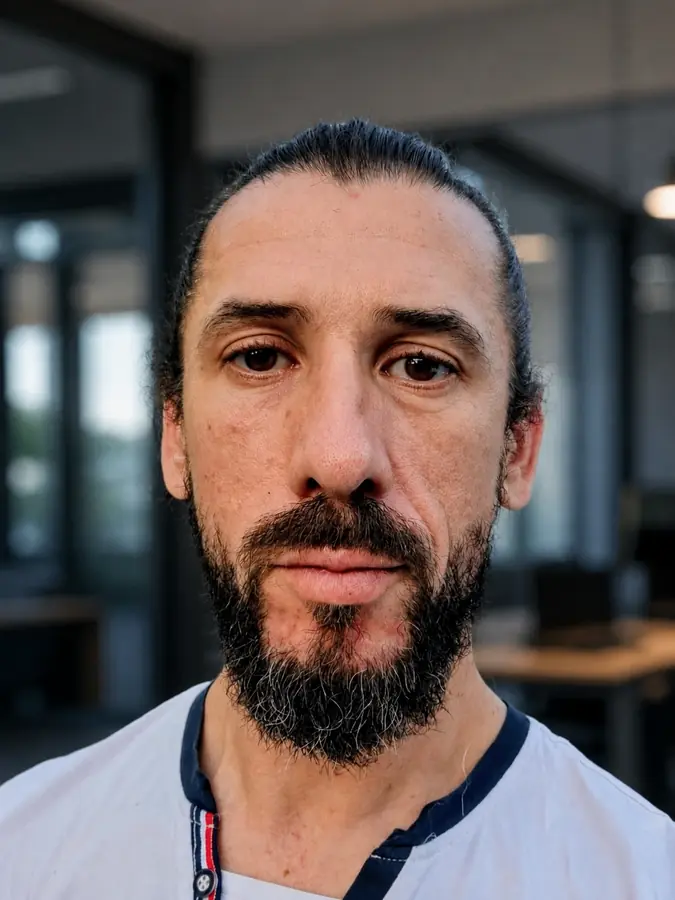
On 4 July 2026, 100 years passed since the birth — in the village of Unțești, Ungheni district — of Vasile Vasilache, a writer whom critics place among the most original prose writers of Bessarabia, but whom Soviet censorship silenced at one point. For the centenary, the state honours him with a silver coin and an academic symposium — both in Chișinău. In the district that produced him, the most living trace is a school bearing his name, in his native village.
A son of Unțești
Vasile Vasilache was born on 4 July 1926 in Unțești — a village that today belongs to Ungheni district (in the interwar period it was part of Bălți county), some 12 kilometres east of the town. He did his first years of schooling in his native village, then studied in Iași, and later attended the Faculty of Philology of the «Ion Creangă» Pedagogical Institute in Chișinău, which he graduated in 1958. Between 1962 and 1964 he took screenwriting courses in Moscow.
He was, in turn, a teacher in Unțești and Cetireni, a magazine editor, a member of the Union of Writers of Moldova from 1965, and an editor at the «Moldova-Film» studio. He died on 8 July 2008 in Chișinău, four days after turning 82.
«Povestea cu cocoșul roșu» and the silence that followed
The work that fixed his name in the history of literature is the novel «Povestea cu cocoșul roșu» (The Tale of the Red Rooster). It first appeared in the magazine «Nistru», in 1965, then in book form in 1966, at the «Cartea moldovenească» publishing house, in a print run of 15,000 copies. It is a parable-novel, built with means unusual for the prose of the time — fragmentation, framed storytelling, parody and burlesque — starting from a small incident of village life.
The novel’s second part, published in «Nistru» in the early 1970s, was received differently. In May 1973 the newspaper «Comunistul Moldovei» — an organ of the party’s Central Committee — ran a devastating article, «Cu povestea nu se glumește…», signed by Ion Racul and Valeriu Senic. The core reproach was that the novel lacked a «positive hero», as socialist realism demanded. Ostracism followed: the writer was, as literary historian Vasile Malanețchi puts it, «taken out of circulation as a prose writer» and took refuge in translation — he translated Pushkin, Shukshin and Rasputin, as well as Hašek’s «The Good Soldier Švejk». The full version of the novel could appear only in 1986, at the height of perestroika.
A classic, but a contested one
Vasilache’s place in the canon is no formality. The critic Mihai Cimpoi, the most authoritative voice of literary criticism in the Republic of Moldova, called «Povestea cu cocoșul roșu» «the first postmodern novel written in our space». Other critics stressed the novelty of its vision — Anatol Gavrilov noted, as early as 1984, that the novel brought «a different artistic vision of village life», distinct from the lyrical prose of Ion Druță.
Recognition was not unanimous, however. In 2005, the critic Ion Simuț devoted to him, in «România literară», a sceptical review — «Un roman comic, izvodit dintr-o snoavă» (A comic novel, spun from a tall tale) — in which, having read only the first part, he saw a joke stretched too long rather than a masterpiece. Ten years later, the critic Cosmin Ciotloș answered him in «Dilema veche», defending the book and seeing in its main character «a rural Myshkin», with Dostoevskian depth. Even Malanețchi, who edited the critical edition, warns that Vasilache’s work «must be approached without stereotypes», because the novel «is not even his most valuable work aesthetically». A writer, then, over whom criticism still quarrels — a sign that he is still read.
How the state honours him at 100
The centenary is marked, in 2026, at state level. On 3 July, the National Bank of Moldova put into circulation a commemorative silver coin dedicated to the writer — with a face value of 50 lei and a mintage of only 500 — the last in the «Notable Personalities» numismatic series. On the same day, the Academy of Sciences of Moldova hosted, in Chișinău, a symposium titled «Centenar Vasile Vasilache – dialectica esențelor», with the participation of major cultural figures, among them Mihai Cimpoi himself. The National Library dedicated an exhibition to him, and his name features in the 2026 National Calendar, among the officially marked anniversaries.
All these tributes, however, share a common denominator: they take place in Chișinău.
In Ungheni, a school and a changing village
In the district that produced him, the writer’s most living trace is the «Vasile Vasilache» gymnasium in Unțești — the school in his native village that bears his name. A local anniversary programme, in Unțești or in the town of Ungheni, had not been announced publicly as of the time this article was published.
And the native village is itself going through change. Unțești — with its own town hall and around 1,600 inhabitants at the 2014 census — is one of the ten localities caught up in the amalgamation project with the municipality of Ungheni, the future enlarged town that would bring together around 44,000 people. If the reform goes through, the village that gave Romanian literature a landmark novel could administratively become a district of the municipality. And that against the backdrop of accelerating depopulation: the population of Ungheni district fell from 96,292 inhabitants in 2014 to 74,507 in 2025, according to provisional data from the National Bureau of Statistics.
A hundred years after his birth, Vasile Vasilache remains one of the few people whom Ungheni district can, without exaggeration, place in the history of Romanian literature. The silver coin struck in Chișinău says so at state level. The school in Unțești says so at home.