
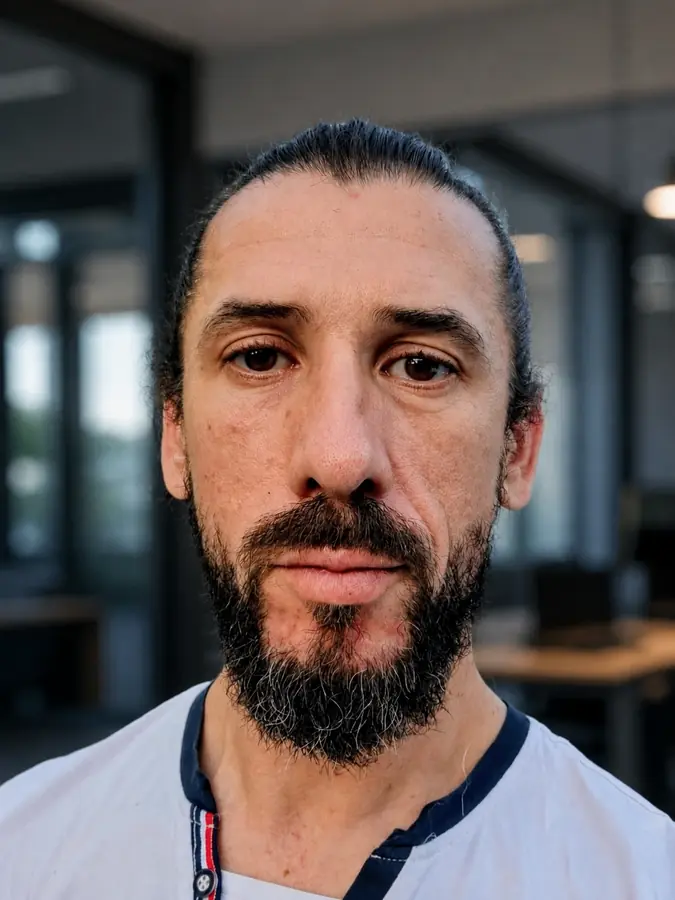
Vitalie Vrabie, mayor of the town of Ungheni, says he has already taken the first step with real money in the process of amalgamating the localities around the town: he has filed the request for a 600,000-lei incentive from the state. And, in the same interview, he flatly rejects the label some pin on him — that the merger is “formal, forced, rushed”.
If I still hear voices saying this is a formal, forced, rushed amalgamation… it is a file of documents and bureaucracy, stages I have gone through according to the roadmap, according to the law.
Vitalie Vrabie, mayor of the town of Ungheni, on the show “Obiectiv Comun” (TVR Moldova)
We took the two claims in turn — the money and the “forcing” — and set them alongside the documents and the voices that contest the reform.
The 600,000 lei are real — and they are only the first tranche
The figure the mayor gives checks out in a public act. On 15 May, the Ungheni Municipal Council adopted a decision requesting from the state “a special-purpose transfer totalling 600,000 lei” to prepare the voluntary amalgamation. The money is not a gift with no strings: the decision breaks it down into concrete activities — from drafting the “vision” of the new administrative unit (105,000 lei) to other organisational costs — and invokes as its basis the Amalgamation Methodology approved by the Government.
“It is allotted to us according to the number of citizens we have,” Vrabie says — and here he is right: the state calculates these transfers on the most recent population data from the National Bureau of Statistics. The first tranche for a unit that merges falls, according to the national framework, within a range from 400,000 to one million lei, depending on the size of the locality.
What matters for the reader is what comes after these 600,000 lei. They are only the start of a much larger scheme: for the whole country, the state has put up three waves of incentives totalling almost 6.5 billion lei — a first “starter” wave in 2026, a much heftier one for infrastructure in 2027–2028 and a third for the budgets of the merged town halls, up to 2030. In other words, as “voluntary” as the amalgamation is on paper, it is just as well paid in practice.
”It wasn’t my initiative”
The mayor’s second claim concerns who started the story. Vrabie insists it was not the municipality that pushed the merger, but the surrounding town halls.
We initially started with eight town halls — seven plus the town hall of the municipality. It really was not an initiative of mine or of the Ungheni town hall. The request came from the mayors around the municipality, whom I listened to, and through the Council’s decision we sent them the invitation to amalgamate.
Vitalie Vrabie, mayor of the town of Ungheni
The “eight town halls” configuration is the one from the start, in spring; meanwhile, the cluster around Ungheni has grown towards ten administrative units and almost 44,000 residents — the largest in the country at present. This does not contradict what we have written so far about the “ten localities”: it is simply that different things are being counted (administrative units versus villages) at different moments, and the list expanded along the way.
The timeline also has a small nuance. The mayor says the invitation went out “through the Council’s decision”; in the State Register of Local Acts, the municipality’s initiation decision dates from February, while the neighbouring town halls adopted their own initiation decisions in April. “April” therefore corresponds rather to the moment when the neighbours fell into line, not to an April decision by the municipality.
”Voluntary”, but with a finger on the scale
This is the heart of the dispute that Vrabie rejects. The procedure he invokes — initiation, public consultation (concluded on 29 June), a council vote, a file to the State Chancellery — is real and complies with the law. But “according to the law” does not answer the question of whether the process is truly voluntary.
Critics of the reform say not really. The Congress of Local Authorities of Moldova (CALM), the mayors’ association, described this year’s amendments as “essential deviations from the principles of local autonomy”, and its legal expert Viorel Rusu faulted the lack of a real dialogue. Their argument, in short: an amalgamation incentivised with billions of lei, in which small town halls lose access to funding anyway, and which is in any case doubled by a mandatory amalgamation that will follow the 2027 local elections, is only half voluntary. Add to that a tight timetable — the “voluntary” stage closes at the end of July — and an amendment that lowered the voting threshold in councils from two thirds to a simple majority.
On the other side, the mayor’s argument is not without weight either: for a town hall of under 3,000 residents — and in the Ungheni district 23 of 33 are in this situation — in an area where the population falls year after year, merging with the town may simply be the rational choice, made in time and with organisation money out in the open.
For now, not all the pieces have settled: at Măcărești, where the first vote had failed, a second was convened, and the final number of localities around Ungheni that actually enter the merger will only be seen after the State Chancellery’s opinion. What is certain is that, beyond the labels, in Ungheni the request has already been filed for the first money of the largest amalgamation in the country.