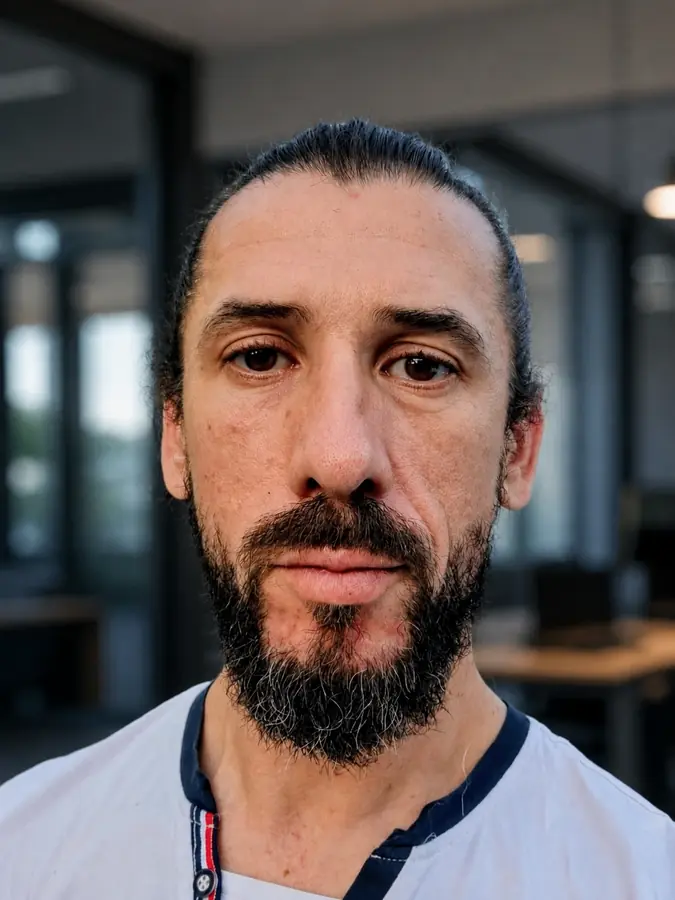
It was a short and solemn moment, with the national anthem played in a hall of the Ungheni District Council. The district president, Dionisie Ternovschi, confirmed — «under art. 39 of the Citizenship Law of the Republic of Moldova» — the taking of the oath of allegiance by a new citizen of the country. We do not give her name and do not identify her: the story here is not about a particular person, but about a threshold few cross and even fewer understand. Because that moment, the oath, is not a formality — it is the very instant at which someone becomes a citizen of the Republic of Moldova.
The oath — the instant a citizen is born
In Moldovan law, citizenship is acquired not on the day the President signs the decree, but on the day the person takes the oath of allegiance. The Citizenship Law regulates this step in article 39 — exactly the basis invoked in Ungheni. The oath is taken before the district president, the municipal mayor or, for those abroad, the head of the diplomatic or consular mission. Through it, the new citizen pledges to be devoted to the Republic of Moldova, to respect the Constitution and the laws of the country, and not to undertake actions that would harm it.
An important detail: not all citizens take this oath. It is required only of those who obtain citizenship through naturalisation or recovery — that is, people who were not simply born citizens. That is why a ceremony like the one in Ungheni is relatively rare and is marked as such, with solemnity.
Five routes to citizenship
The law recognises five ways of acquiring citizenship: by birth, by recognition, by adoption, by recovery and by naturalisation. The first apply, broadly, to those who already have a tie of blood or origin to the country. Naturalisation is the route of those who come from outside.
And it is not an easy route. As a rule, the law requires legal and permanent residence of about ten years (less in special situations — marriage to a citizen of the Republic of Moldova, statelessness or beneficiary-of-protection status). Added to this are knowledge of the Romanian language and of the Constitution, verified by an exam, and proof of lawful sources of income. There is also a state fee, of the order of a few thousand lei. Only once all this is met does the application reach the President of the Republic, who grants citizenship by decree — and the person actually receives it on the day of the oath.
How many become citizens — and where they come from
The figures, in fact, tell an unexpected story. According to ASP data cited publicly, over the past three years almost 20,800 people acquired citizenship of the Republic of Moldova: 6,093 in 2023, a peak of 10,227 in 2024 and 4,454 in 2025. For comparison, in nearly two decades before 2022, the number of those naturalised was measured in the hundreds, not the thousands per year.
What changed? In large part, the war across the Prut, in Ukraine. The General Inspectorate for Migration shows that about 2,630 Ukrainian citizens acquired citizenship of the Republic of Moldova after 24 February 2022, plus almost 2,843 recognised as citizens. Overall, the new citizens come predominantly from the Russian Federation, Ukraine and Belarus, plus people of undetermined status.
In Ungheni, a subject with two directions
For a border district like Ungheni — about 75,800 inhabitants at the 2024 census, one of the largest in the country — citizenship is a word with a particular weight. The most visible flow here usually goes the other way: many Moldovans have taken Romanian citizenship, which is also citizenship of the European Union, and cross the bridge over the Prut daily with documents from both countries.
That is precisely why a ceremony in which someone chooses the opposite road — to become a citizen of the Republic of Moldova — takes on an added symbolic weight. We do not know, and do not speculate, who the person is or why she took this step. But the gesture itself, marked with the national anthem at the District Council, says something about what belonging to a country looks like, concretely.
The facts about the ceremony and the legal basis (art. 39 of the Citizenship Law) come from the official statement of the Ungheni District Council; the identity of the new citizen is not revealed, out of respect for privacy, since the subject is the process, not the person. The details about the routes to citizenship and the conditions of naturalisation are from the Citizenship Law of the Republic of Moldova. The figures on the number of people who acquired citizenship (2023–2025) belong to the Public Services Agency and were taken from public communication — they should be confirmed at source; the data on Ukrainian citizens come from the General Inspectorate for Migration, and the population of Ungheni district from the National Bureau of Statistics (2024 Census). As of publication, Triunghi.md had not obtained a reaction from the District Council or ASP.