
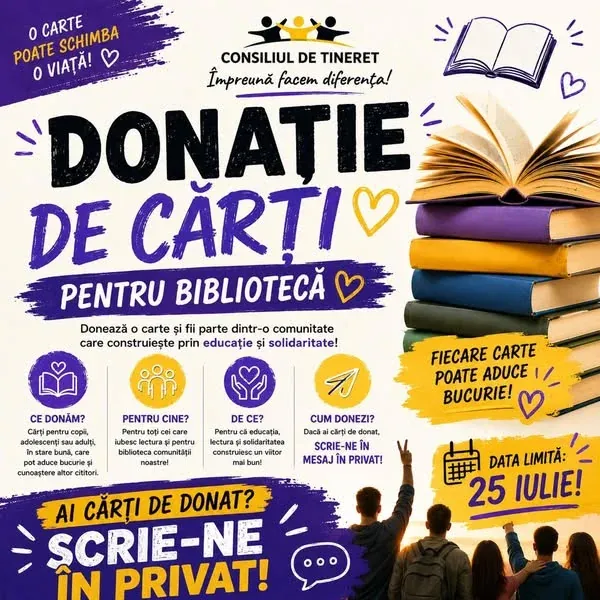
The Ungheni District Youth Council is asking the people of Ungheni for the books they no longer read. On Tuesday, July 8, the youth structure launched a donation drive — “Book donation for the library” — collecting volumes in good condition, for children, teenagers or adults, to give them a second life on the shelves of a community library.
The mechanism is simple, and the deadline is short. Anyone with books to give writes a private message on the District Youth Council’s Facebook page, and the organisers collect the donation. The campaign ends on July 25.
One thing the announcement does not say: which library, exactly, the books go to. The poster speaks of “our community’s library” without naming it — a detail only the organisers can provide.
Who is collecting the books
The District Youth Council is no ordinary association, but the youth structure that works alongside the Ungheni District Council. It was founded in 2015 and brings together 35 young people aged 14 to 35, from the district’s communities, according to its profile on the national platform youth.md. In past years, these same young people organised a large-scale cleanup on World Cleanup Day, district forums and advocacy campaigns — the book drive fits naturally into this civic pattern.
Why the gesture matters
The appeal lands on a real nerve. In almost two decades, the book stock of public libraries in the Ungheni district has thinned by a quarter — from around 570,300 to about 424,500 copies, according to National Bureau of Statistics data. Throughout that time, the number of library visits has grown: people come, but the shelves grow thinner. A campaign started by young people themselves, one that brings books into the system rather than taking them out, addresses precisely this imbalance.
It is not the first time the people of Ungheni have given books: in June, the writer Elena Vizir donated volumes to Branch no. 2 in Ungheni — a different gesture, but from the same family of solidarity around reading. The difference now is that the initiative comes from a group of young people and calls on the entire community to take from their own shelves the books that can reach another reader.
The campaign details — what is donated, how and by when — come from the poster and announcement of the Ungheni District Youth Council. The structure’s profile is drawn from the youth.md platform, and the figures on the district’s book stock — from the National Bureau of Statistics. The beneficiary library and any numerical target for the campaign were not made public in the announcement.