

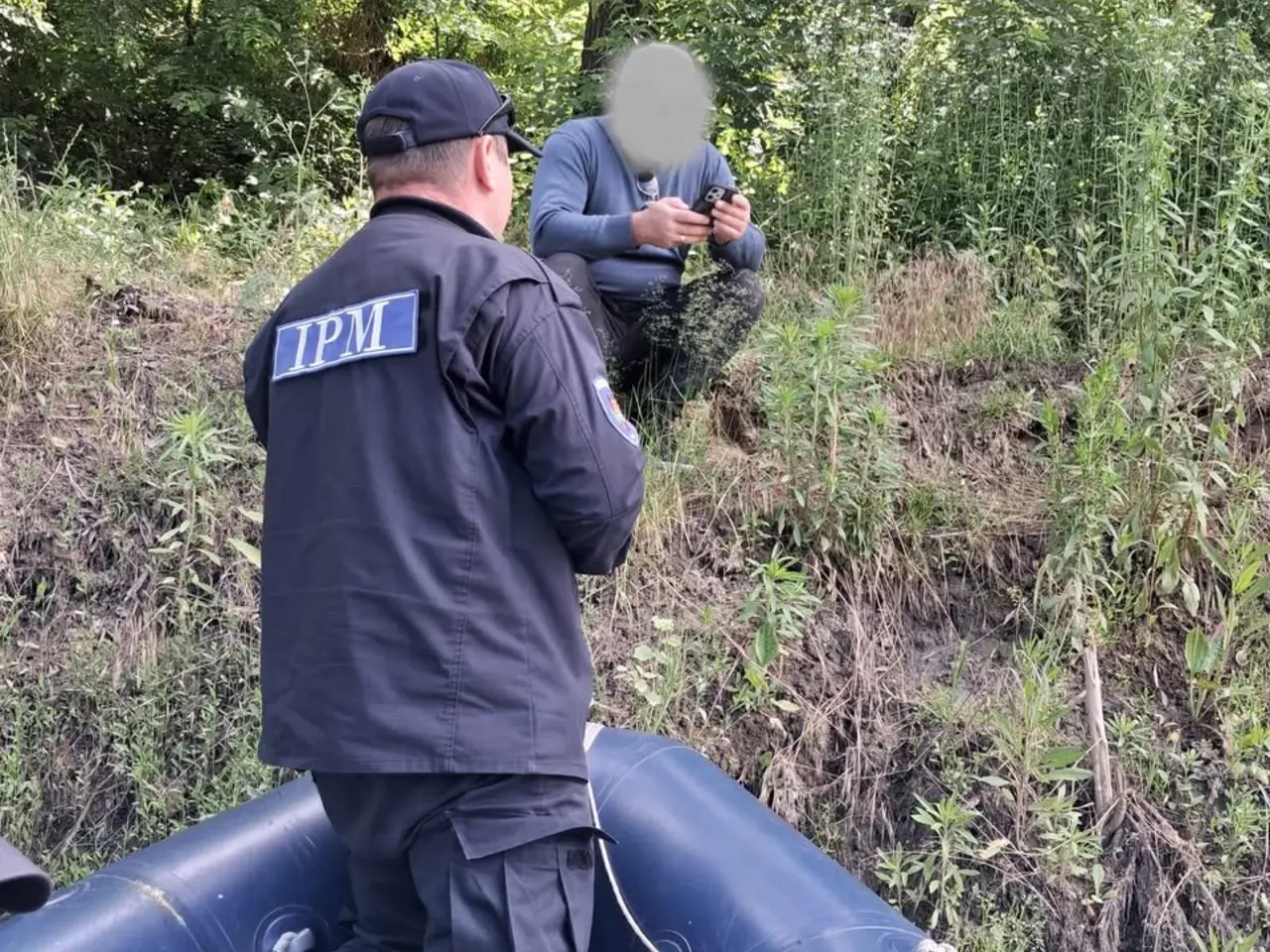
Environmental inspectors from Ungheni and Border Police officers from Valea Mare carried out fresh raids against illegal fishing on the Prut river, in the Ungheni district sector, the Environmental Protection Inspectorate (IPM) announced in a statement on 16 June. The action is part of the “TRITON 2026” operation; following the checks, “violations were found”, reports were drawn up and administrative penalties were applied.
The statement does not say, however, how many anglers were fined, what exactly they did, or what penalties they received. And the timing raises a legitimate question: on the Prut, the spawning ban had ended more than a week earlier. So what is still banned for fishing on the Prut in June — and what does it cost?
On the Prut, the ban ended on 7 June
The 2026 fishing ban was introduced by Order no. 12 of 27 March by the Environment Agency. On the Prut river and the Costești-Stânca reservoir, the ban ran from 9 April to 7 June — 60 days meant to protect fish during the spawning season. On the Dniester and the southern sectors the ban ended on 15 June, while on inland rivers and the Manta lakes it runs until 30 June.
In other words, on 16 June, when IPM announced the raid, recreational fishing was already allowed again on the Prut. That means the “illegal fishing” found is no longer about breaching the ban, but about the other rules that apply year-round — and the IPM statement does not specify which ones were broken.
What stays banned, always
Even outside the spawning ban, the following remain forbidden on the Prut:
- poaching gear — nets, cast nets and gill nets, as well as fishing with electric current, explosives or toxic substances;
- protected species, listed in the Red Book;
- permanently restricted areas — near dams and bridges, at the mouths of tributaries and on the Costești-Stânca reservoir.
On top of that, the Prut is a border waterway. To fish on its bank you need a border-zone access permit, issued free of charge by the Border Police, including online through the ePermis platform. Its absence is penalised separately, under the border-regime rules.
What it costs: the fines
Penalties for illegal fishing are set out in article 114 of the Contravention Code. The amount is calculated in conventional units, one unit worth 50 lei. For individuals:
- breaching the rules on protecting fish resources — from 300 to 600 lei;
- breaching the fishing rules — from 450 to 600 lei;
- fishing for valuable species — from 2,100 to 4,500 lei;
- fishing with electric current, explosives or toxic substances — from 3,000 to 4,500 lei.
For legal entities, fines reach up to 25,000 lei, depending on the offence. Confiscation of the gear and the catch is added on top.
A coordinated action, not an isolated case
The Ungheni raid is not a one-off. “TRITON” is a joint operation by the Border Police and the Environmental Protection Inspectorate, carried out on border waters around the ban period. On the Prut, among other places, the two institutions describe coordinated actions:
In partnership with the Environmental Protection Inspectorate, joint actions of monitoring, intervention and prevention of illegal fishing are carried out.
Border Police, on the border-zone regime during the fishing ban
How to fish legally on the Prut, in Ungheni
For those who want to cast a line without risk, the basic rules are simple:
- first get the free border-zone access permit from the Border Police;
- fish only with allowed gear — rods, casting rods, landing nets, crayfish traps — with no more than five hooks in total;
- do not take home more than 5 kg of fish per day;
- stay away from permanently banned areas — dams, bridges, tributary mouths, Costești-Stânca;
- do not fish protected species.
Everything else — nets, cast nets, electric current — remains poaching, whatever the season.
Update — a new raid, this time with figures
On 8 July, IPM Ungheni announced a new raid on the Prut together with the Border Police — the Valea Mare and Frăsinești sectors — this time with concrete results. Inspectors checked the permits of those fishing and drew up one contravention report under Article 114(2) of the Contravention Code. Nine ownerless bottom-line rigs („pripoane”) were also found and removed from the riverbed — gear left to catch fish unattended, which is banned. Unlike the June raid, for which the inspectorate released no figures, the tally is now public: one penalty and nine poaching rigs pulled out of the water.
This article explains the legal regime based on IPM’s public statement and the legislation in force. The concrete figures of the 16 June raid — the number of penalties, the offences alleged and any damage — were not made public by the inspectorate. Update, 8 July 2026: IPM Ungheni announced a new joint raid with the Border Police (the Valea Mare and Frăsinești sectors) — one report (Article 114(2) of the Contravention Code) and nine bottom-line rigs removed from the Prut.