

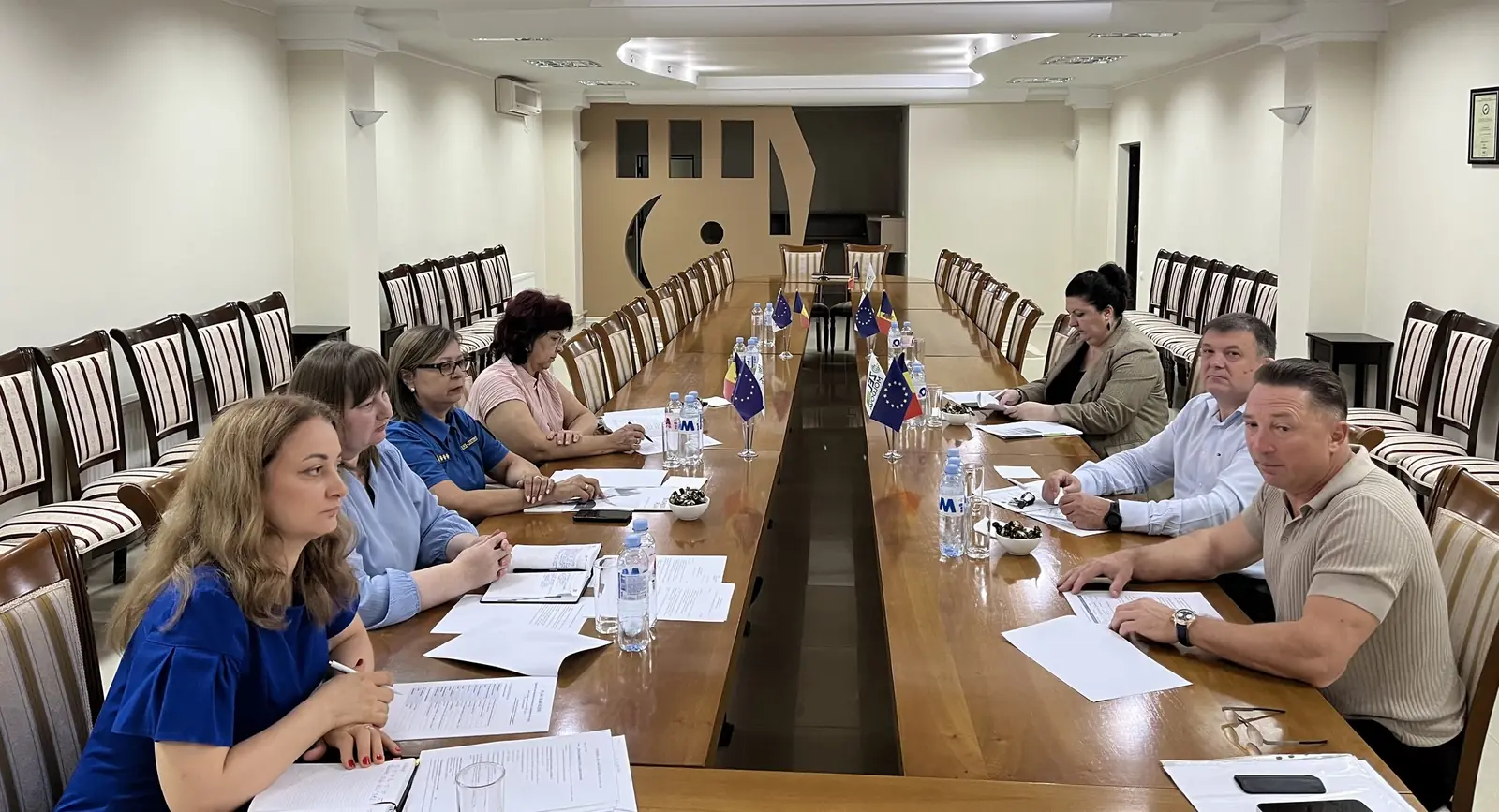
The Administration of the Free Economic Zone (ZEL) “Ungheni-Business” announced on Thursday, 30 July, that it had held the contest for selecting residents and that it was won by the company S.C. “GRAFIC PRIM” S.R.L., with the economic project “Operations for marking and printing glass objects”.
Update, 18 August 2026: at the newspaper’s request, the zone administration disclosed the figures for the winning project — a planned investment of 4 million lei, 16 jobs and a single candidate entered in the 30 July contest. The figures are incorporated into the text.
Update, 11 September 2026: the annual report of the Ministry of Economic Development and Digitalisation on the free economic zones in 2025, published in June 2026, gives the figures of the “Ungheni-Business” zone on 31 December 2025 — 2.144 employees, 466 fewer than a year earlier. The text uses them wherever the report has new figures; the other data remain those for 2024.
The previous contest recorded on the zone’s website was held on 7 August 2025 and was won by “EXPROFILO” S.R.L., with a project for processing cold-stamped profiles for the concrete industry.
Who the company is
S.C. “GRAFIC PRIM” S.R.L. has been registered in the State Register of Legal Entities since 5 January 2004, with its registered office in Chișinău municipality. Its founder and sole administrator, holding 100% of the capital, is Victor Șmigon — unchanged throughout the publicly available history, from November 2014 onwards.
In the annual financial reports, the company appears with 3,17 million lei in sales revenue in 2024 and 11 employees; current data indicate 14. It has come out of a year in the red: in 2022 it reported minus 48,9 thousand lei, in 2024 — a profit of 580,6 thousand lei.
What its main activity is depends on the database you open: one aggregator of the State Register marks it as manufacture of hollow glass, another puts the printing of books and brochures at the top of the list, while in the classification of the National Bureau of Statistics it appears under pre-press services. The secondary lists include packaging and plastic articles, metal joinery for construction, business consultancy, wholesale trade and the recovery of non-metallic waste. The exact profile can be established from an extract issued by the Public Services Agency or from the contract signed with the zone administration.
Pre-press work — layouts, colour separations, printing plates — is the link immediately upstream of screen printing on glass, the technique by which the design is applied directly onto the bottle. The physical address associated with the company in public data is in the town of Criuleni. For the activity in the free zone, the company will rent a production hall of 1 000 m², the zone administration said.
What “marking and printing glass objects” means
The wording in the announcement is not accidental. Law No. 440/2001 on free economic zones lists, in article 6 paragraph (10), the types of activity permitted in a free zone, and letter b) reads almost identically: “sorting, packaging, marking and other similar operations on goods transiting the customs territory of the Republic of Moldova”.
The wording therefore points to the transiting-goods model: the bottles would enter the zone, would be decorated — by screen printing, engraving, hot stamping or digital printing — and would move on. Under what regime the new resident will actually work does not, however, follow from the announcement: the investor’s guide published by the zone lists, for those entering now, only wholesale trade, the auxiliary types of activity and processing under the inward processing regime.
In an operation with transiting goods, the goods are not subject to customs duties and benefit from zero VAT with the right of deduction for deliveries from and to outside the country’s customs territory. These are the facilities that the zone administration puts first in its promotional materials.
It also has a price, which the zone publishes openly: for “sorting, marking, packaging and other similar operations on transiting goods”, the resident pays the administration a zone fee of up to 2% of net sales, compared with the 0,5–1% charged for production activity. To this are added 600 euro for registration as a resident, 1.000 euro for the authorisation for each type of activity and between 0,5 and 1,5 euro per square metre per year for the rent of the public land.
The usual clients of such a workshop, in the Republic of Moldova, are the producers that sell in decorated bottles: wineries, producers of brandy and spirits, mineral water, beer. Demand exists a stone’s throw away, too: “Vinăria Ungheni”, the wine and brandy factory in Ungheni municipality, on the bank of the Prut, has in its catalogue a product category called precisely “Divin în sticle decorative” — brandy in decorative bottles — with 37 items. Nothing public links the two companies, however, and there is no public information about the customers for whom the new resident is to work.
Upstream, by contrast, the chain is fragile. The Vetropack Chișinău glass packaging plant announced on 3 December 2025 the temporary shutdown of one of its two furnaces, for at least six months, invoking the difficult European market and energy costs. The company said at the time that the staff reduction could not be avoided and that it would look for socially acceptable solutions for the employees concerned.
How much it invests and how many people it hires
The same article 6 of Law 440/2001 also sets out, in paragraph (2), the criteria by which the selection is made: the volume and the character of the planned investments, the zone’s need for infrastructure, the maintenance of the orientation towards industrial production for export, the free plots of land, the supply of labour, water and energy resources — and other criteria.
The volume of the investment and the workforce are therefore among the criteria that the law places at the basis of the decision. At the newspaper’s request, made under Law No. 148/2023 on access to information of public interest, the zone administration disclosed these data. The winning project provides for a planned investment of 4 million lei and 16 new jobs. A single candidate took part in the contest of 30 July 2026, and the company expects to launch the activity in the third quarter of 2026.
For comparison, at the contest of 20 July 2023 the administration had published, about the company taking part at the time, “CONT-EXPERT” S.R.L. — today on the list of residents —, the same kinds of data: “The company plans to open 8 new jobs, with an average monthly salary of 13.000 lei. Volume of investments – 76 690 Euro, Volume of services provided annually – 2 736 000 lei”, plus the quarter in which the activity was to begin.
In a free zone with more than two thousand employees, the number of hires from a new project is the piece of information that directly concerns the reader here.
The zone: 24 years, 2.144 employees, a third of the land in use
ZEL “Ungheni-Business” turned 24 on 25 July. It was set up by Law No. 1295 of 25 July 2002, for a term of 42 years — that is, until 2044. Its Administration is a state body, founded by the Government, which operates on self-financing principles and is headed by a chief administrator, a post held by Natalia Iepuraș.
Despite the name, the zone is not only in Ungheni: the founding law transferred to it plots of land in Ungheni municipality and in the commune of Zagarancea, but also in the commune of Tuzara in Călărași district, in Nisporeni, in Hîncești and in Soroca. The contests, by contrast, are all held here — monthly, on Thursdays, at 11.00, at the headquarters at 4 Ion Creangă Street. Whoever wants to enter files a business plan for two or three years and the balance sheet for the past year, plus a participation fee of 400 euro, which is not refunded if they lose.
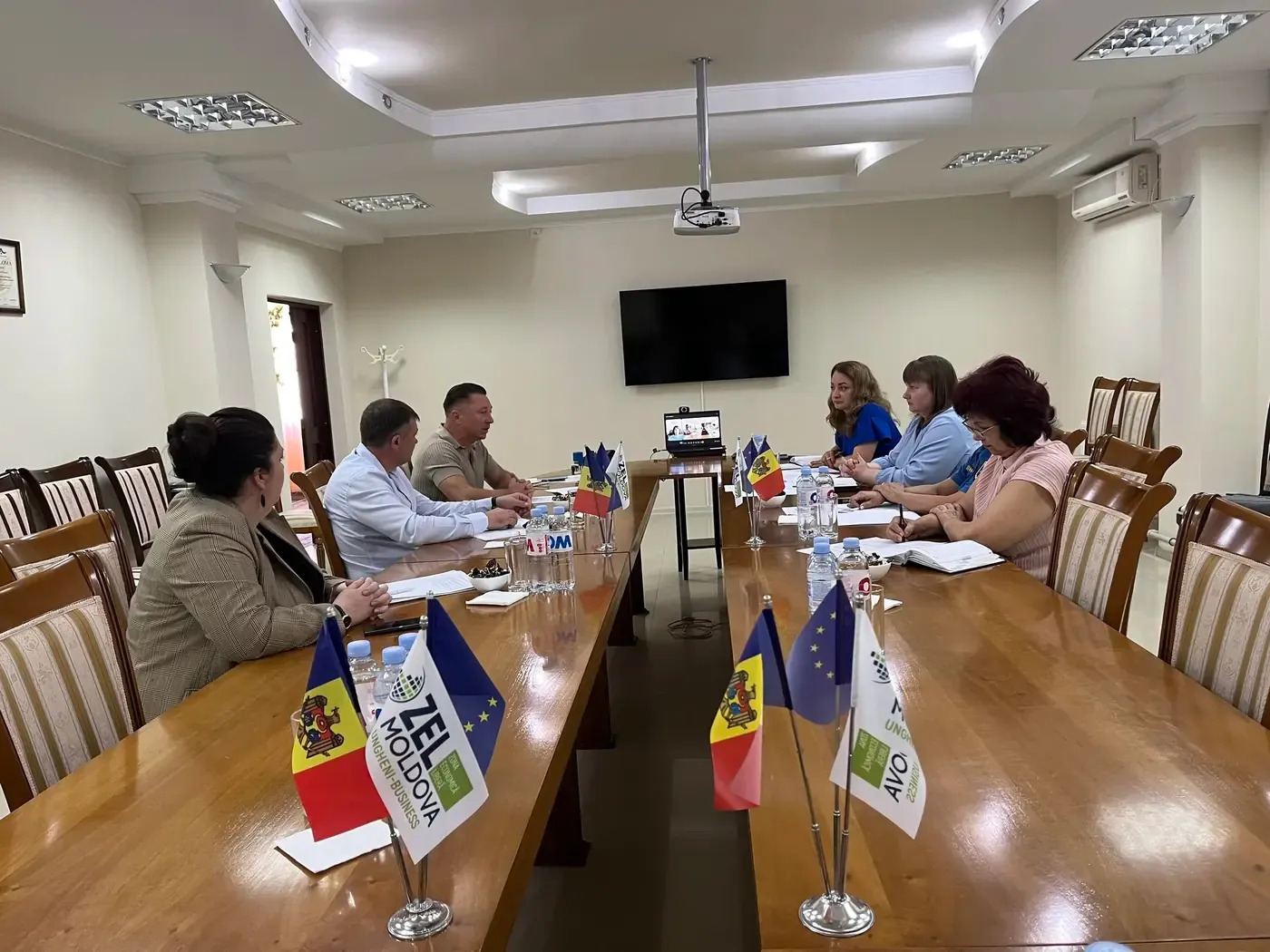
The contest for selecting residents of 30 July 2026, at the headquarters of the zone administration; some of the participants were connected by video conference. Photo: ZEL “Ungheni-Business” / Facebook
The list of residents published by the administration includes 50 companies, and their profile says what the zone actually is: carpets and rugs — “Covoare-Ungheni”, “Moldabela Trade”, “Unicorn-Carpets”, “Carpeta MD”, “Unucarpet”, “EURO CARPETS” —, wool and synthetic yarns (“Euro Yarns”, “Filatura-Ungheni”), electrical wiring harnesses (“Lear Corporation”), furniture (“Euroatlant”, “Euromobila-Lux”), clothing, footwear, industrial paints and varnishes, wholesale trade in petroleum products, liquefied gas and cereals. None of them has a glass activity on record — the project approved on Thursday would be the first of its kind in the zone.
On 31 December 2025, according to the annual report of the line ministry, the “Ungheni-Business” zone, including its subzones outside the district, had 2.144 employees — the second figure among the country’s free zones, after Bălți — and cumulative investments of 123,1 million dollars. A year earlier it had 2.610 employees: 466 employees fewer in a single year, a fall of almost 18% — a difference between the headcounts at the end of the two years, not a number of dismissals. The zone’s sales of industrial production fell by 10,4% in 2025, the second consecutive year of contraction after minus 20,9% in 2024 — while across all the country’s free zones they grew by 2%. The zone’s land was developed, at the end of 2024, to the extent of 36,9%, a little more than a third; the 2025 report does not repeat this indicator by zone.
The number of residents differs according to the date and the document. The ministry’s report records 56 residents registered in the “Ungheni-Business” zone on 31 December 2025 — the second figure in the country, after Bălți with 90 — and its figures are calculated on the basis of the annual reports of the zone administrations. The zone administration told the newsroom that on 30 June 2026 there were 49 residents registered in the zone, with 2.229 employees in total, while the list published on its website includes 50 companies.
The administration is actively looking for investors: nine days before the contest, it received a delegation from the Kingdom of the Netherlands, led by the mayor of Beekdaelen municipality, Eric Geurts, to whom it presented, according to its own press release, “the available infrastructure”; in May, it had received businesspeople from China and Ambassador Dong Zhihua, and more recently a delegation from Latvia, which it showed two Moldovan-Belgian synthetic yarn and carpet factories in the zone.
Ungheni in the national picture
On 31 December 2025, the six free economic zones of the Republic of Moldova counted 240 residents — 16 fewer than a year earlier —, an investment stock of 653,8 million dollars and 12.856 employees, according to the annual report of the Ministry of Economic Development and Digitalisation. The number of employees in the free zones fell by 1.398 people in 2025, after falling by 1.740 in 2024. Sales of industrial production totalled 12,86 billion lei, 2% more than in 2024, and 94,4% of them went to export.
Against the background of the same decline, Ungheni was, in 2024, the zone that attracted the most: of the 6 new residents registered across the country that year, following four contests, 3 entered “Ungheni-Business” — more than at Taraclia (2) and Bălți (1). All six, however, had the same type of activity: “external commercial activity”, that is, trading operations. The project approved now is a processing operation, not a trading one.
The movement is not one-way. An informative note of the ministry, from June 2025, also records an exit: SRL “Amigara”, a resident of the zone, has asked for two private plots of land of almost 2 hectares to be excluded from ZEL “Ungheni-Business”. The plots are in Hîncești municipality, and no free zone customs regime is installed on them, the same note states; the owner has leased them to companies with activities that are not permitted in the free zone and is now asking for them to be taken out of the perimeter and for the resident contract to be terminated, considering that it can carry out its activity more advantageously outside the zone.
What a new resident means for the people of Ungheni
The context in which the project lands is one of contraction. In Ungheni district, the extractive and manufacturing industry had, on average, 3.359 employees in 2024, against 3.800 in 2023 — 441 people fewer in a single year, a fall of 11,6%, according to National Bureau of Statistics data. Over the same period, the turnover of the sector fell by almost a third. The total number of employees in the district also came down, from 16.800 to 16.300.
Against this background, the demand for labour nonetheless remains among the highest in the country: on 26 June 2026, the National Employment Agency recorded 260 vacancies in Ungheni district — the third number in the country, after Chișinău municipality (8.284) and Bălți (832). In April there were 156.
There is one more expectation worth tempering. A simple calculation, from official figures, shows that “free zone” does not automatically mean a better wage: in 2024, the average wage paid across all the free economic zones of the country was 11.315 lei, and the average gross earnings in Ungheni district — 11.321 lei. Practically the same sum. The comparison has its limits: the average for the zones covers all six ZEL in the country, and the average for the district also includes public sector staff, where public administration pays best (15.211 lei). The conclusion remains, however: a job in the free zone is, on average, an ordinary job for Ungheni — paid below the national average, which in the third quarter of 2025 was 15.488 lei against 11.781 lei here, that is, 22nd place out of 35 territories.
The 2025 report measures the same gap at country level: the average wage of the free zones’ employees stood at 74,0% of the average wage in the real sector of the national economy, down from 76,3% in 2024.
In other words, what counts in a new project is not the label, but the number of hires and the wage committed to in the contract.
The “old” residents and the “new” residents: two different regimes
Through a law of July 2024, the state divided the residents of the free zones into two categories, according to a cut-off date: 31 December 2023.
Those registered by then remain, until 1 January 2034, under the customs regime of the old Law 440/2001 — a deadline negotiated by the Government with the European Commission. To them, and only to them, the classic income tax facilities in the Tax Code also apply, granted until 1 July 2034, depending on the investments made by 1 July 2024.
The companies that become residents from 1 January 2024 onwards — the category the newcomer falls into — no longer receive that package. They come under the regime of the new Customs Code, where the free zone is an area with a special storage regime, on the model of those in the European Union. For them, the state has provided a different, narrower instrument: an income tax reduction reserved for manufacturing companies, through the regional state aid scheme for investments, also until 1 January 2034 — and without the right to cumulate the two schemes.
In other words, “it has become a resident of the free zone” no longer means today what it meant three years ago. What exactly has been granted to the new resident will be seen from the contract signed with the administration, a document which, under the law, must include the economic project and the planned parameters.