
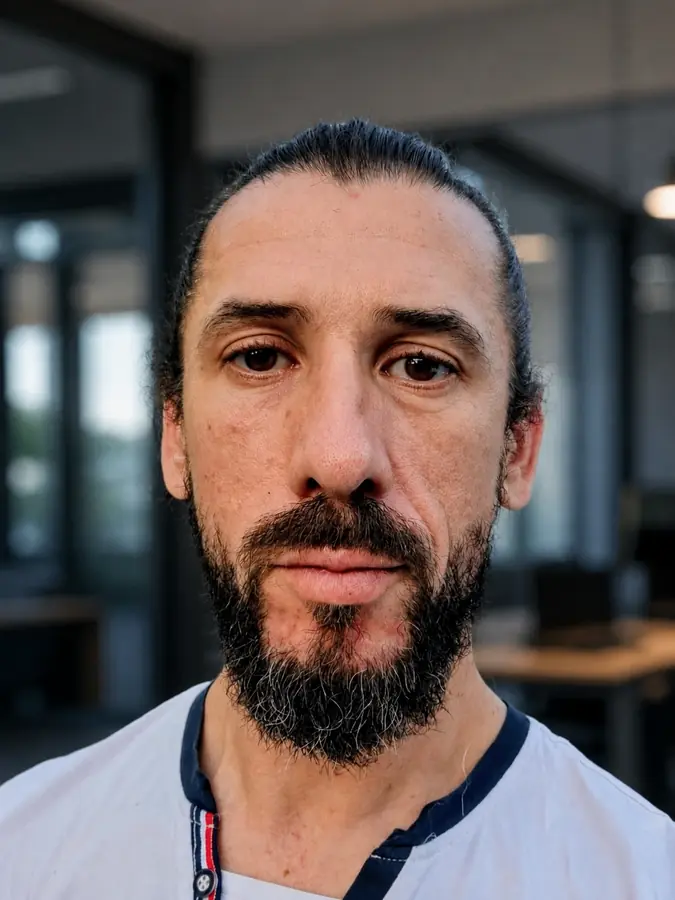

On Saturday, 4 July, at the „Dimitrie Cantemir” Library in Ungheni, the Independence Day of the United States was celebrated. The American Corner marked, with games, music and confetti, the „Freedom 250” edition: 250 years since America’s Declaration of Independence, in 1776. A one-day reception, like many others.
Behind it, however, lies a story few people in Ungheni know — one that has connected the town on the Prut with America ever since 1877. It is neither praise nor propaganda: these are verifiable facts, some spectacular, others uncomfortable. We gathered them and put them through verification, separating what is certain from what has remained legend.
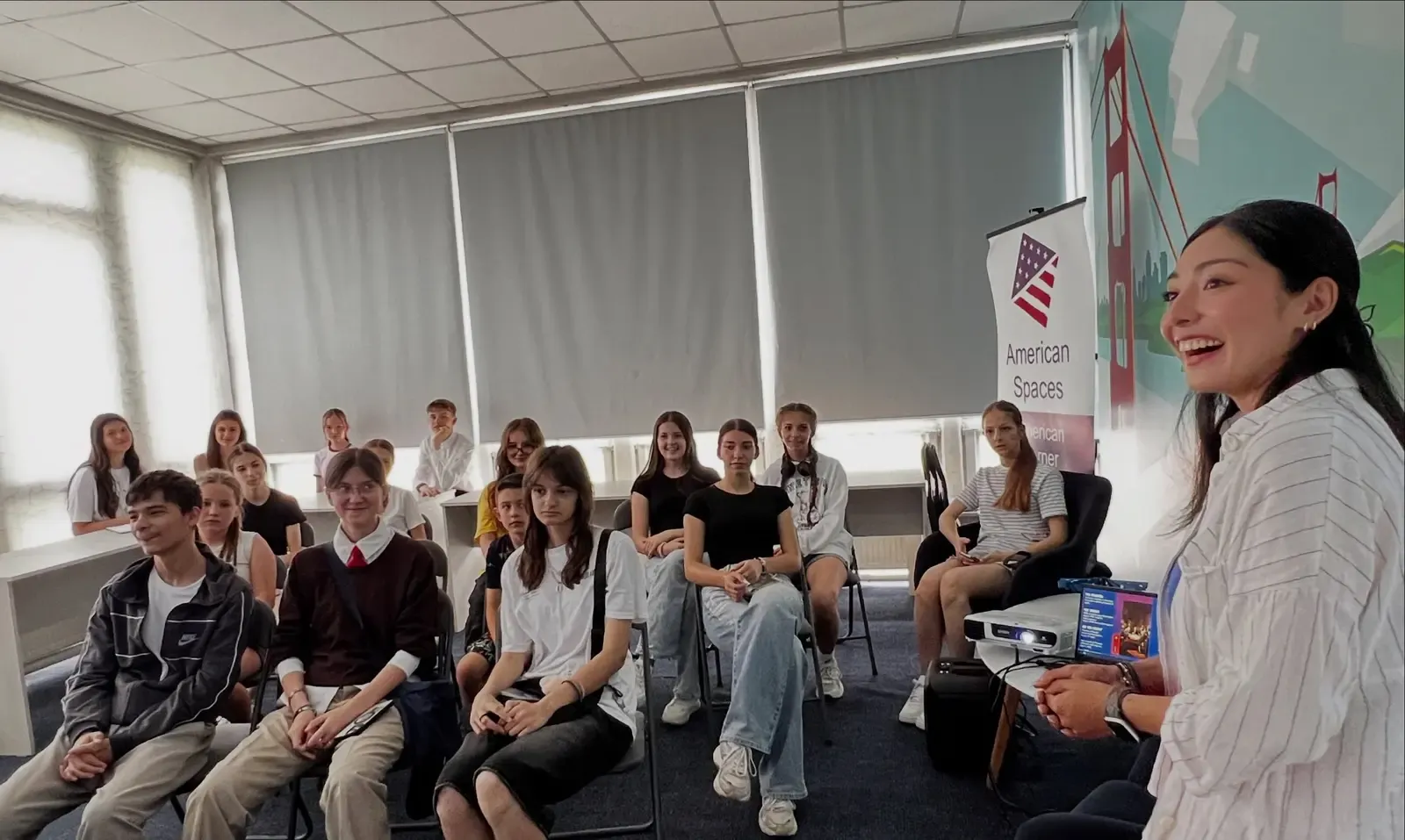
The „Freedom 250” reception at American Corner Ungheni, 4 July 2026. Photo: American Corner Ungheni.
The Man from Ungheni Who Wrote „The Apartment”
We begin at the summit. One of Hollywood’s great screenwriters was born in Ungheni.
Itek Domnici came into the world on 27 June 1920, in the market town of Ungheni — then, after the Union, part of Greater Romania. His family, Jewish, emigrated to the United States in the late 1920s and settled in Brooklyn. There he changed his name to I.A.L. Diamond and became, over the years, the closest collaborator of director Billy Wilder.
Together they wrote some of the most beloved American comedies. Diamond co-wrote the screenplay of „Some Like It Hot” (1959), considered by many critics the best comedy in the history of cinema, and won the Academy Award (Oscar) for the screenplay of „The Apartment” (1960). A man from Ungheni who left across the ocean as a child, whose real name was Itek Domnici, thus took home a statuette in Hollywood.
It is the most spectacular — and the best-documented — link between Ungheni and America. (Other names claimed for Ungheni also appear on internet lists; some do not withstand verification — more on them below.)
1877: A War Passed Through Ungheni Station — and an American Wrote About It
Decades earlier, Ungheni was already a place through which history passed — the point where the link was made between the Russian Empire and the West.
In 1875, the Russian Empire built the Chișinău–Ungheni–Iași railway, and in April 1877 the railway bridge over the Prut was put into use — a few days before Russia declared war on the Ottoman Empire. On that bridge, in those very days, the imperial army entered Romania, on its way to the Balkan front. Ungheni station then remained, for nearly a century, the official border-crossing point between Russia and Romania — the place where trains even changed their track gauge.
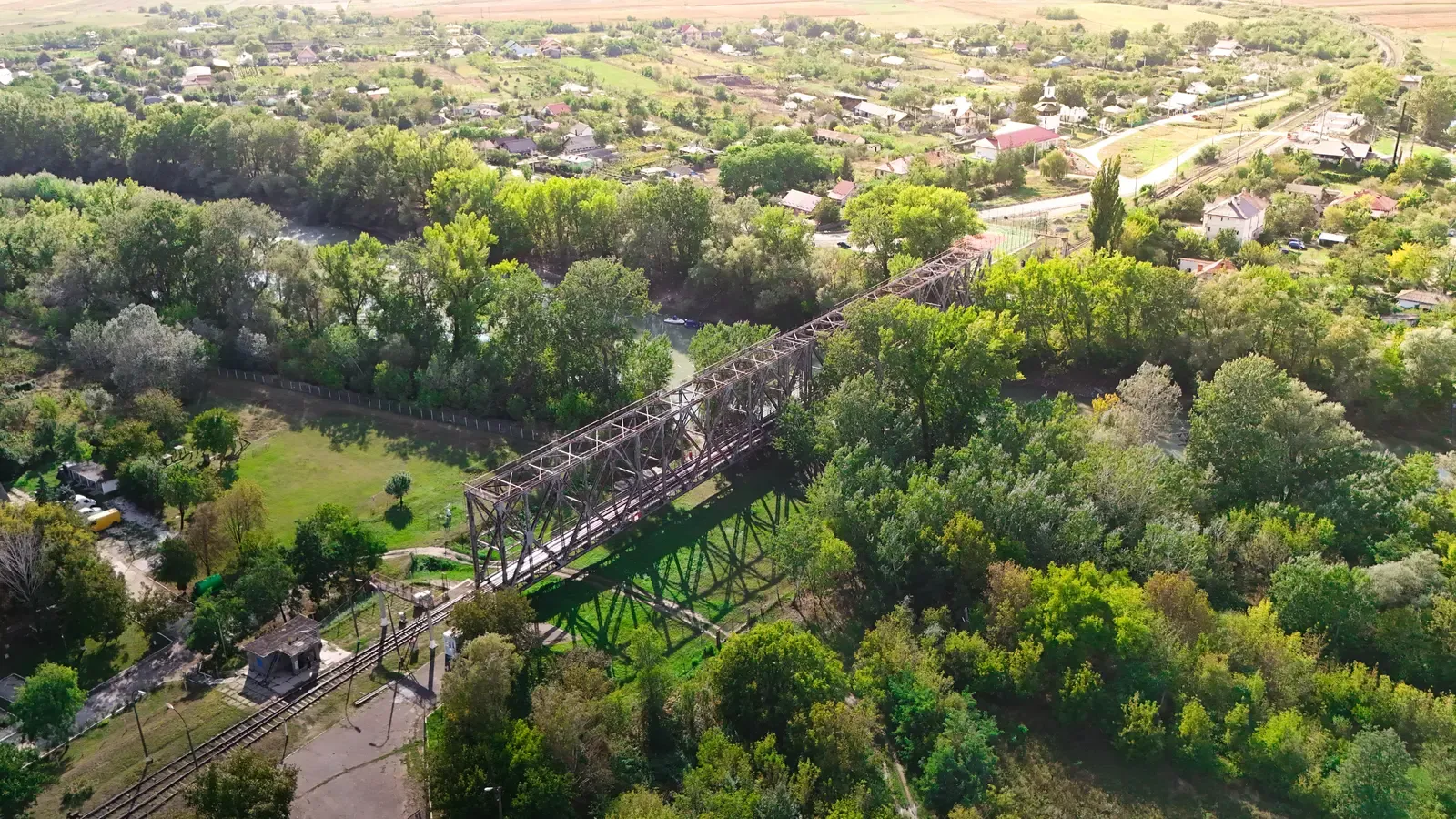
The railway bridge over the Prut at Ungheni, known as „Eiffel’s Bridge”, put into use in 1877 — the Russian army entered Romania across it, on its way to the Balkan front. Photo: Wikimedia Commons (CC0).
What is less known is that an American witnessed it and wrote about it. Francis Vinton Greene, an officer and military attaché of the United States to the Russian army, published in 1879 a history of the campaign in which he notes, in black and white, that the troops „crossed the frontier at Ungheni”. The name of our town thus appears, by the hand of an American officer, in a book from 1879.
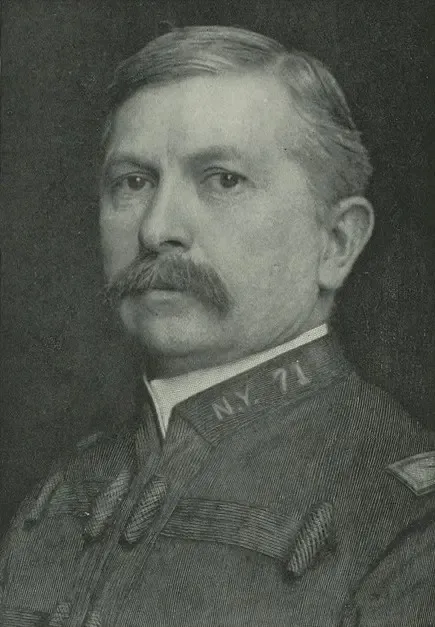
Francis Vinton Greene, the American officer who, as a military attaché to the Russian army, wrote in 1879 that the troops „crossed the frontier at Ungheni”. Photo: public domain (Wikimedia Commons).
A word about the bridge: although it is known as „Eiffel’s Bridge”, its authorship is disputed. Historians attribute it to the Russian engineer Nikolai Belelubsky; the local version says that the original bridge, built by engineer Balitskii, was damaged by the waters of the Prut and only then redesigned with the involvement of Gustave Eiffel’s workshop. The official name „Eiffel” was given to it by the local authorities only in 2012. „Eiffel’s Bridge” is, therefore, in part, a beautiful legend.
From Here People Left for America
At the end of the 19th century, Ungheni was a market town with a majority Jewish community — almost a thousand souls at the 1897 census. From it, as from the whole south of the Russian Empire, people left for America: „mostly to the United States”, the town’s community archive notes.
The departures increased after the Chișinău pogrom of April 1903 — about a hundred kilometers from Ungheni, on the same railway line. The massacre, which left almost 50 dead, shook America: for the first time, the Jews of the United States organized nationwide protests, and a petition of protest addressed to the tsar ended up, ultimately, deposited in the vault of the State Department in Washington. Bessarabia thus entered American public consciousness — and the wave of emigration to New York and Philadelphia accelerated.
The memory of that vanished Ungheni was written, across the ocean, in Yiddish: two emigrants who left for Philadelphia, Moshe Melamed and Chaim (Herman) Barkan, left memorial books about their native town — one of them, from 1959, is even titled „Mayn Shtetl Ungen” („My Town, Ungheni”). It is a layer of history that deserves to be treated with sobriety: the Jewish community of Ungheni was annihilated in 1941, in the Holocaust carried out under the regime of Ion Antonescu.
A collateral curiosity, with reservation: the melody of Israel’s anthem, „Hatikvah”, has roots in a folk song from the Moldovan region, set to music by Shmuel Cohen — who, sources say, was originally from a small town near Ungheni (not from the town itself), and who left not for America, but for Palestine. A real connection, but one to be treated with precision.
An American City Twinned with Ungheni
The ties are not only historical. Since 2000, Ungheni has been twinned with Winston-Salem, a city in the state of North Carolina — a relationship confirmed by both sides and revived in recent years. It did not remain on paper: in 2003, the Americans donated 30 wheelchairs for people with disabilities; since 2006, students of the Fine Arts School in Ungheni have exhibited in an art salon in Winston-Salem; in 2015, the chess section of the sports school played, across the Atlantic, a tournament with an American club. (The City Hall also lists a second American twinning, with Mankato, Minnesota, since 2011 — but that one seems to have remained mostly on paper.)
The More Than Three Decades of Institutions
The densest American presence, however, is that of the last three decades — since, in 1992, the United States established diplomatic relations with the independent Republic of Moldova.
The „American Corner” where „Freedom 250” was celebrated is itself such a trace: American Corner Ungheni opened in 2004, in partnership with the library, as a free resource for English, culture and technology — and it functions, by the Embassy’s own statement, also as an „alumni center”, where Ungheni residents returning from exchange programs in the USA meet again. That the tie is alive is shown by one concrete detail: in January 2020, the „Moldova ReConect” network of former scholarship holders held a meeting right in Ungheni.
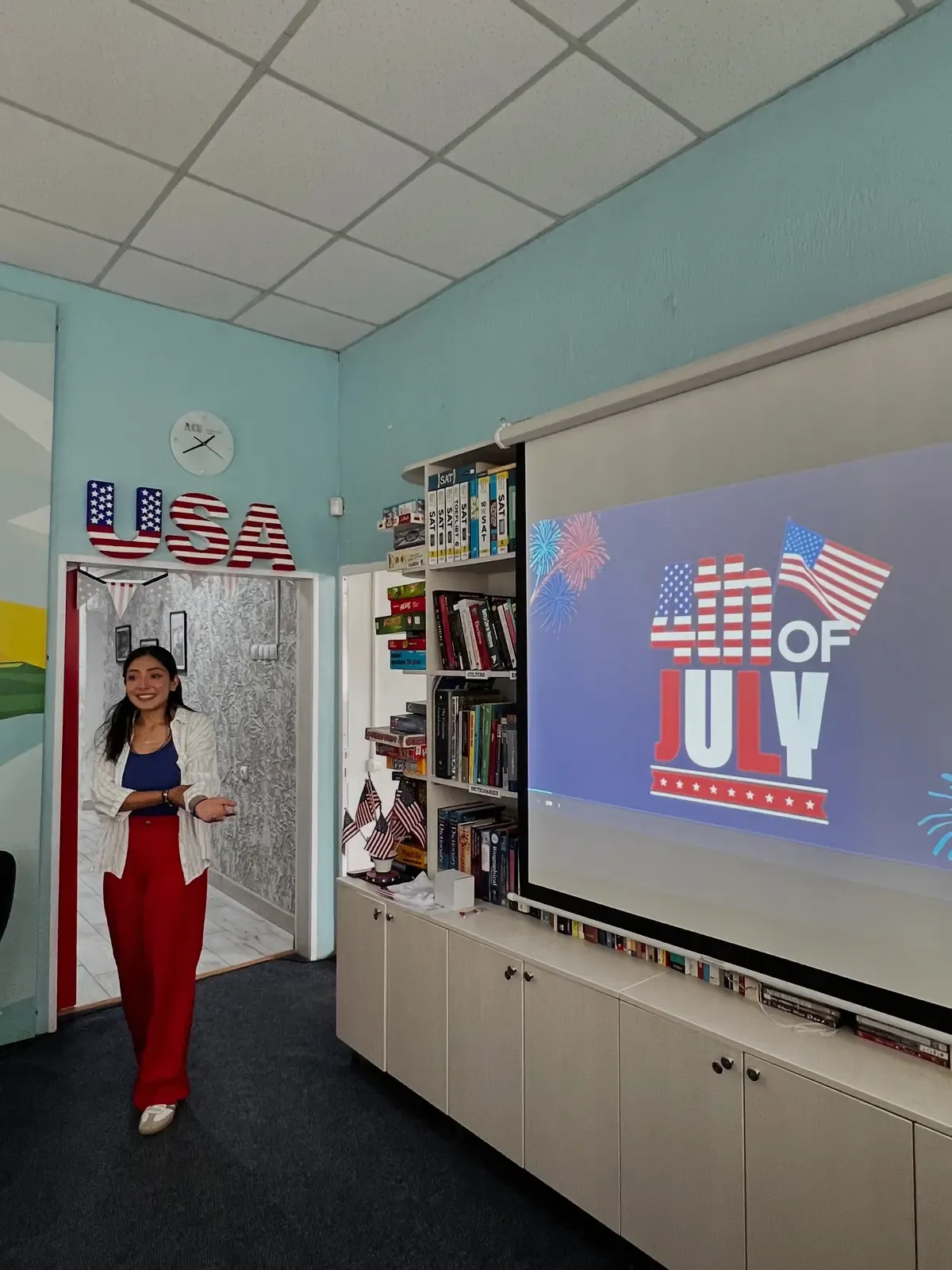
The „American Corner” at the „Dimitrie Cantemir” Library — a free resource for English, books and technology, opened in 2004. Photo: American Corner Ungheni.
Through such programs, at the country level, more than 6,000 Moldovans have passed since 1993. The concrete local faces are hard to name publicly — but some can be named: librarian Aliona Manciu, of the „Dimitrie Cantemir” Library, followed a leadership program for librarians in the United States.
Then there is the footprint visible on the street. Through the USAID „My Community” program, Ungheni built 146 bus stops — 106 in the city and 40 in eight surrounding villages — from an investment of 13.9 million lei, of which almost 8.6 million was American money. USAID also funded the study for the Berești logistics terminal and transformed the Bălți and Ungheni courts into „model courts”, through a project of 5.6 million dollars.
On the Prut, at Blândești (Sculeni commune), the only irrigation system in the district rehabilitated through the Millennium Challenge Corporation — the American agency that ran in Moldova a program of about 259 million dollars — has operated since 2015. And in May 2022, a fire station built from the ground up with more than 470,000 American dollars was inaugurated in Ungheni — serving 72 localities in the district. At the ceremony was the U.S. Ambassador, Kent D. Logsdon.
„Freedom 250” and the Uncomfortable Part
Here comes the nuance an honest newspaper cannot avoid.
First, a point of calendar: although the Embassy marked „Freedom 250” by invoking „35 years of partnership” with Moldova, formal diplomatic relations were established on 18 February 1992 — so in 2026 it is, in fact, 34 years. The „35” figure is counted from the recognition of independence, in 1991.
Then, the scale. Since 1991, the United States has given Moldova — through all its agencies — more than 2.6 billion dollars, of which more than one billion through USAID alone, in approximately 130 projects. This is money that has built real things, but also a tool of influence, by the very definition of public diplomacy. Both truths stand together.
And in 2025, the support stopped abruptly. On 20 January, the administration in Washington froze foreign assistance, and USAID was, by 1 July, dissolved and absorbed into the State Department. The effect was felt in Ungheni too: the Berești terminal project, left without its American funder, is now seeking its money at the European Commission, through a joint application by Romania and Moldova. At the country level, the cuts hit energy projects worth more than 200 million dollars and reignited an old debate — how healthy it is for entire reforms to depend on a single external funder.
It is worth stating, for balance, what was not American: in the 2022 Ukrainian refugee crisis, when Ungheni was a transit hub, the centers and playgrounds in the city were funded by Japan, by the European Union and by Caritas Austria, not by the USA. And the Iași–Ungheni–Chișinău gas pipeline, often associated with „Western aid”, is built with European money, not American. Precision matters — especially in a subject some read with enthusiasm and others with suspicion.
More than the July 4th reception
Taken together, all these facts say something simple: for Ungheni, America has never been just a distant country on the map. It was a man from Ungheni who reached Hollywood, an American officer who wrote the town’s name in a book, a petition taken to Washington because of a pogrom next door, a city twinned across the Atlantic.
But it was also very concrete: bus stops in eight villages, a fire station, a library corner where English is taught for free. The 4 July reception passes in a day. What remains — and what is lost, when the winds change in Washington — is what truly matters.