
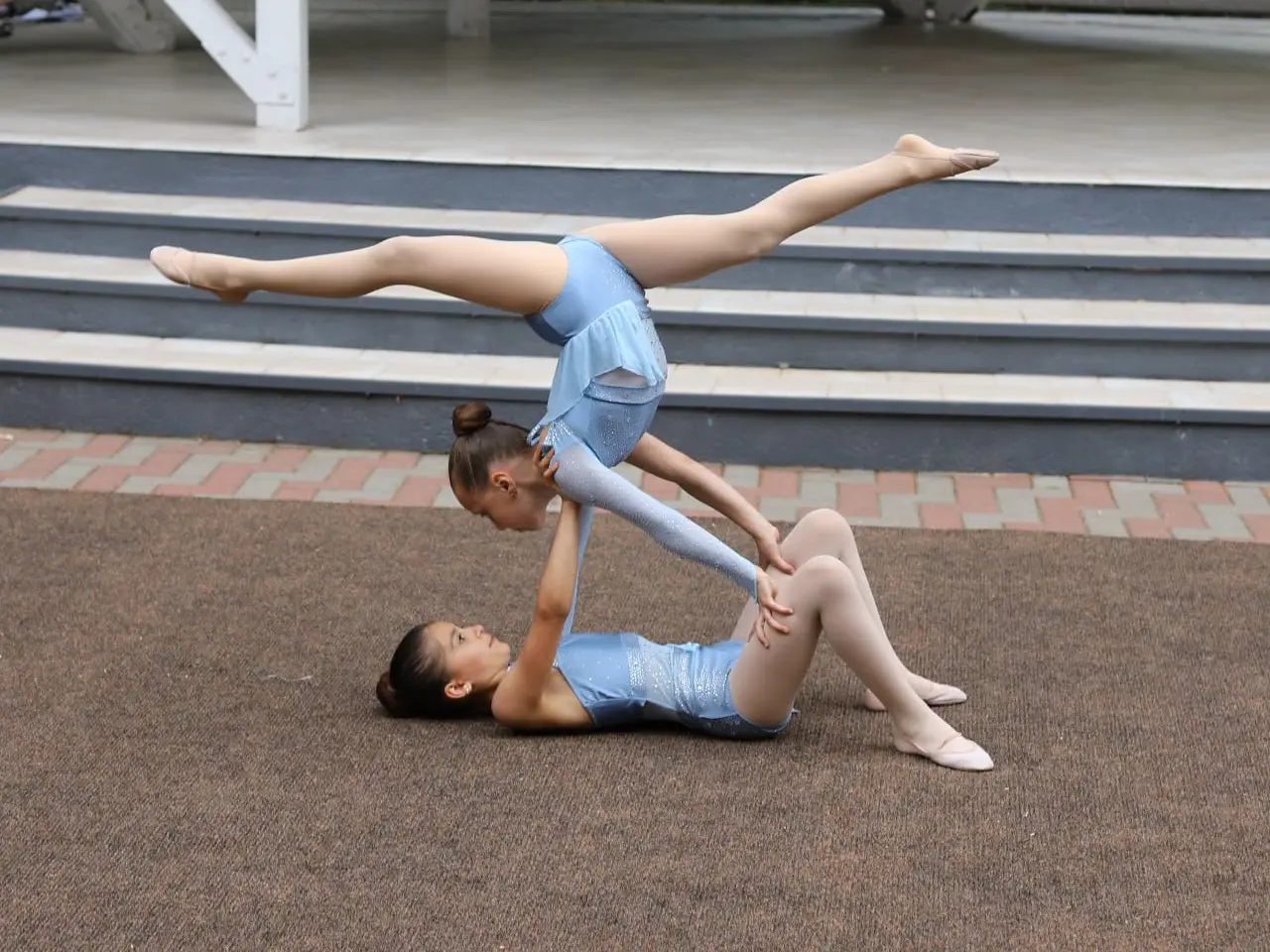
On Thursday evening, 9 July, the stage in Micul Cluj Park in Ungheni belonged not to seasoned artists, but to children. Young gymnasts and young performers took to the park stage in turn, at an evening dedicated to celebrating childhood through movement and music — a new instalment of the „Vara Culturală-n Parc” (Cultural Summer in the Park) project run by the municipality’s House of Culture.
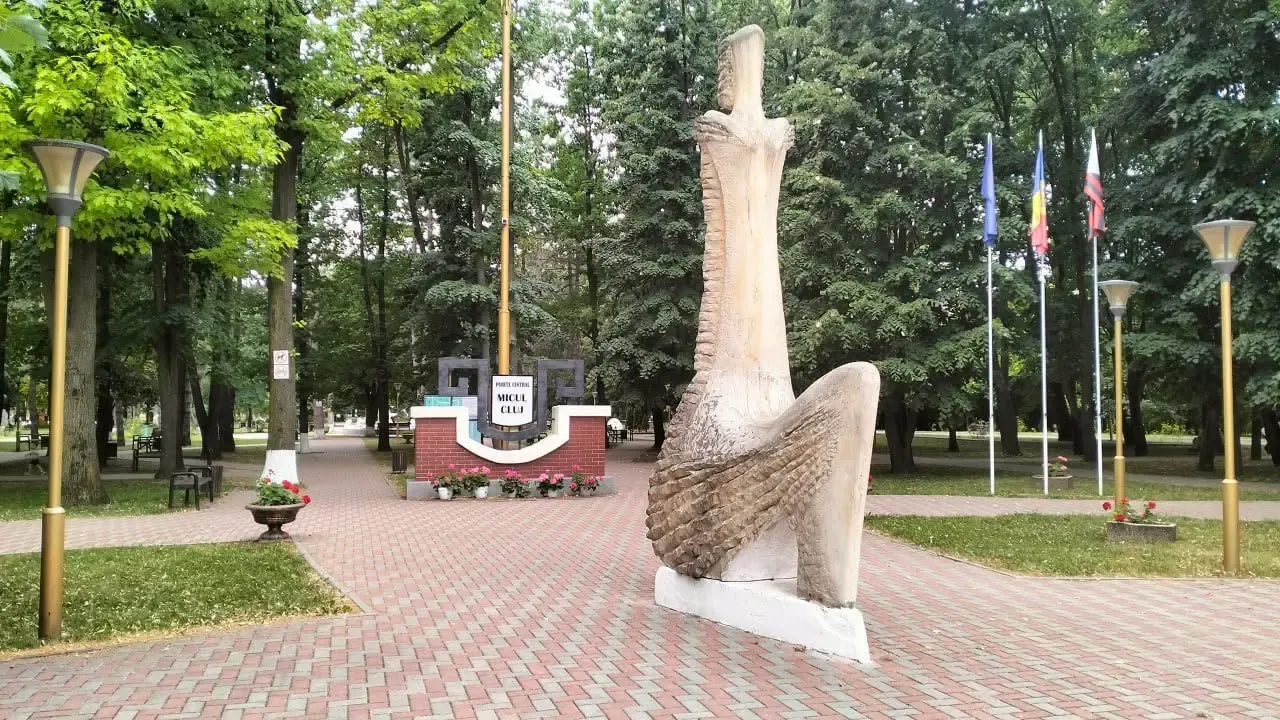
For a family in Ungheni, this evening meant something simple and, in summer, quite rare: a good show a stone’s throw from home, with no ticket. That, in fact, is the core of „Vara Culturală-n Parc” — a series of events through which the House of Culture moves culture out of the hall and into the open air, onto the park stage, throughout the summer, with free admission.
What happened on stage
The programme this time was more athletic than folkloric. The gymnastics and acrobatics numbers were delivered by two local groups: the „Triumf Gym” gymnastics studio, coordinated by Iuliana Andrușca, and Activ Fitness Club, coordinated by Inga Luchița.
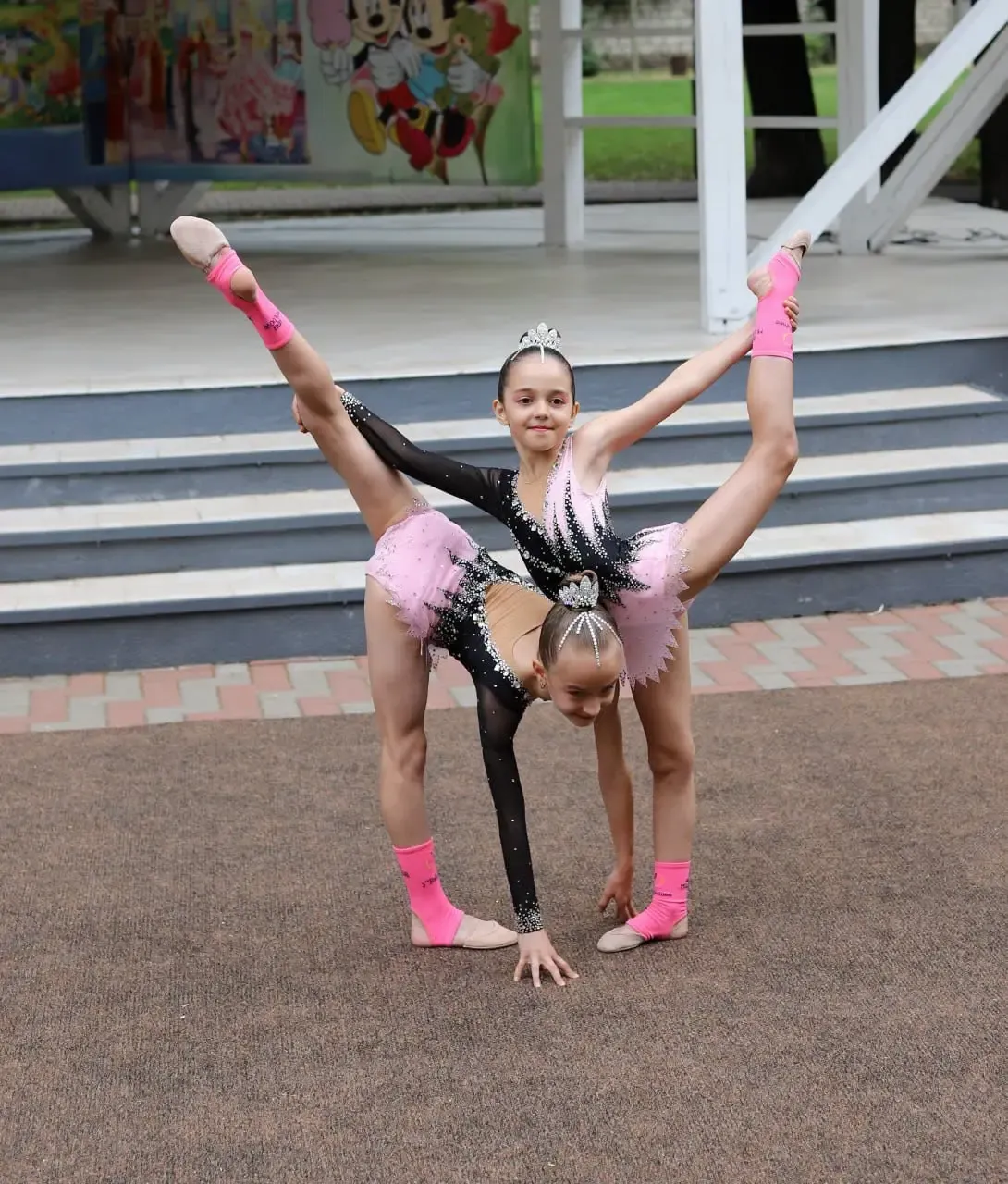
On the mat in front of the stage came a succession of balances, splits, backbends and human pyramids — from little girls barely learning their first moves to pairs and groups performing polished acrobatic figures.
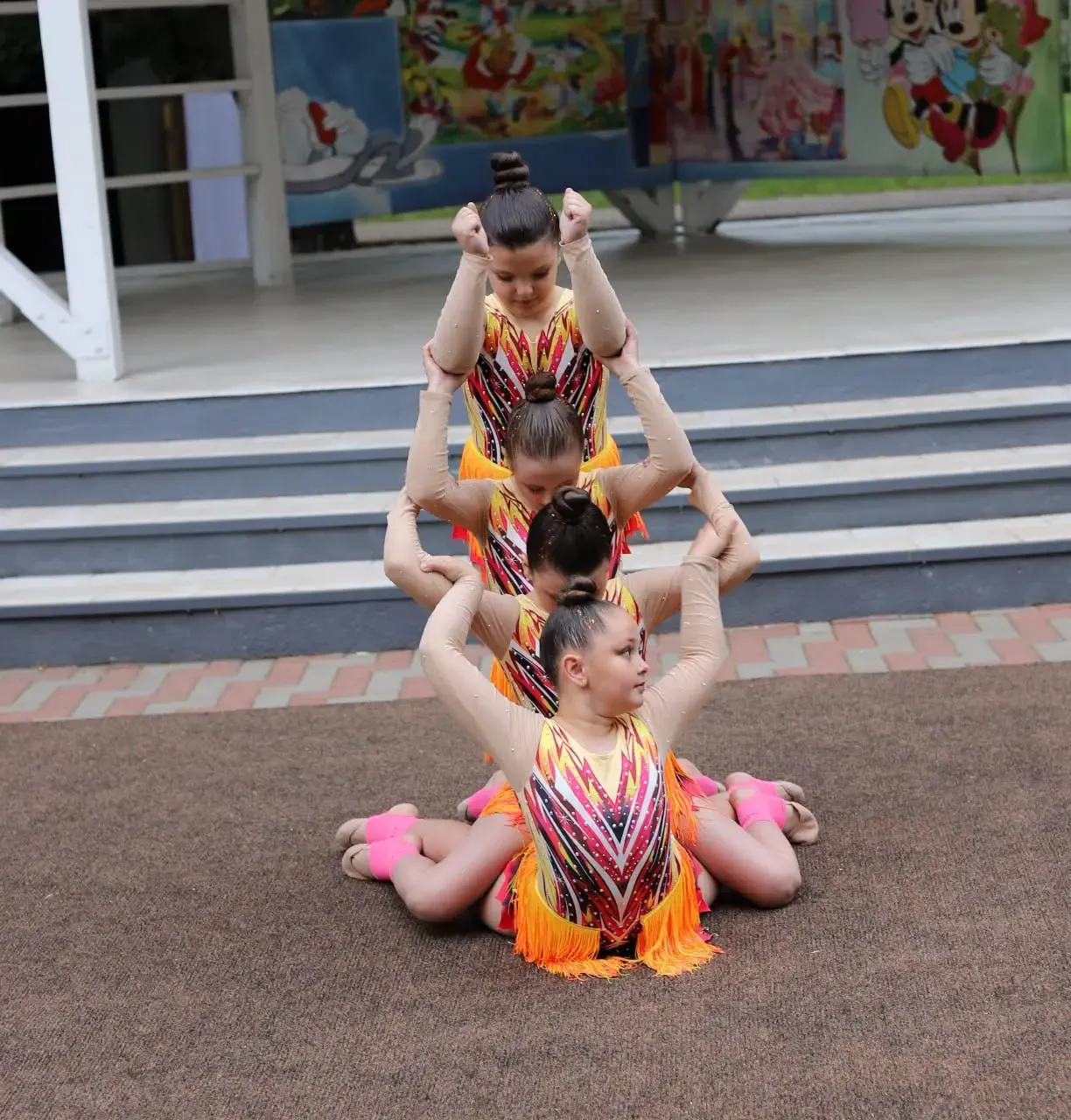
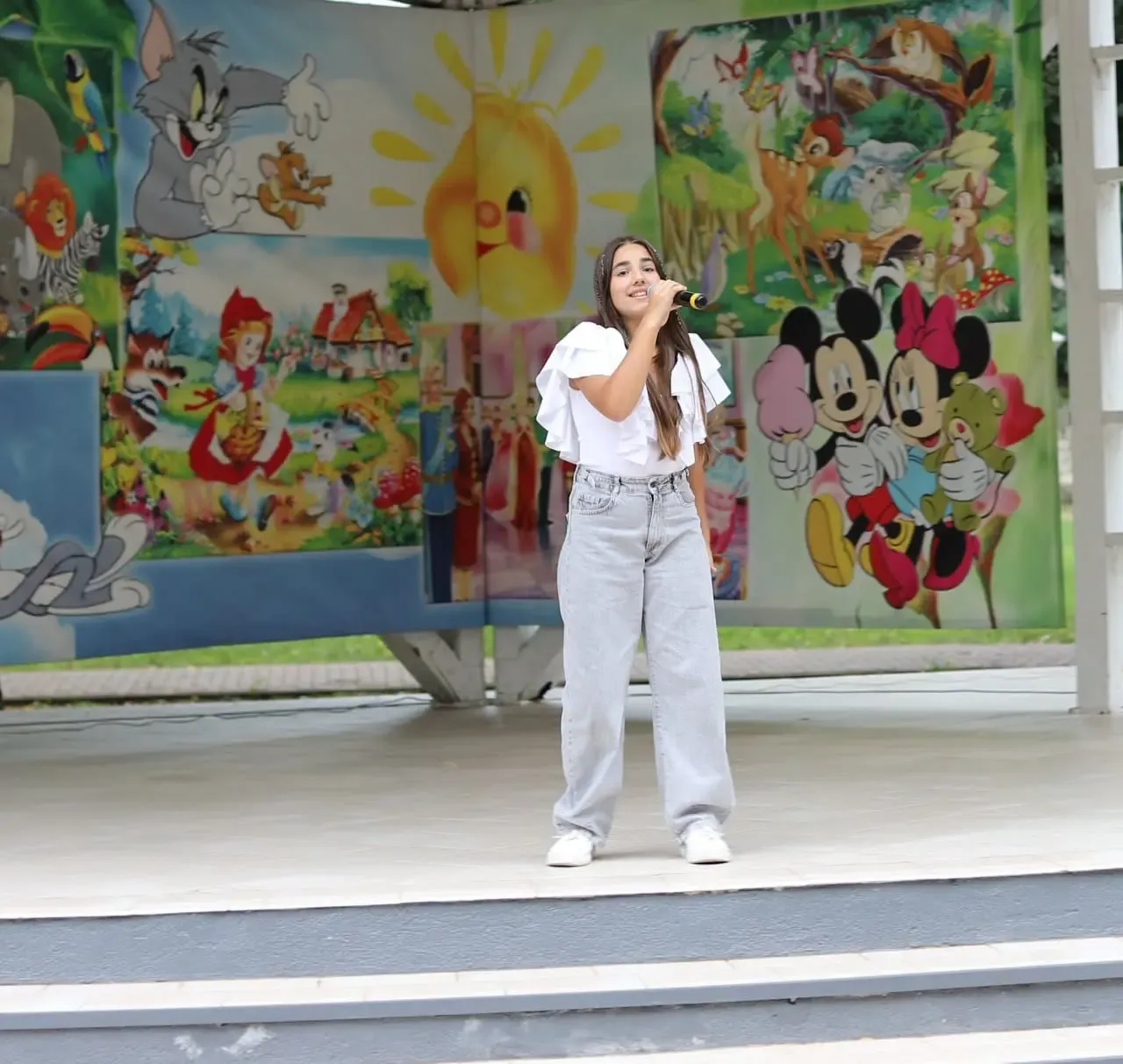
The musical moments were offered by young performers Mia Țurcanu and Gabriel Guțan, and the evening was hosted by Iuliana Galiț. The House of Culture’s technical team also helped things run smoothly.
An audience that gathered on its own
On the park benches and the stage steps on Thursday evening gathered dozens of Ungheni residents — mothers with children, grandparents, groups of friends. Among the spectators was Eduard Balan, one of Ungheni municipality’s three deputy mayors.
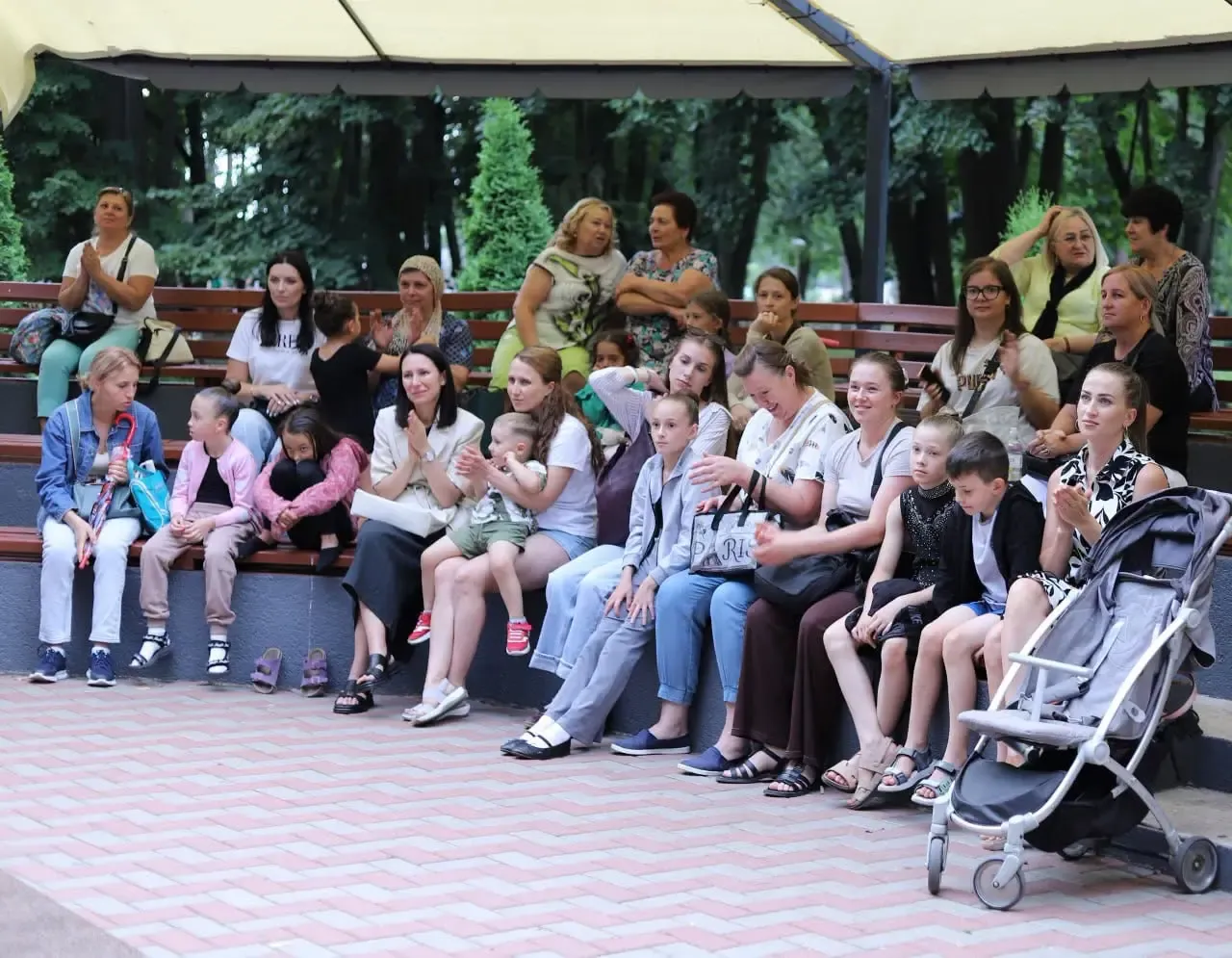
That such an event draws a crowd is no small thing in a town where, in summer, leisure options — especially for children — are limited. A free, open-air show on a warm evening fills exactly that gap.
Why this park matters this year
„Micul Cluj” is no accidental name. The town’s Central Park — the municipality’s largest green space, around 12 hectares — has borne this name since 2020, chosen in gratitude to the twin city of Cluj-Napoca; the summer stage on which the children now perform was rehabilitated with Cluj’s support.
This year, the park stage has an added role. The House of Culture building is due to undergo renovation and energy-efficiency works in 2026 with European support — which means the town’s main hall has effectively moved outdoors, into the park. Each evening of „Vara Culturală-n Parc” thus becomes not just entertainment, but the main space where culture is made in Ungheni this summer.
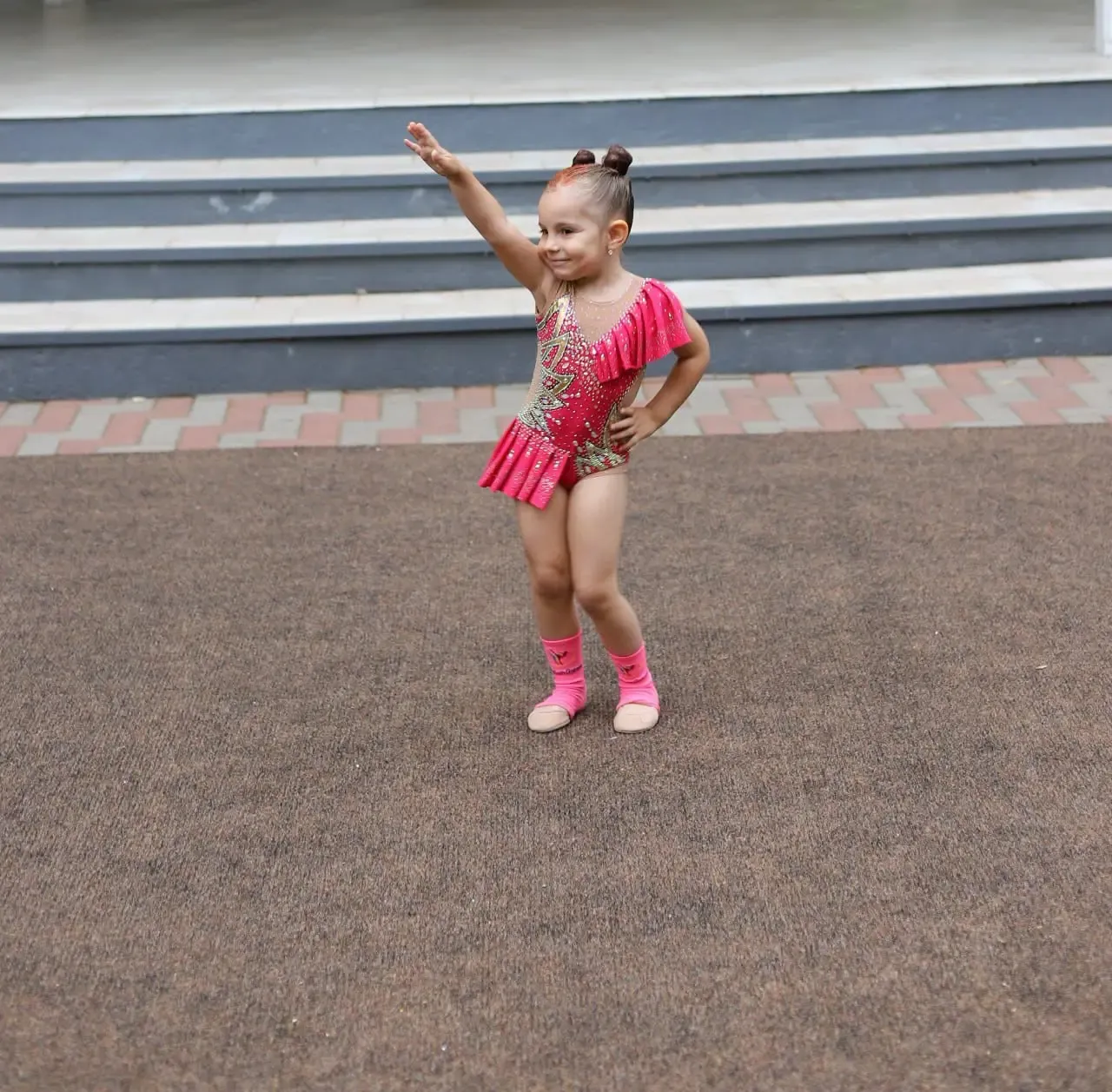
Thursday’s evening was neither the first nor the last. In recent weeks, the project has also brought to the park an evening of folklore, with three ensembles, and a show dedicated to the memory of Stephen the Great. The full summer programme is kept by the organisers, on the House of Culture’s pages; anyone wanting to catch the next evening would do well to follow them. A more distant but predictable marker is the Ungheni Municipality Days, traditionally held at the end of August, around the town’s patron-saint feast on 28 August.
The dates, participants’ names and the „Vara Culturală-n Parc” title come from the official communication of the House of Culture of Ungheni municipality. The history of Micul Cluj Park, deputy mayor Eduard Balan’s post, and the information about the renovation of the House of Culture building come from official sources of Ungheni municipality’s town hall and from a Moldpres report.