

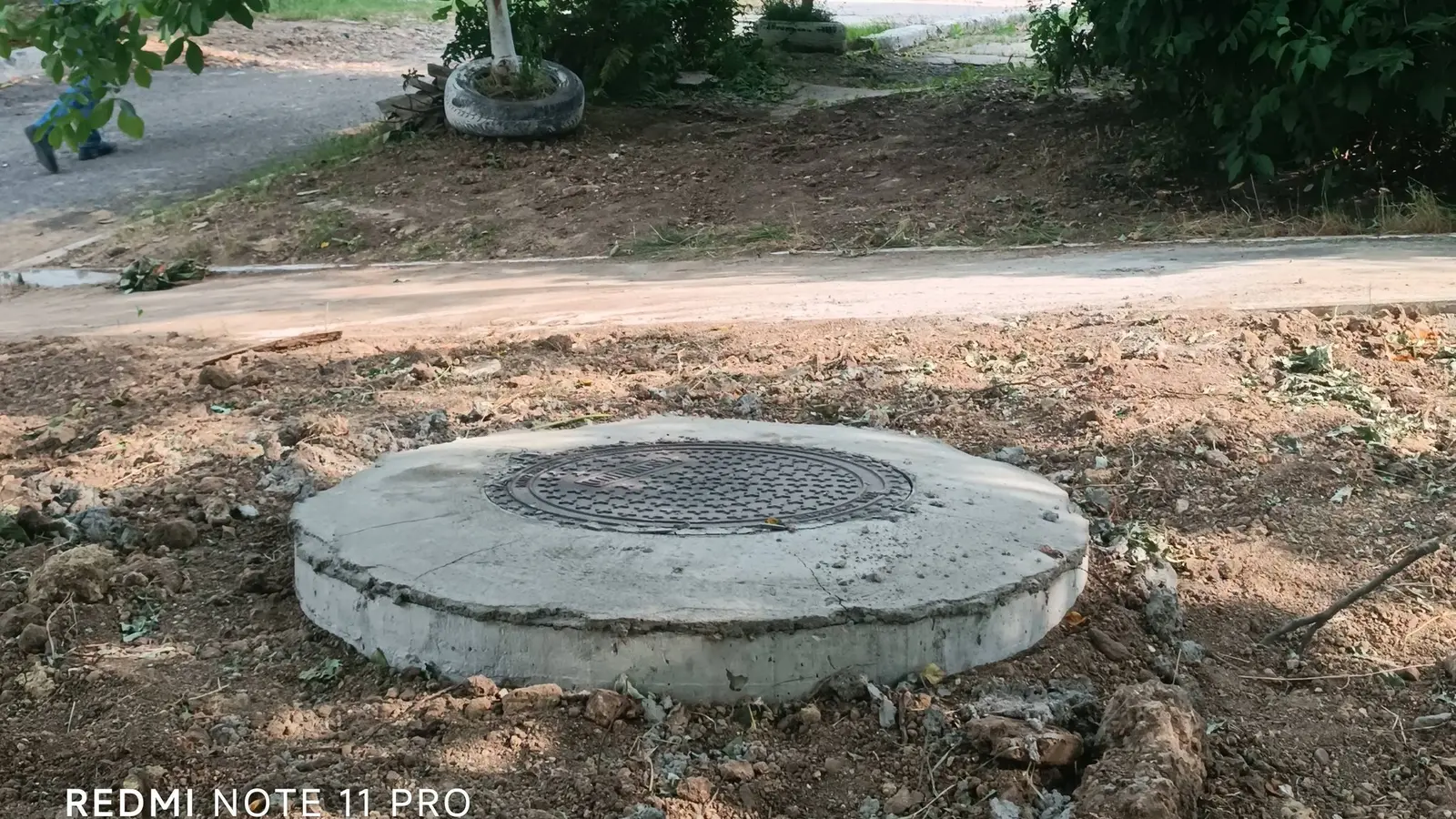
The Cornești town hall announced on Sunday evening, 5 July, that it had completed the extension of the water-supply and sewerage network on Ștefan cel Mare Street, near Popas. The work also included running the pipes beneath the R1 Chișinău–Ungheni national road, at kilometre 77+215, through drilling done without opening a trench at the surface. For households in the area, this means they can connect to the centralised public water supply.
The “closed method” the town hall refers to is, as a rule, horizontal directional drilling: the pipe is pulled beneath the roadway without opening a trench and without interrupting traffic. When crossing a national road, this avoids cutting the road surface — which would weaken the road’s structure — and keeps traffic flowing. The R1, which links Chișinău with Ungheni and Sculeni and passes through Cornești about 28 kilometres from the town of Ungheni, is managed by the National Roads Administration, the authority that approves the placement of networks within the national-road zone.
A project launched through “Satul European”
The extension is not an isolated project. The water and sewerage network of the town of Cornești — together with the village of Romanovca, which belongs to the same town hall — was built through the government’s “Satul European” (European Village) programme, in a project that provided a water main, a sewerage network and a treatment plant. According to the National Office for Regional and Local Development (ONDRL), the state allocated around 4.5 million lei for it through the National Fund for Regional and Local Development; that money paid for a 1,000 m³ water reservoir and a treatment plant with a capacity of 300 m³ per day. ONDRL also notes that, through this project, more than 300 households in Cornești and about 70 in Romanovca received tap water, and 490 households in Cornești were connected to the sewerage network.
The Cornești town council spent several years preparing the project’s legal ground. In 2021 it approved delegating the public water and sewerage service through an association agreement, and in 2024 and 2025 it updated and amended the technical execution project, according to decisions published in the State Register of Local Acts.
Mayor Angela Vatamaniuc described, at the project’s launch, the lack of water and the non-functioning systems as the town’s most serious problems.
What the town hall did not say
In its Facebook announcement, the town hall did not make public how much this stage cost — the extension on Ștefan cel Mare Street and the crossing of the R1 road — nor who carried out the drilling. Nor did it name the operator that will maintain the network and bill the connected residents. The town of Cornești has its own treatment plant, while the regional operator “Apă-Canal Ungheni” serves the town of Ungheni and a few neighbouring localities.
Why it matters for a whole district
The stakes go beyond a single street. Across the country, the public water supply reaches about 69% of localities, but centralised sewerage remains the rare part of the infrastructure: only 164 localities — 10.7% — had a public sewerage network at the end of 2025, according to the National Bureau of Statistics, and in the Centre region, which Cornești belongs to, the share drops to 12.6%. With a treatment plant and hundreds of households already connected, the town is among the few localities in the area with a complete service — water and sewerage.
The investment also comes to a district that is losing people. The population of the Ungheni district fell from about 96,000 residents in 2014 to around 74,500 in 2025, according to the NBS — a context in which access to basic utilities weighs on households’ decision to stay.
Under the town hall’s announcement, several residents welcomed the work and asked that the network reach other parts of the town as well.