

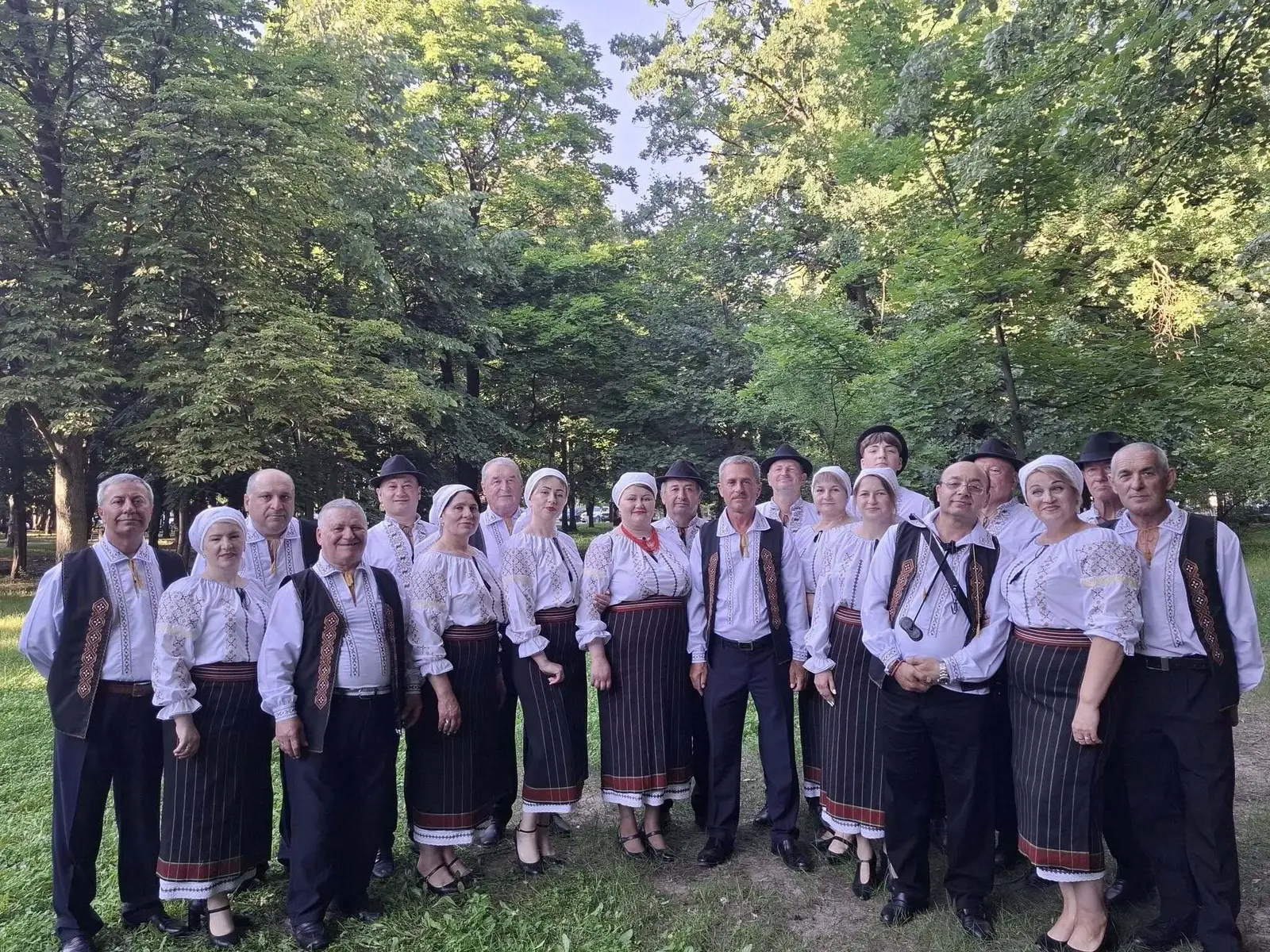
Ungheni’s best-known summer festival is changing its venue this year. “Sânziene Unghenene”, the celebration of folk traditions organised by the Palace of Culture, cannot return to the island on Lake Delia, where it was held in 2025. This year’s edition comes down on 5 July into the heart of the town — to Scuarul Înfrățirii and Independence Square.
The reason announced by the organisers has to do with what the water left behind. At the end of May, Lake Delia overflowed, and the recreation area the town is building on its shore was left with works unfinished. For the people of Ungheni, the festival’s move is not just a change of address: it is the visible mark of the spring floods on one of the town’s most conspicuous public investments.
The island left without a footbridge
In the announcement on its page, the Palace of Culture says plainly why it is giving up, this year, the place that had become almost a symbol of the celebration:
Unfortunately, this year, because of the consequences of the recent floods, we will not be able to return there. This time, we invite you to celebrate the beauty of the Sânziene traditions right in the heart of the town of Ungheni, in Scuarul Înfrățirii. Ungheni Palace of Culture
The floods invoked by the organiser are independently confirmed. On the night of 22–23 May, Lake Delia overflowed across nearby farmland, households and access roads, and drone footage showed the scale of the damage. It was one link in a wider episode: between 22 and 28 May, the General Inspectorate for Emergency Situations (IGSU) activated a crisis cell for several districts hit by torrential rain, Ungheni among them, with controlled releases and the reinforcement of dykes at Delia. Nationwide, the intervention mobilised 933 people and 247 units of equipment.
That the island is not ready for a mass event is also clear from how the works are progressing on the ground. Lake Delia, spread over about a hundred hectares, passed in 2024 from state ownership into the town’s administration, which has since been laying out a recreation area around it, in stages. The bathing season opened on 21 June at the beaches along the shore, with lifeguards — but, as Triunghi.md reported at the time, the waterfront was in the middle of development, and the footbridge to the island was among the promises still unfulfilled. With the shore open but the island cut off by the water, the decision to move the festival into the centre makes sense.
What happens on 5 July
According to the official poster — signed by the Ungheni City Hall, the Palace of Culture, the Culture and Tourism Department and the Centrul Artelor Perene — the day begins at 15.30 with the participants’ procession, setting off from the Palace of Culture towards Independence Square. At 16.00, in Independence Square, the Sânziene Hora is struck up, and from 16.15 the artistic programme and themed activities move to Scuarul Înfrățirii.
Besides song and dance, the organisers are preparing folk-costume and craft workshops: the sewing of the traditional shirt, the plaiting of Sânziene wreaths and a display of traditional costumes. The edition’s special moment is the “Sânziana 2026” contest. The detailed programme, with the names of the invited ensembles, is to be added on the Palace of Culture’s page.
From Delia island to Scuarul Înfrățirii
The festival already has a tradition in the Ungheni summer calendar. Last year’s edition, held in July 2025 on the island on Lake Delia, drew hundreds of people around song, dance and craft workshops; among those who took the stage then was the “Țărăncuța” folk group from Florițoaia Veche. The island, with water all around, gave the celebration an atmosphere the organisers had hoped to keep as a permanent home.
The new host, Scuarul Înfrățirii, is a public space in the town centre, laid out in 2010 on about 6,000 square metres, next to the Ungheni Courthouse; beside it is the Urban Garden, laid out through a cross-border project funded by the European Union. It is a place where the town routinely holds concerts, performances and seasonal celebrations — closer to people, in the middle of town, even if without the water and greenery of the island.
The celebration itself reaches back to an old layer of the folk calendar. Sânziene, or Drăgaica, falls on 24 June — a day overlaid with the Nativity of St John the Baptist and marked in recent years also as the International Day of the Ie (the traditional blouse). At Ungheni, however, the themed festival is scheduled for early July — a weekend devoted to the tradition rather than the exact calendar date.
What it means for Ungheni
Beyond the hora and the wreaths, the relocation says something about how the town builds its public spaces. Delia is the town’s recreation bet — a hundred-hectare lake that Ungheni wants to turn into a leisure area, with a management regulation adopted in January and the first stage of the waterfront funded in May. The spring floods tested that bet before the works were finished, and the relocated festival is one of the concrete signs that the area’s rehabilitation is not done.
For the community, the practical news stays simple: on 5 July, Sânziene takes place in the centre, not on the island. And the question that remains open — when the celebration will be able to return to Delia — depends on how quickly the town repairs what the water damaged.
The date, venue and programme of the 2026 edition come from the official announcement and the festival poster, published by the Ungheni Palace of Culture. The overflow of Lake Delia and the outcome of the intervention are confirmed by ProTV Chișinău and by IGSU communications relayed by the state agency Moldpres. Details about the 2025 edition come from Moldpres, and those about the waterfront works and the “footbridge to the island” from Triunghi.md’s own reporting on the opening of the summer season. The link between the floods and the impossibility of using the island is the organiser’s assertion, corroborated by the state of the works at Delia. The edition number and the full list of invited ensembles had not been officially communicated at the time of publication.