

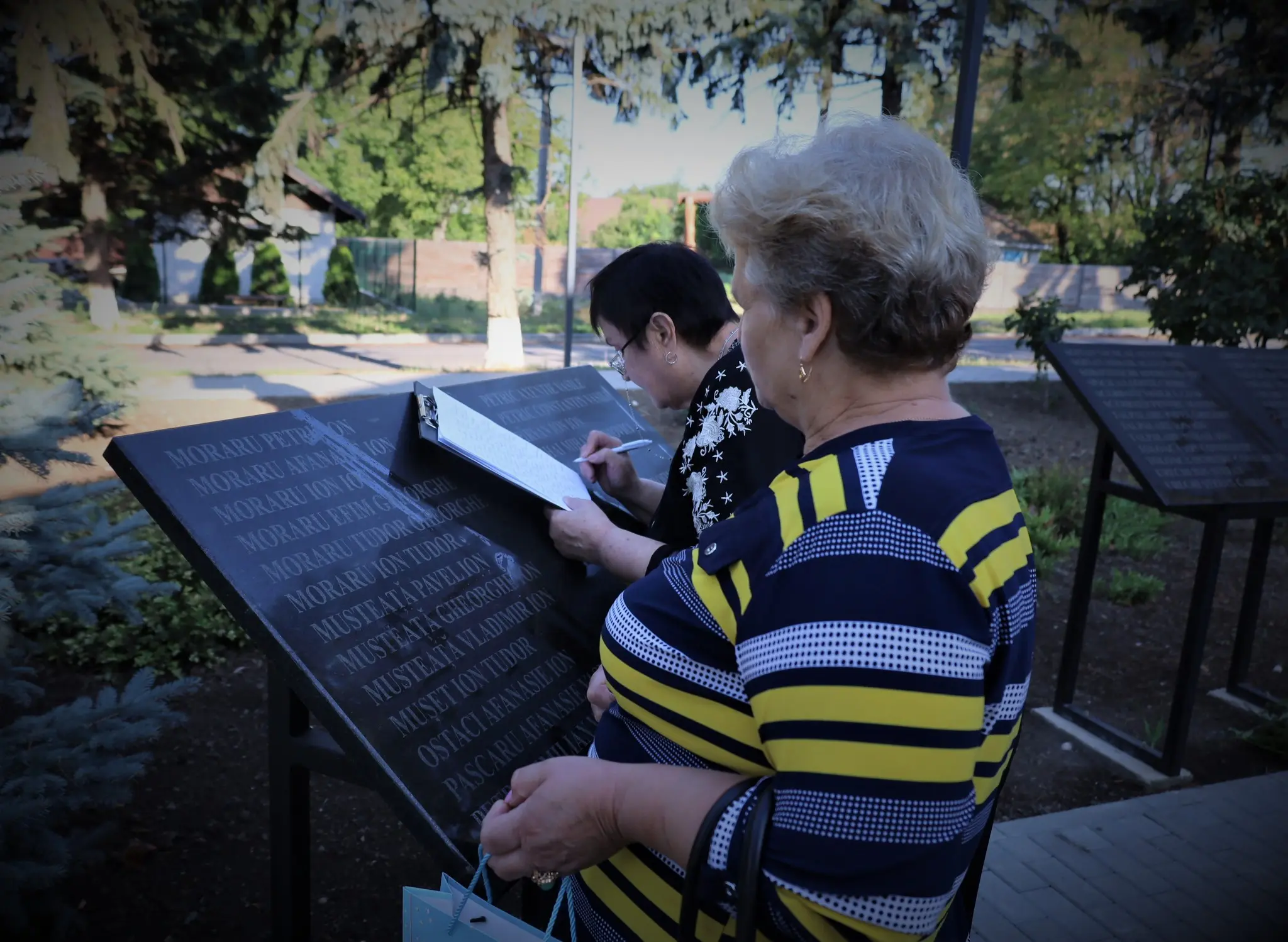
On 29 August, in the centre of the village of Valea Mare in Ungheni district, the Memorial Complex of Heroes and Deportees was inaugurated and consecrated. It is the place of remembrance that grew from the oak cross we wrote about in July — but which has since been transformed into a complex with commemorative plaques, a fountain, lighting, benches and pavement.
The Cross of Memory and Gratitude was consecrated by parish priest Vadim Corostinschi. According to the initiators, the complex commemorates over 130 locals whose destinies were broken by history: villagers who fought in the First and Second World Wars and families deported in 1941 and 1949.
From a private initiative to a public complex
The project originated from the initiative of the Iucal family — Vasile and Angela — and Veronica Fiodorov, a native of the village. The legal basis was laid in October 2024, when the communal council of Valea Mare unanimously adopted (12 votes in favour) the decision to build the monument, with costs covered from the municipal budget.
The project’s vision expanded over time. Mayor Alexei Antoci extended the original initiative — an oak cross, carved by master carpenter Valentin Racoviță — into a landscaped memorial complex: commemorative plaques, a fountain, green space, lighting and pavement. The general project of the complex was designed by architect Victor Vieru, and the cross was designed by architect-engineer Nicolae Starciuc.
The site was chosen in a central location of the village, where a large part of the community passes daily.
Local context
Valea Mare has its own names in the “Book of Memory”, the official catalogue of victims of totalitarianism. At the level of Ungheni district, the catalogue gathers around 2,900 names from over 60 localities. The inauguration at Valea Mare follows the model from Ungheni city, where the annual commemorations on 6 July are held at the Cross of the Nation’s Martyrs — a wooden monument erected in memory of the victims of repression.