

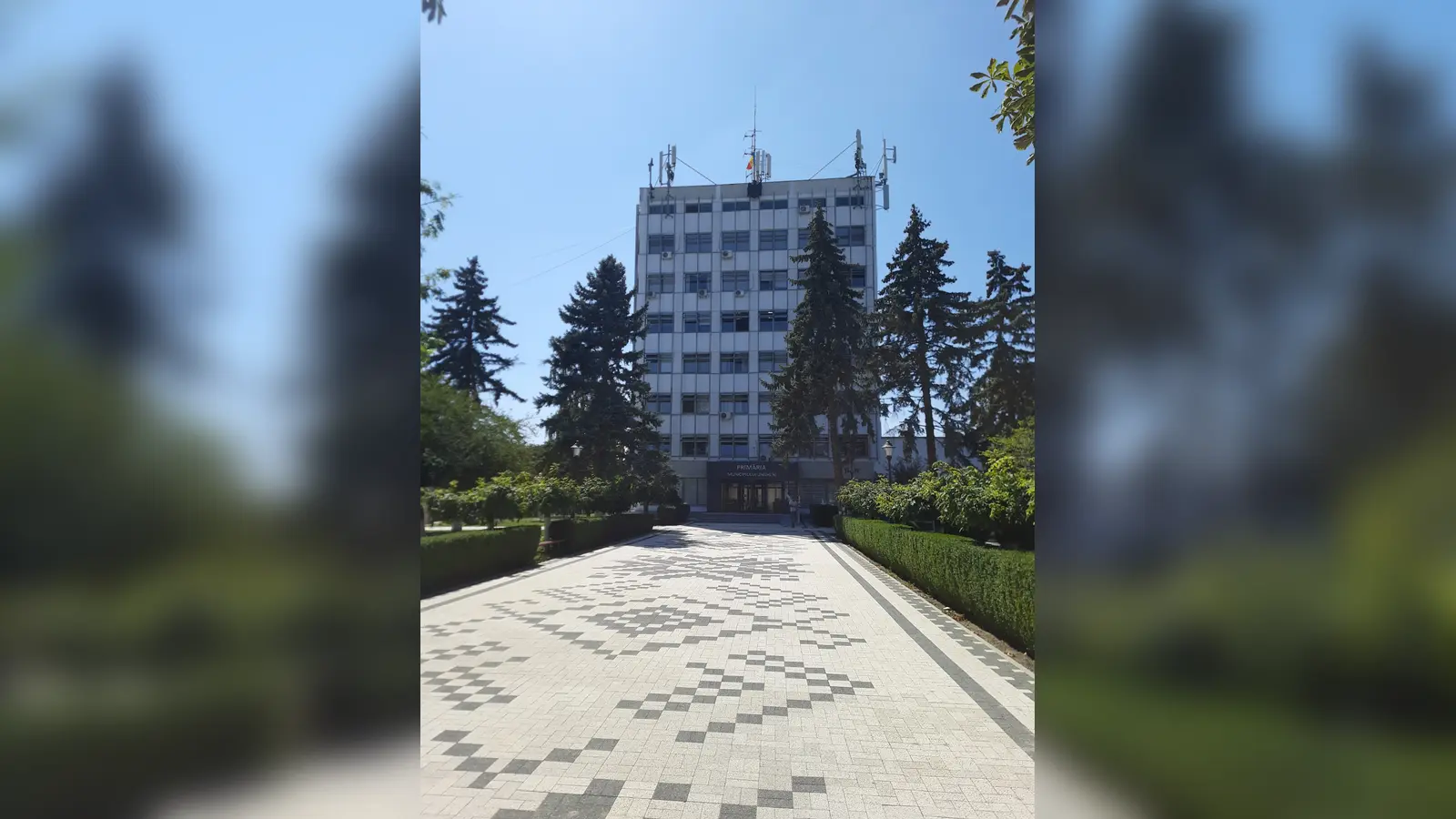
The merger of the ten localities around Ungheni has moved from principle to text. On 2 July, the cluster’s town halls opened a second public consultation on the matter — this time not on the idea of unification, but on the concrete draft decision by which each council is to approve the merger. Residents can send recommendations until 22 July, after which the decisions go to a vote in the councils.
This is exactly the stage we flagged back in June: at the first consultation, in spring, people were asked to weigh in „on principle”, because the text of the decision and its annexes did not yet exist. Now the document has been drafted and put up for debate — a sign that the process is nearing the point at which it becomes irreversible.
Where the document is and how to intervene
Unlike the first round — which we criticised for circulating mainly on Facebook rather than through official channels — the current draft is public on the national decision-transparency platform, particip.gov.md, in the consultations section. The authority indicated as responsible for the process is the commune of Valea Mare, and the document lists all ten units: the municipality of Ungheni, the communes of Zagarancea, Mănoilești, Valea Mare, Morenii Noi and Florițoaia Veche, the villages of Cetireni, Unțești and Costuleni, plus the commune of Brătuleni in the Nisporeni district.
Parallel notices appeared, in the same days, on the pages of the cluster’s town halls — in Zagarancea (where the contact is the secretary, Turețchi Ira), in Costuleni and in Valea Mare. Recommendations can be sent by e-mail, by post or to each town hall in person, until 22 July.
What the acts actually say
In the State Register of Local Acts, the ten localities so far appear only with acts initiating the merger and with the decisions by which they requested the state’s 600,000-lei transfer to prepare the union. A decision approving the merger has not yet been registered by any of them — precisely because it is the object of the current consultation. After 22 July and the councils’ vote, the consolidated file goes to the State Chancellery, which prepares the bill that would give the new town hall legal existence.
In the villages, the first discontent
If criticism until now came mainly from the institutional level — the mayors’ association, CALM, spoke of „deviations from the principles of local autonomy” — the second consultation has also brought out a reaction from below. Under the Costuleni town hall’s post, the most-liked comment compares the merger to Soviet collectivisation: „if you don’t merge, they threaten to cut your funding”, writes the author, who calls on mayors to show „dignity” and not to „jump into the arms of the Republic of Ungheni”. For now, this is discontent at the level of residents’ comments: no mayor or councillor from the ten localities has publicly challenged this consultation.
The comment’s central claim, however — that people are being „threatened” with funding cuts — deserves a cool-headed weighing. Law no. 225/2023 contains no penalty clause for localities that refuse to merge; on the contrary, the state has tripled the incentive for those that do, from 1,000 to 3,000 lei per resident, within a package of about 6.49 billion lei. In other words, the mechanism is a „carrot”, not a „stick”. Yet the sense of coercion rests on real elements: town halls with fewer than 3,000 residents — 23 of 33 in the Ungheni district — have structurally weaker access to funding, and the reform provides, after the 2027 local elections, for a stage of mandatory amalgamation for those left below the threshold. It is precisely this tension — voluntary on paper, heavily incentivised in practice — that we documented at length.
Until 22 July, the decision remains, at least on paper, open to recommendations. Anyone who wants their voice to count for more than a Facebook comment can send it where it will be filed — on particip.gov.md or to the town hall of their own locality.