

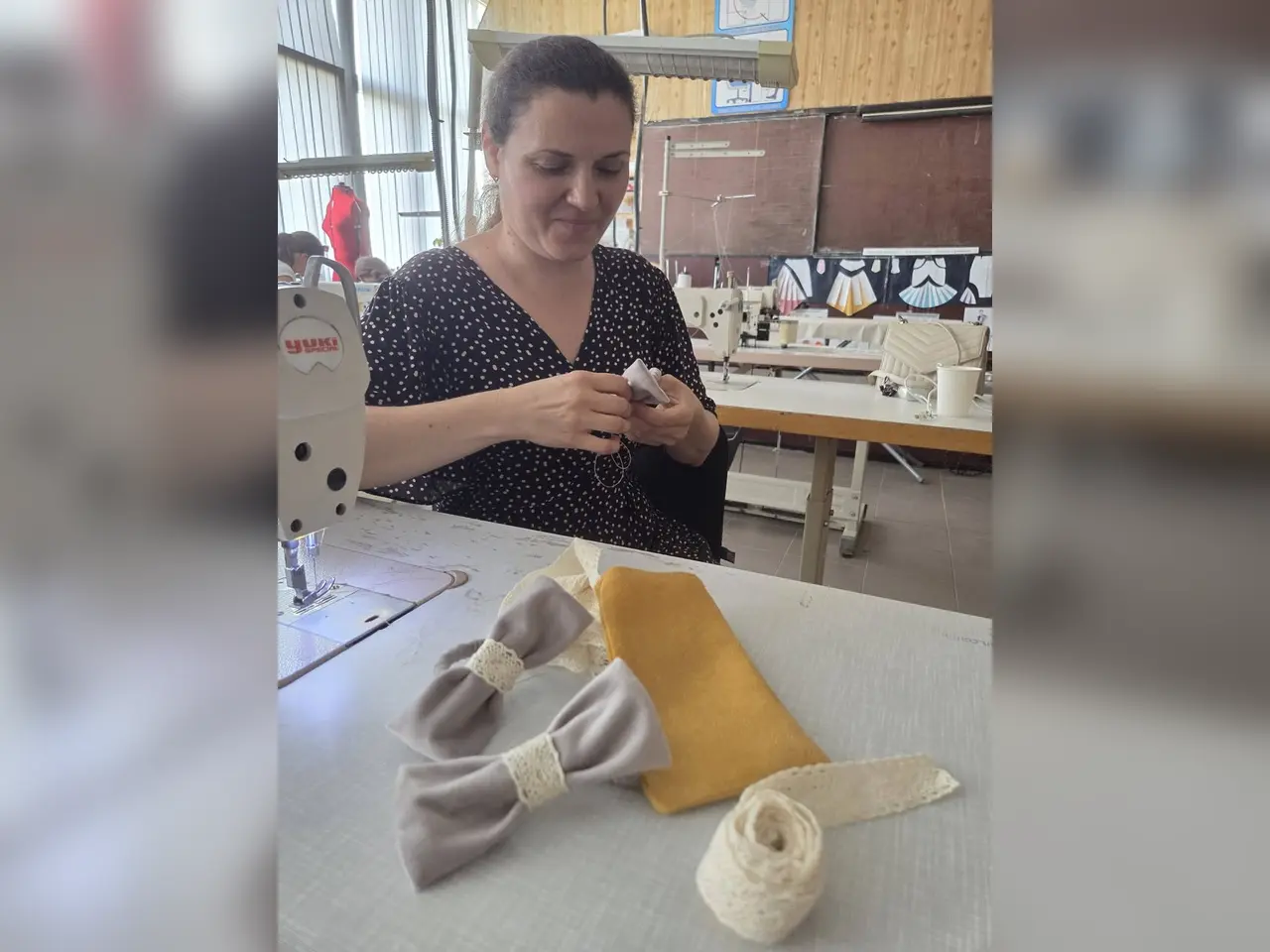
A worn T-shirt, a scrap of fabric left over from cutting, a piece of lace. To many, rubbish. To the students of the Ungheni vocational school, raw material. In May and June, the institution hosted two creative workshops in which participants gave a second life to old clothes, turning them into original pieces, and made objects from recycled materials.
The workshops — titled „Cercul inovativ al tradiției” and „Firul memoriei” — were not a random activity. They were brought to Ungheni by ZIPHOUSE, Chișinău’s creative and fashion-industry hub, as part of the TEX-DAN project, an initiative of the European Interreg Danube Region programme dedicated to circularity in the textile and fashion industry. In other words, a transnational programme about how the textile industry can produce less waste reached, in practice, the workbenches of a district vocational school.
Why it matters for a school that trains tailors
The Ungheni vocational school trains trades linked to textiles and garment-making — its classrooms are, in fact, workshops full of industrial sewing machines. For the students here, upcycling (bringing old clothes and materials back into use instead of throwing them away) is not merely a creativity exercise but a skill increasingly in demand in today’s fashion industry.
Fashion is one of the most polluting industries in the world, and the European Union is pushing the entire sector toward the circular economy — less wasted material, more reuse, products designed to last. A student in Ungheni who knows how to turn an old garment into a new piece is learning exactly the skill her future employers, at home or abroad, will be looking for.
The workshop, beyond the photo
The images published by the school show the concrete result: handmade bows and accessories from scraps of fabric and lace, sewn on the tables of the sewing workshop. „The workshops showed that imagination, skill and care for the environment can go hand in hand,” the institution notes.
For a district vocational school, such a collaboration — with a creative hub from the capital and a European project — is also a form of visibility: it shows that vocational training in Ungheni can be connected to the industry’s big trends rather than cut off from them. The post does not say how many students took part in the two workshops, nor whether the activity will continue in the new school year.