
Less visible than a festival, but more durable, Ungheni found itself a place this spring on the map of international cultural diplomacy. In May the town hosted Moldova’s first caravan of the World Folklore Union, opened an office of the organisation at its Palace of Culture, and signed a twinning agreement with a city in Turkey. The results of these steps have now been presented to the union’s leadership, gathered in Poland — a sign that the ties did not end with the group photo.
What the World Folklore Union is
IGF — the World Folklore Union — is an international organisation that brings together folklore federations and ensembles and runs festivals in dozens of countries. It was founded in the middle of the last century, has offices in France and Italy, and is led, in its current term, by Professor Dorel Cosma, from Bistrița (Romania). Moldova joined the union relatively recently, by vote, on 21 November 2023, in San Giovanni Rotondo, Italy.
The membership did not stay on paper. A year and a half later, Moldova moved from being a new member to hosting an event of the union — and the town chosen to host it was Ungheni.
The May caravan and the office at the Palace of Culture
From 7 to 10 May 2026, Moldova hosted, for the first time, the IGF “José Antonio Viñas” Caravan — named after a Spanish artist and former vice-president of the union. According to the state agency MoldPres, around 30 delegates from nine countries — Austria, France, Israel, Italy, Lithuania, Romania, Spain, Turkey and Ukraine — took part, alongside Moldovan artists.
The programme combined the capital with Ungheni. It included an intercultural meeting at the National Museum of Ethnography and Natural History, talks at the Ministry of Culture and, in Ungheni, two moments with local stakes: the inauguration of an IGF representation office at the Palace of Culture itself, and the Caravan Gala. Implementation fell to the public association “Centrul Artelor Perene”, with the support of the Ministry of Culture and the Ungheni mayor’s office.
For the town, the office at the Palace of Culture is the part that matters in the long run: not a one-evening event, but a permanent address for an international folklore network, hosted by Ungheni’s main cultural institution.
The twinning with Izmit
As part of the same caravan, Ungheni signed a twinning agreement with Izmit, a city in Kocaeli province in north-western Turkey. The decision was not spontaneous: the Ungheni Municipal Council had prepared it through a ruling of 27 March 2026, which approved launching the twinning procedure and empowered mayor Vitalie Vrabie to sign the agreement. That ruling, in turn, drew on a letter of intent signed half a year earlier, on 5 September 2025, during a visit by an Ungheni delegation to Izmit.
The signing itself took place in Ungheni, during the caravan days, around 9–10 May. According to local Kocaeli press, the document was signed by mayor Vitalie Vrabie and Izmit municipal councillor Celal Hülür — not by the Izmit mayor in person — while the Turkish delegation included several councillors and a European-projects specialist.
Izmit is added to an already long list: the number of localities twinned with Ungheni, according to the mayor’s office’s official page, exceeds 20, with partners in Romania, Ukraine and beyond. At the time of checking, the published list had not yet been updated with Izmit, even though the agreement had been signed — an administrative delay, not a reason to doubt the partnership.
The report from Rytro
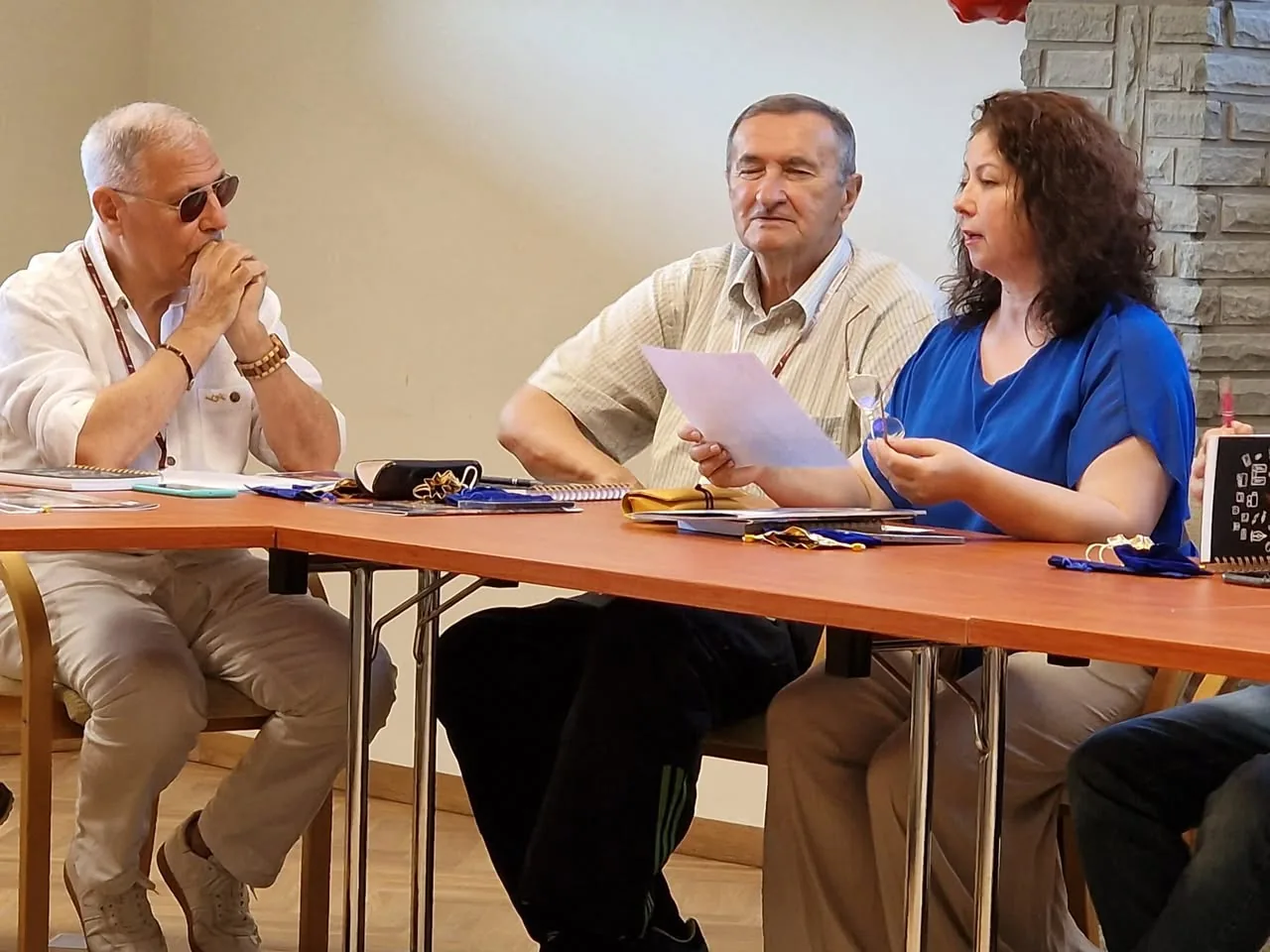
The most recent step took place far from Ungheni. According to a post by Centrul Artelor Perene on 27 June, Silvia Zagoreanu — director of the Ungheni Palace of Culture and Moldova’s representative in IGF — presented the report on the organisation of the caravan to the meeting of the union’s Board of Directors, held in Rytro, Poland. The same post also describes her as president of the “Centrul Artelor Perene” association, which implemented the event.
According to the association’s own account, Zagoreanu thanked the union’s leadership for its trust and described hosting the event as an honour for Moldova and for the municipality of Ungheni. The Rytro meeting and some details of the May programme are, for now, reported only by this source; the core facts, however — the caravan, the office at the Palace of Culture and the twinning with Izmit — are confirmed by state communications and by a document of the Municipal Council.
Beyond protocol, the stake for Ungheni residents is concrete: in a few months, the town turned membership in an international union into a hosted event, a permanent office and a new sister city. For a district cultural institution, that is a rare currency — visibility and contacts that usually remain the preserve of the capital.