

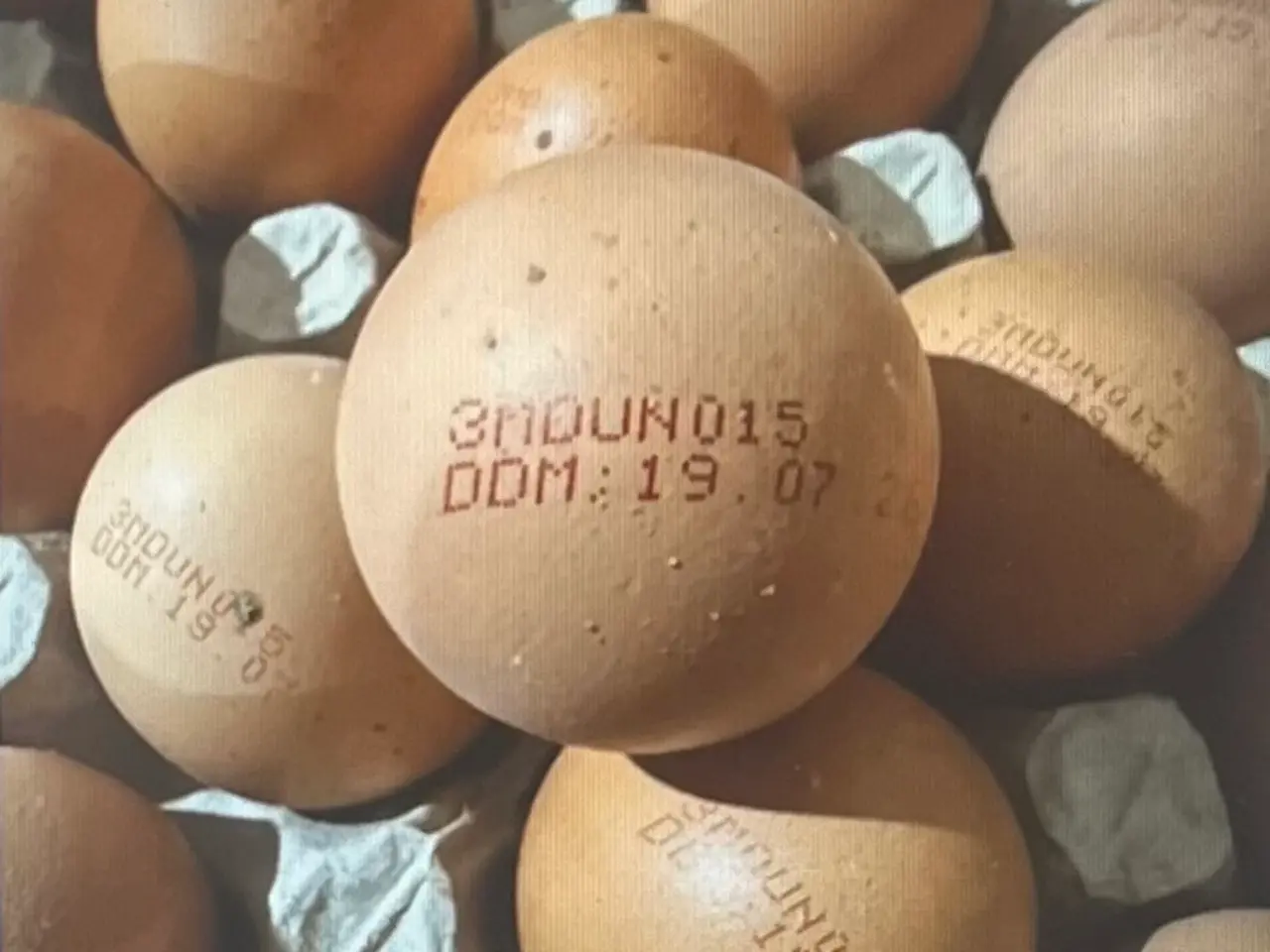
If you have eggs at home bought in the past few weeks, it is worth turning them over and looking at the shell. On 24 June, Moldova’s National Food Safety Agency (ANSA) ordered the recall of a batch of hen eggs for human consumption produced by a farm in Ungheni district, after laboratory tests pointed to a risk of Salmonella contamination.
The producer is DANT-AGRO LLC in the village of Pârlița, and the regulator is urging people not to eat eggs from this batch but to return them to the shop.
What buyers should look for
ANSA has published the markings by which the batch can be recognised. A producer code and a best-before date are stamped on each eggshell and on the packaging. The recall covers eggs:
- with producer code 3MD UN 015;
- with a best-before date: all production dates up to and including 20 July 2026.
If the eggs in your fridge carry this code, the agency’s recommendation is clear:
ANSA recommends that consumers not eat the eggs from the batch in question. People who have bought these products are urged to return them to the shop where they were purchased, on the basis of the receipt or invoice. ANSA, recall notice of 24 June 2026
Why the batch was recalled
According to ANSA, the decision came after Salmonella Typhimurium was detected in droppings samples taken from the laying hens at the producer’s farm. In these conditions, the agency says, there is a risk that the eggs from that batch are contaminated too. The recall is therefore a precaution: it does not mean every egg in the batch is infected, but that the danger cannot be ruled out, and the authority prefers to take the product off the shelves.
ANSA says it is monitoring the removal of the eggs from retail networks.
How dangerous Salmonella is
Salmonella is one of the most common causes of food poisoning, and eggs and poultry are its classic sources. The illness shows up as fever, abdominal pain, nausea, vomiting and diarrhoea, usually one to three days after eating the contaminated food. For a healthy adult it generally passes on its own; the real danger is to young children, the elderly and people with weakened immunity, in whom dehydration and complications can be serious.
The risk is not theoretical. A study published in the journal One Health & Risk Management shows that between 2004 and 2022 salmonellosis hit Moldova with an average incidence of about 28 cases per 100,000 inhabitants a year — but nearly five times more often among children under two. And the type now found in Pârlița — Salmonella Typhimurium — was behind a quarter of the country’s salmonellosis cases in 2022.
Not the first time at the same farm
For DANT-AGRO LLC this is not the first such alert. In November–December 2022, ANSA ordered a practically identical egg recall from the same farm in Pârlița, also over Salmonella. Back then the code on the packaging was “MD EPC UN 15”; the egg-marking format has since changed, and the producer now appears under the code 3MD UN 015 — one more reason to look at today’s packaging, not an old label.
This is context, not a verdict: such checks are carried out periodically at all producers, and Salmonella in laying hens is a widespread problem that the authorities manage through exactly this kind of recall. In the same period, ANSA also announced the recall of an egg batch from another producer, in the south of the country, over a related bacterium.
DANT-AGRO is, in fact, a district-scale producer — a farm with about 91 employees, not a smallholding at the edge of the village. As of publication, the company had not issued a public response to the recall.
What you can do now
This is a farm in Ungheni district, whose eggs naturally reach local tables and shops first. The practical message is simple: look at the packaging or the shell; if you find the code 3MD UN 015 and a best-before date up to 20 July 2026, do not eat the eggs and take them back to the shop where you bought them, with the receipt. For a complaint or a query, ANSA has a green line at 0800 800 33 and a consumer line at 022 511 511.