

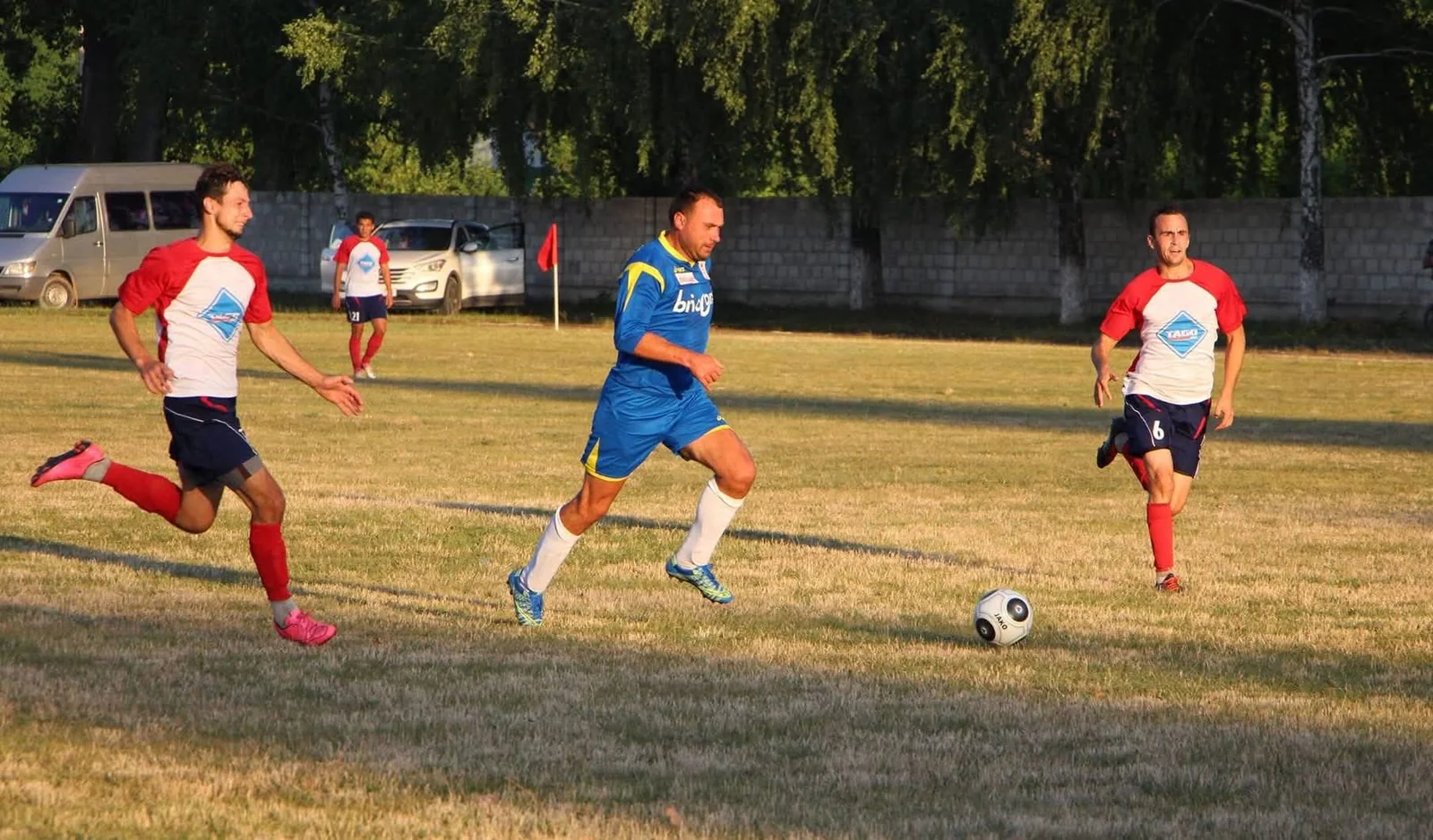
A former player of the town team returned to the football he grew up in not with a statement, but with a bag of kit. Eugen Șarpațchii donated 12 training bibs and 16 pairs of boots to the girls of the Măcărești football team and gave 2,000 lei to FCM Ungheni’s U11 and U12 children’s groups. The club announced it on 3 July on its official Facebook page.
It is the kind of gesture that never shows up in the standings, yet keeps youth football in the game: boots and bibs for a girls’ team with a national record, and money for the youngest players of the town academy. The club publicly thanked him for his „generosity, involvement and for staying close to the Ungheni football community”.
Gestures like this inspire, and show that a passion for football goes beyond the pitch. FCM Ungheni, official page
A player from the class of 2002–2003
Who is the donor? Eugen Șarpațchii is a native of Ungheni, and he is listed — in a slightly different spelling, „Șarpațchi” — in the town team’s 2002–2003 squad, then called FC Spartac Ungheni and playing in the „B” Division. It is the same structure that, after a string of renamings, is today called FCM Ungheni and plays in Liga 1, the second tier of Moldovan football, under coach Dorin Bambuleac.
That it is the same man is confirmed by his former teammates themselves: under the donation post, names from that squad of more than two decades ago — Cristian Jardan, Vasile Codreanu — welcomed his gesture. It is a sign that this generation of footballers has stayed close to the club and is now helping those who come after them. The club presents him as the „former player” who „continues to support the development of football at the local level”.
The Măcărești girls, a team with a national record
The destination of the donation says the most. Măcărești, a commune in the Ungheni district, has a girls’ football team that plays at national level — and not as an extra. This spring, the „Elada” high school team from Măcărești won the Centre regional stage of the national „Speranța” tournament (for girls born in 2014–2015) and reached the final stage, played at the Zimbru stadium in Chișinău — a result few teams in the country, urban or rural, achieve.
The Măcărești girls are the tip of a pyramid built over recent years. At its base is the UEFA Playmakers programme, which in 2025 brought football to more than 1,000 girls aged between 5 and 8, in 23 centres across Moldova — one of them in Măcărești, another in the town of Ungheni. Then come the national age-group tournaments, such as „Speranța”, and the girls’ youth championship, which last year gathered 20 teams from four regions of the country. It is a young but fast-growing circuit, in which a district school’s team can reach the national finals.
What a pair of boots actually changes
For a youth club, a donation of kit is no small thing. Women’s football here is a young discipline, which relies largely on the enthusiasm of coaches and on small budgets; a pair of children’s football boots costs, in Moldovan shops, from a few hundred to more than 2,000 lei. Those 16 pairs and 12 bibs mean, even at modest prices, several thousand lei — that is, the difference between training with whatever is at hand and taking the field kitted out like a serious team. And here the support goes to a project that is already delivering.
The money, to the youngest in town
The second part of the donation — the 2,000 lei — went, according to the club, to FCM Ungheni’s U11 and U12 groups, that is, to the children’s core of the town club’s academy. These are the same age groups from which, years later, the senior side is fed — the team that in May narrowly missed promotion to the top flight and starts its new season in Liga 1 on 31 July.
The donation changes no standings and makes no sensational headlines. But it does something small budgets rarely manage: it puts boots on the feet of children who want to play, and bibs on the shoulders of girls who carry the name of Măcărești all the way to the national finals. A former player, a handful of old teammates gathered around the same club, and a generation of girls and children just starting out — all on the same pitch.