
The railway project Ungheni has been following for months has moved from paper to procedure. Romania’s national railway has published, in the Electronic Public Procurement System (SEAP), the contract notice for the design and construction of the electrification of the Iași–Border line — exactly the step our explainer a week ago flagged as the «next» one, noting that the date of the tender was not yet public. Now it is.
The notice, registered under the number CN1093934, was published on 29 June by CFR’s Iași Regional Railway Branch. The contract put out to bid is a «design and execution» one: the same contractor first draws up the technical design, then carries out the works. The deadline for bids is 5 August 2026, 15.00.
What is actually being put out to tender
The object of the contract is the full electrification of the Socola–Ungheni section — about 23.4 kilometres on the Romanian side, from the Iași railway node to the Prut — plus a series of «light modernization» works: removing speed restrictions by replacing the track structure (rail, fastenings, sleepers, ballast), changing the switches, rehabilitating the station platforms and the bridges, culverts and level crossings along the route.
The schedule set out in the documentation is 9 months for design and 18 months for the execution of works, with a 60-month guarantee — hence the total contract duration of 89 months, which also includes the guarantee and closure periods.
Two figures that seem to clash — and why they don’t
Anyone who has followed the subject will have seen two different sums. The Government in Bucharest approved, on 18 June, techno-economic indicators of about 495.3 million lei; the tender notice now speaks of 289.55 million lei excluding VAT. This is not a contradiction: the first figure is the total investment on the Romanian side — with VAT, with design, supervision and contingencies — while the second is strictly the estimated value of the contract put out to bid. Both refer to the Romanian side of the project.
The money comes in equal shares: half from a European grant through the «Connecting Europe Facility» programme, half from the Romanian state budget. The tender documentation confirms, in black and white, what was the stake for Ungheni from the start: the financing came as the result of a joint Romania–Republic of Moldova application, submitted under the project name «IUBorder» — that is, Iași–Ungheni Border.
The Moldovan side, still at the documentation stage
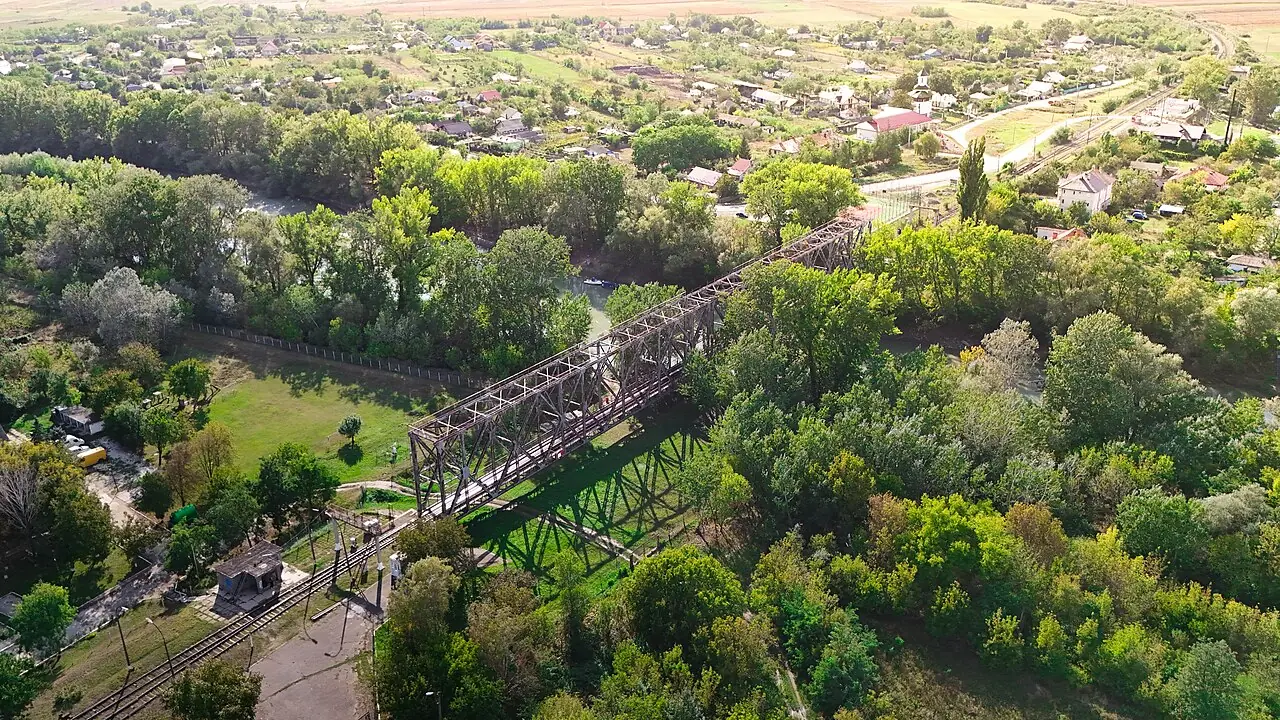
The tender published now covers only the right bank of the Prut, up to the border. On the Moldovan side, things are further behind: Moldovan Railways was, at the end of June, at the stage of technical expertise of the «Eiffel» bridge and of preparing documentation to European standards. The Moldovan part of the investment — around 7.2 million euros for the bridge and for about 2 kilometres of catenary in the area of the Ungheni station — is much smaller than on the right bank. A separate tender, on the territory of the Republic of Moldova, was announced by officials as due to follow «in a few days», but at the time of writing it had not yet been published.
There also remains the common-sense caveat, valid for any large infrastructure project: a published tender means neither a signed contract nor machinery on site. After 5 August come the evaluation of bids, any challenges, and only then the award — and only after that do the nine months of design and the eighteen of works begin. The old calendar, which spoke of works starting as early as the summer of 2026, has already slipped.
With these reservations, the meaning of the 29 June step nonetheless remains clear: the line that will bring, for the first time, electric current to the rails on the Moldovan side has officially reached the builders’ table. And its eastern end is at Ungheni.