

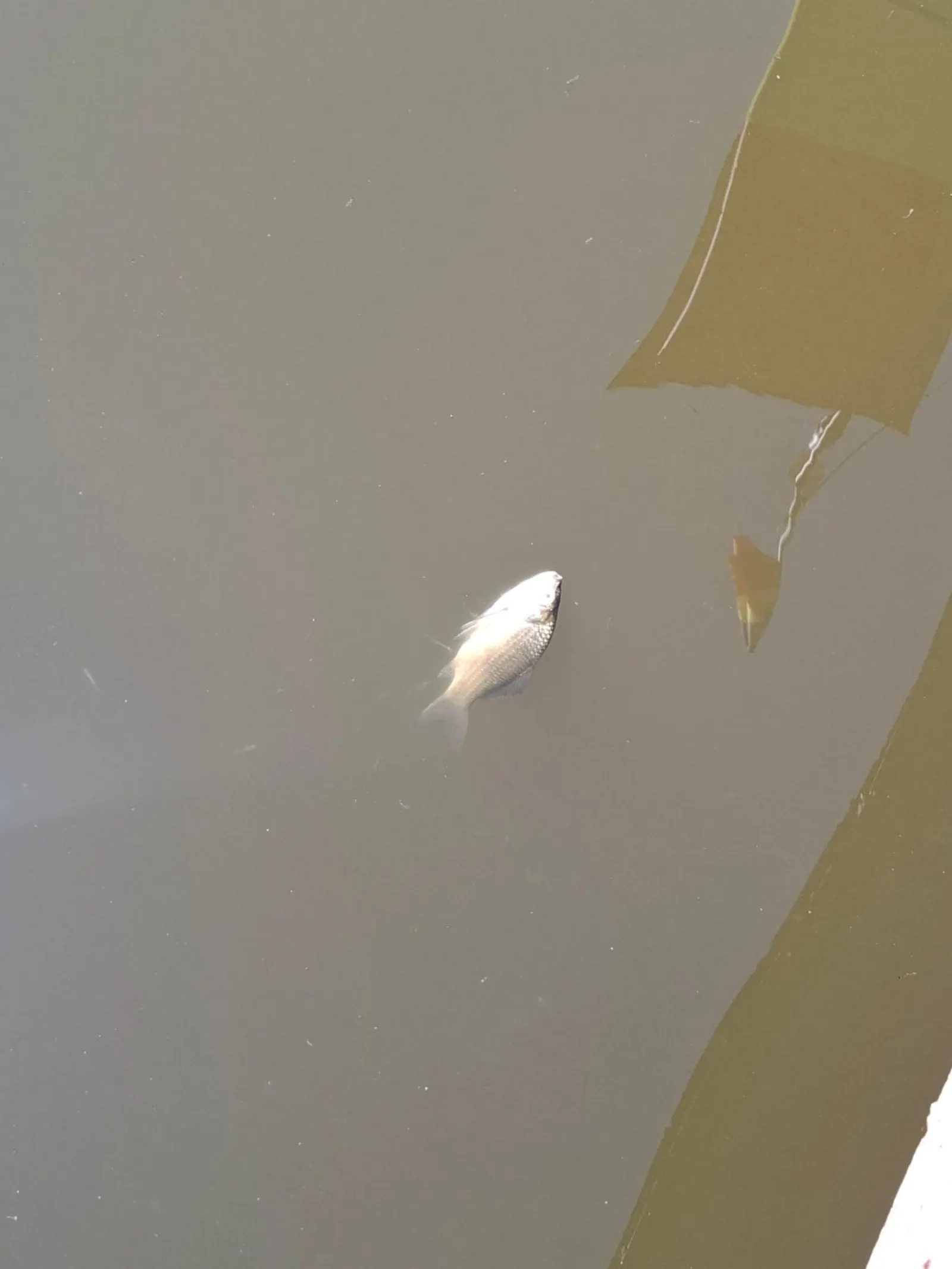
In early August, a fish die-off occurred in Lake Delia in the municipality of Ungheni: images showing hundreds of dead fish floating on the surface circulated on social media and caused concern. The phenomenon came after the yellow-code heatwave days, from 1 to 3 August — temperatures above 33 degrees — and against the backdrop of a severe hydrological drought. The explanation environmental specialists give for such situations is a shortage of dissolved oxygen: in intense heat and low water, the oxygen in the water drops below the threshold at which fish can still survive. The exact cause is to be established by the Environmental Protection Inspectorate.
On the shore of the same lake, the municipal beach has been open since 21 June, with lifeguards, and has not been closed by any document up to the time of publication. Through an order of 5 June, the mayor of Ungheni municipality, Vitalie Vrabie, opened the summer season, with developed beaches on the Prut and on Lake Delia, with lifeguards provided by the Ungheni Maintenance Sector. At the newsroom’s request, the Ungheni Public Health Centre responded, on 5 August, with exactly the opposite:
the Lake Delia recreation area has no sanitary operating permit Ungheni Public Health Centre, response no. 06-3/514 of 5 August 2026
In the same response, the institution states that “in the 2026 summer season not a single water sample was taken from Lake Delia” and that its recommendation “is that swimming in Lake Delia be banned” — because, “historically, the water quality of this basin has not met the sanitary requirements for bathing waters, swimming having been banned in every previous season.”
As for the dead fish, the territorial subdivision of the National Food Safety Agency (ANSA) in Ungheni responded categorically, in less than an hour from the request:
the recommendation is categorical: it must not be consumed in any form, because of the major risks of poisoning and contamination Ungheni Territorial Subdivision for Food Safety, 7 August 2026
The institution adds that the basin “is not registered for sanitary-veterinary purposes” and recommends that the public “not harvest and not consume fish from this lake.”
What the law says about a beach. The Regulation on recreation areas, approved by Government Decision no. 737 of 2002 and in force, requires a bathing area to have a sanitary operating permit, and the public health centre to take samples at least monthly during the season. A new regulation, transposing a European directive, was approved by the Government on 29 July 2026 — five days before the fish die-off — but only enters into force in six months, and the first classification of bathing waters will be carried out at the end of the 2029 season. For this summer, it does not apply. One thing must be said plainly: a fish die-off is not, in itself, a legal basis for closing the beach. But nor does it say the water is safe — and on water safety, the only document from 2026 is the Public Health Centre’s response, which finds that there is neither a permit nor samples.
After the fish died, two of the institutions asked each say they took no samples: the Public Health Centre, because it was not requested to — “sampling is carried out on the basis of a request/application, and no application has yet been submitted”; ANSA, because it “was not notified through an official alert regarding the fish die-off.” The Environmental Protection Inspectorate, which would have jurisdiction over the cause of the die-off, had not responded by the time of publication — the legal deadline for our request expires on 25 August.
Ungheni municipal town hall, which has managed the lake since 2024 and owns the beach, was asked by the newsroom, on 7 August, on what basis the beach remains open without a sanitary permit, whether it had been informed by the Public Health Centre and whether it intends to suspend swimming or to post warnings. As of publication, the town hall had not responded. A separate request for information of public interest, sent on 4 August, has a legal deadline of 25 August.
Ungheni has two municipal beaches: the one on Lake Delia and the one on the Prut river. Unlike Delia, the beach on the Prut is included in the water-monitoring calendar approved for 2026, according to the Public Health Centre. The laboratory results for this season had not been communicated by the time of publication. Until then, the only official recommendation about Lake Delia is that of the Public Health Centre: that swimming be avoided.
The context gives the measure of the stakes. The town is investing 5.8 million lei in developing the promenade of the same lake, in a project co-financed with Cluj-Napoca. The lake, of about 100 hectares, passed in 2024 from state ownership to the management of the municipality. And this summer, Moldova has recorded 18 people drowned since the beginning of the year, with only about 19 beaches with lifeguards across the entire country, according to IGSU data. The practical question of a person who wants to cool off remains a single one: can you still swim in Lake Delia. The public health institution’s answer, for now, is no.
This news report is based on the official responses of the Ungheni Public Health Centre (no. 06-3/514 of 5 August 2026) and of the ANSA Ungheni territorial subdivision (7 August 2026), archived by the newsroom; on the mayor’s Order no. 152-02/1-7 of 5 June 2026; on the Regulation on recreation areas (Government Decision no. 737/2002) and the new regulation approved on 29 July 2026; on IGSU data. The number of dead fish was not officially communicated by the time of publication; the figure reflects the images that appeared in the public space, and the scale and cause are to be established by the Environmental Protection Inspectorate. Ungheni municipal town hall and the Environmental Protection Inspectorate were contacted; they did not respond by the time of publication, and the legal deadlines of the information requests expire on 25 August 2026.