
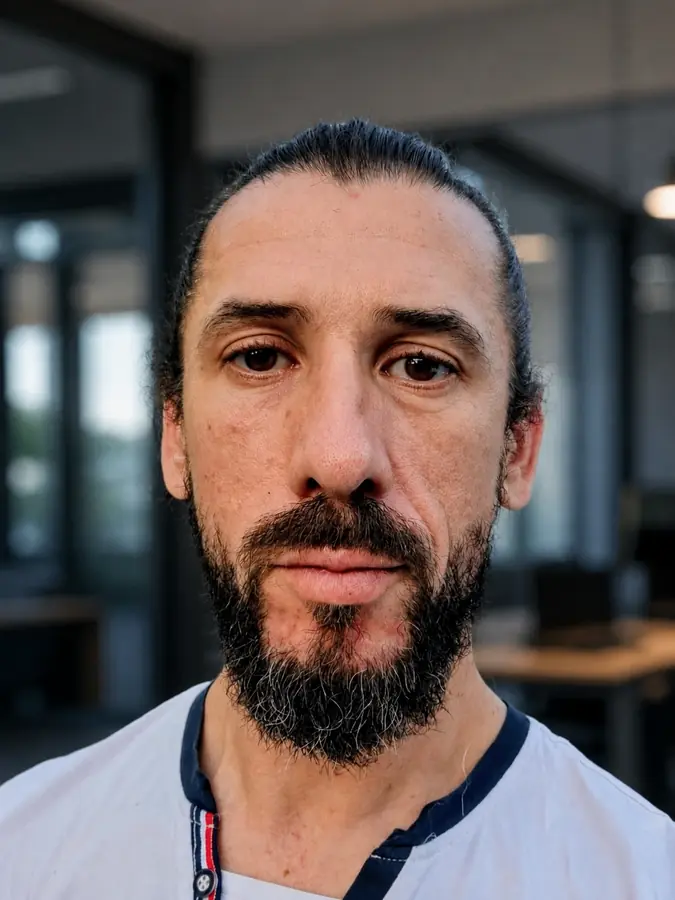
On Thursday, 25 June, the “Dimitrie Cantemir” Library in Ungheni opens a photo exhibition that links two views of the same village, 95 years apart. One belongs to Iosif Berman, the photographer who accompanied, in 1931, the most famous scientific expedition in the history of Romanian sociology. The other is by Vasile Șoimaru, a son of the village, who retraced the path in 2026. The village is Cornova — today a commune in Ungheni district.
The summer 55 scholars “read” a village
In the summer of 1931, sociologist Dimitrie Gusti brought his team across the Prut. Cornova became the seventh village studied monographically by the Bucharest Sociological School and the first Bessarabian village examined this way. For a few weeks (25 June – 13 August, by some sources 26 June), about 55 researchers — sociologists, ethnographers, jurists, doctors, musicologists, architects — measured, recorded and photographed everything: the household, the family, customs, the economy, faith.
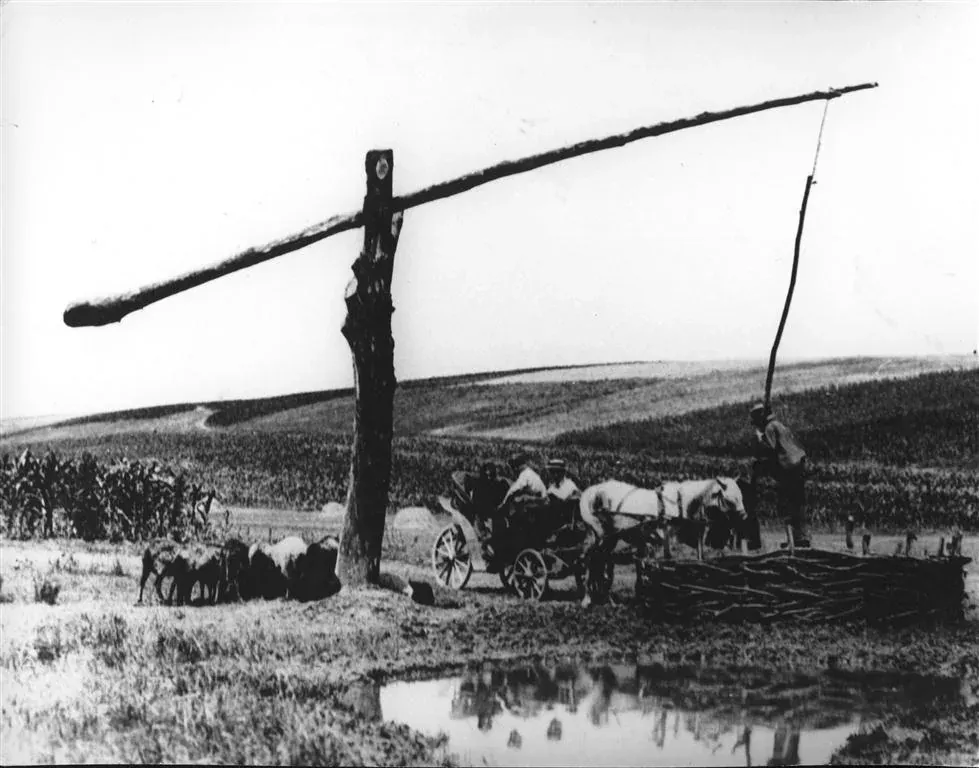
A sweep well at Cornova, in the summer of the 1931 monographic campaign — the kind of image Gusti’s team gathered alongside its notes and measurements. Photo: Iosif Berman, Cornova, 1931 (public domain) · reproduced from Cooperativa Gusti.
It was no accident. Gusti was looking for a village marked by “more than a century of tsarist administration,” to see what was left of the Romanian rural world after a century of foreign rule. Here the young Henri H. Stahl formulated the idea of “social archaeology,” and names that would go on to define Romanian sociology — Anton Golopenția, Mircea Vulcănescu, Traian Herseni, Xenia Costa-Foru, Mihai Pop — did their fieldwork apprenticeship.
Cornova’s full monograph did not appear between the wars. What remained, however, were 12 studies published in the “Archive for Social Science and Reform” (volume X, 1932) and a 1931 documentary film — an archive that another Cornova native would bring back to light much later.
The man with a thousand eyes
The images that are now the subject of the exhibition bear the signature of Iosif Berman (1892–1941), nicknamed “the man with a thousand eyes.” He was the official photographer of Gusti’s campaigns and is considered the first professional of Romanian ethnographic photography, as well as the most-published Romanian in the interwar National Geographic. Gusti acknowledged his role plainly — without the photographer, the fieldwork was left without a face.
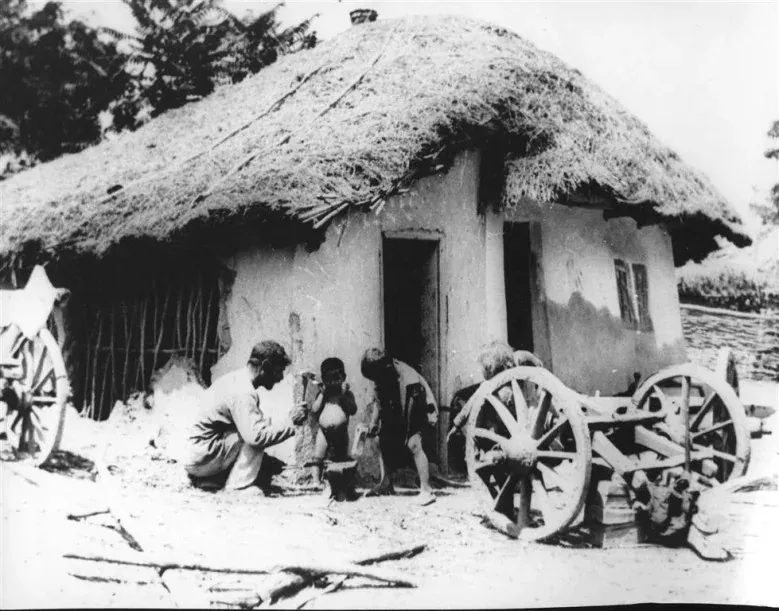
A Cornova household captured in 1931: a wattle-and-daub house with a thatched roof, barefoot children and a cart with wooden wheels — the very world Berman fixed on film. Photo: Iosif Berman, Cornova, 1931 (public domain) · reproduced from Cooperativa Gusti.
Berman’s fate was cut short brutally: after the 1940 antisemitic laws, his studio was confiscated, and he died in 1941. His negatives survived, however, through archives, and Cornova made him an Honorary Citizen.
A son of the village who retraced the path
The link between 1931 and 2026 is named Vasile Șoimaru — an economist and photographer born in Cornova in 1949, a former MP and ASEM vice-rector. He initiated and coordinated the collective monograph “Cornova” (2000) and, above all, the volume “Dimitrie Gusti and his collaborators. Cornova 1931” (2011, 852 pages, produced together with Marin Diaconu and Zoltán Rostás), which gathered the scattered materials of the campaign.
In Ungheni, Șoimaru sets his photographs of today beside Berman’s — a dialogue across time about how the village looked and how it still looks. He is also the event’s organizer.
A small village with a large legacy
Today’s Cornova is a village in decline. At the 2024 census, the commune numbered 599 residents, down from 968 in 2014 — a fall of nearly 38% in a single decade. The thinner the real village grows, the more its memory weighs: on 6 May 2026 a bust of Dimitrie Gusti was unveiled at Cornova, a sign that the anniversary year is being marked at home, not only in books.
One historical nuance is worth stating, to avoid anachronism: in 1931, Cornova belonged to Orhei county, not to Ungheni. Later administrative reorganizations brought it into Ungheni district — so “Cornova ungheneană” (Ungheni’s Cornova) is a present-day, correct framing of a village that, in its day, had a different address.
What can be seen on 25 June
The event at the “Dimitrie Cantemir” Library begins at 10.30. Besides the photo exhibition, the program announces the screening of two documentary films about Cornova — from 1931 and 1991 — and of television programs about the village, among them a contribution by Paula Popoiu, director of the “Dimitrie Gusti” National Village Museum in Bucharest, about the academician who put Cornova on the map of science.
For the people of Ungheni district, the story has a simple stake: a village in the district entered, 95 years ago, the sociology textbooks of an entire country. On 25 June, that story comes home — on the walls of a library, in black-and-white and in color.
The historical data come from academic sources on the Cornova campaign (Cooperativa Gusti, Romania Sociala, Historia.ro) and from Dimitrie Gusti’s official biography (the Romanian Academy); the figures on the village’s population are from the National Bureau of Statistics (the 2014 and 2024 censuses). The details of the 25 June event come from the organizer’s public announcement, Vasile Șoimaru; at the time of writing, the host library had not published its own announcement. The exact start date of the 1931 campaign differs between sources (25 or 26 June). The historical photographs in this article are by Iosif Berman (Cornova, 1931) and are in the public domain, reproduced from Cooperativa Gusti (Florentina Țone’s article on the Cornova campaign).