
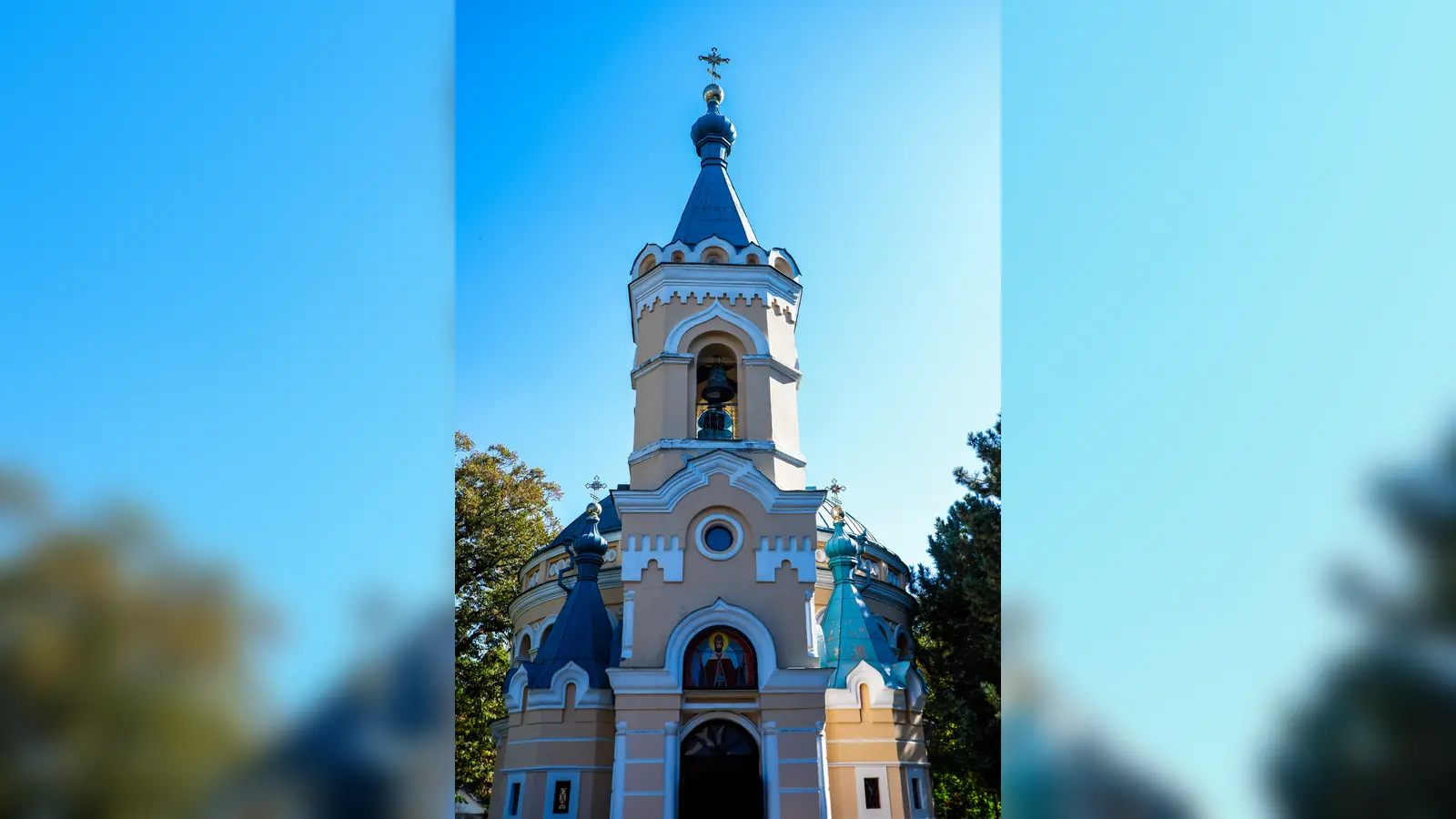
Today, 2 July, marks 195 years since the birth of Alexander Bernardazzi — the man who gave Ungheni one of its most beautiful buildings: the “St. Alexander Nevsky” Cathedral, the jewel in the city centre. The City Hall marked the anniversary with a post from its “Getting to know our city” series. It is worth learning who the architect behind the cathedral really was — along with one correction and a few curiosities.
A 19th-century master
Alexander Bernardazzi was born on 2 July 1831 — not in Saint Petersburg, as is often stated (including in the City Hall’s anniversary message), but in Pyatigorsk, in the Caucasus. He came from a dynasty of architects of Swiss-Italian origin, hailing from Ticino and settled in the south of the Russian Empire; his connection to Saint Petersburg comes from his membership in the architects’ association there, not from his place of birth.
He was Chișinău’s chief architect for more than two decades, from 1856 to 1878, and signed dozens of projects that still define the city today: the City Duma building (today’s Chișinău City Hall), the “St. Panteleimon” church, the water tower, the girls’ gymnasium. After 1878 he worked in Odessa, where his signature is on, among others, the old railway station and the Stock Exchange building. He died in 1907 and, at his own wish, was buried in Chișinău.
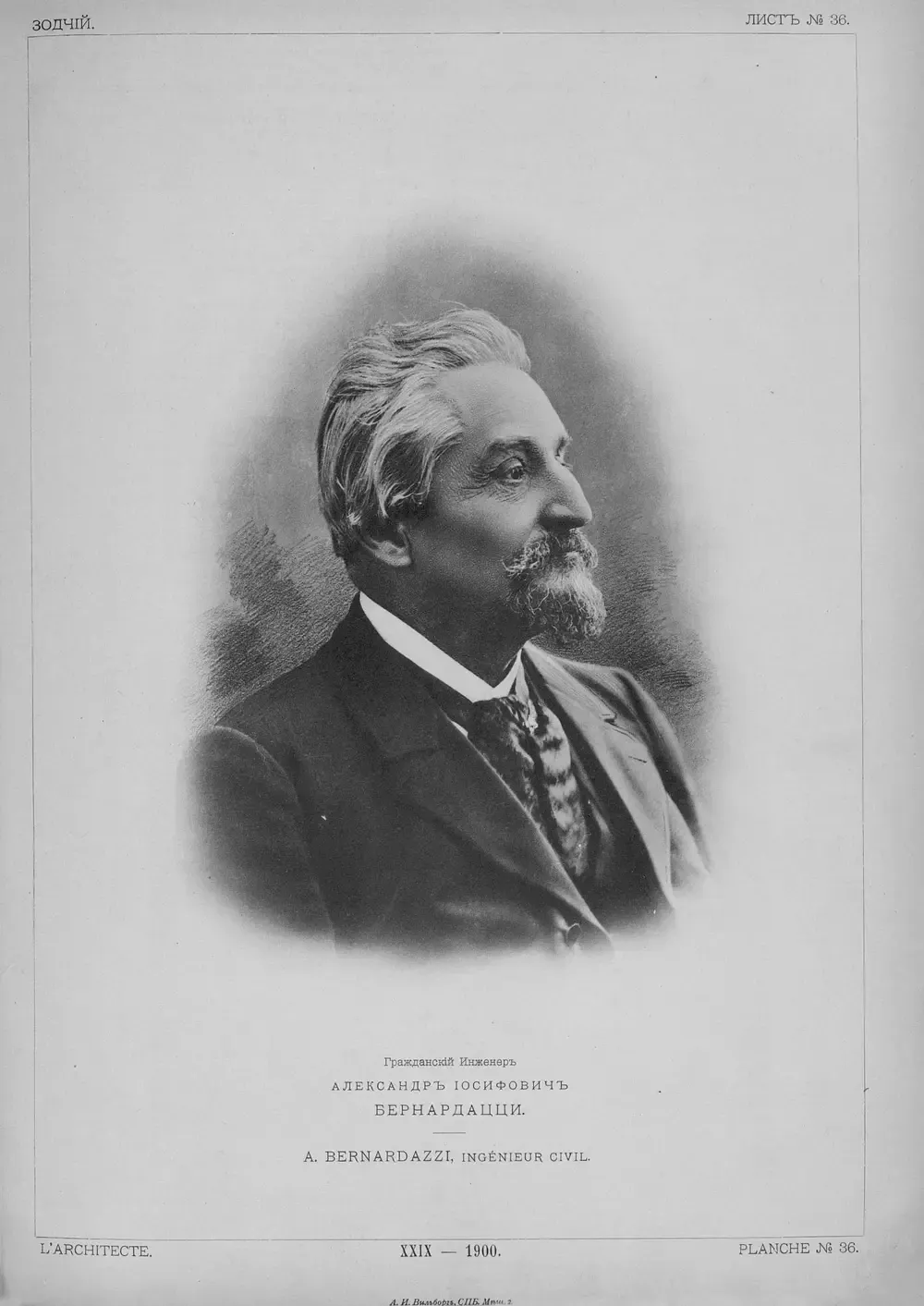
Alexander Bernardazzi, in a portrait published by the “Zodchy” architecture magazine in 1900 (public domain).
The cathedral he designed “as a gift”
In the early 20th century, when the Ungheni community wanted to build a church worthy of it, Bernardazzi — already settled in Odessa — answered the construction committee’s call and donated the design of the future church. The foundation stone was laid on 30 August 1903, and the building was put into use in the summer of 1905; it was consecrated in 1906 by Bishop Vladimir of Chișinău and Hotin. Built in the Byzantine-Russian style, the cathedral has remained, as the City Hall also puts it, “a true architectural jewel”.
The building lived through a turbulent century. On its site, in 1877, the imperial manifesto declaring war on the Ottoman Empire was read out before Russian troops. During the Soviet period, the building was turned into a museum and even a gym, and religious life resumed only in 1991. Since 3 April 2011, the church has held the status of episcopal cathedral, as the seat of the Diocese of Ungheni and Nisporeni, established in 2006.
One street, two architects
“Exactly 100 years after the completion of the church, the architect returns to Ungheni,” the City Hall notes: on 21 October 2005, the City Council decided that one of the town’s streets would bear the name of Alexander Bernardazzi.
Here comes the most amusing curiosity. According to the City Hall, the street — an artery of the Tineretului district, built in the 1970s — initially bore the name of another great Bessarabian architect, Alexey Shchusev. Born in Chișinău in 1873, Shchusev designed, among much else, the Mausoleum on Red Square in Moscow. And so a single street in Ungheni links two heavyweight names in architecture: the one who gave the town its cathedral and the one who signed one of the best-known monuments of the 20th century.
From the City Hall’s account we also learn that the street was refurbished in 2013 with support from the Social Investment Fund of Moldova and the City Hall, and that along it stand one of the city’s largest kindergartens, “Andrieș”, as well as the oldest farmers’ market in Ungheni. These details belong to the City Hall’s archive and could not be separately verified with a primary document — so we present them as such.