
On 8 July, when Nicoleta Cojocaru stepped onto the top of the podium at the Youth World Championships in Colombia — three gold medals and two world records — the official statements spoke of the federation, of the ministry and of the coach in Chișinău. Under the announcement we published, a reader asked a single question: “But why is Mr Gheorghe Gorencu not named?”
He was right. And the answer is not a footnote: it is a story that the state’s own documents confirm line by line.
A garage up for sale
Gheorghe Gorencu was born and lived in Unțești — a village that today has 1,127 inhabitants (2024 census). He was a construction engineer, a graduate of the Polytechnic Institute, from a family of craftsmen: his grandparents had built churches and painted icons.
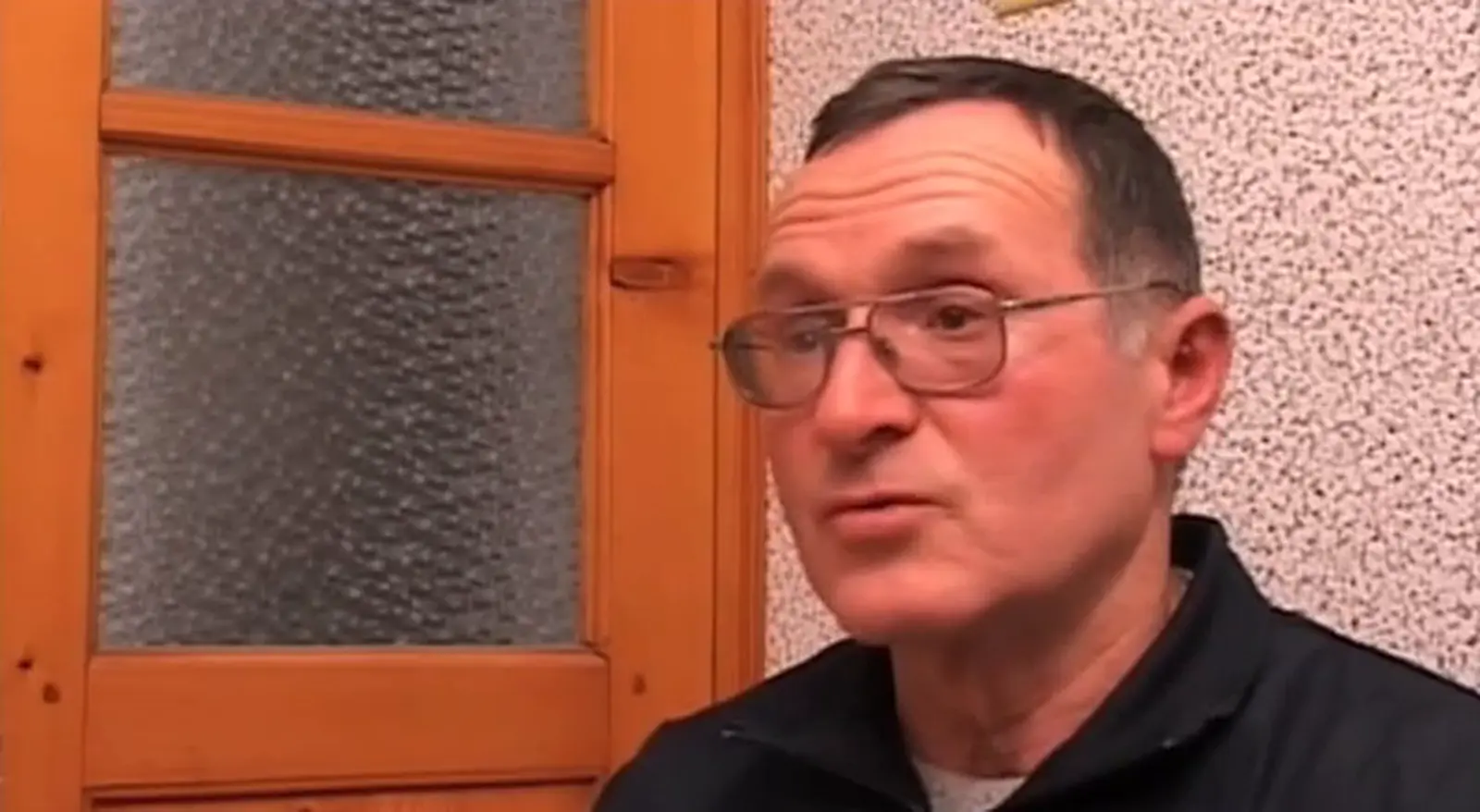
The love of iron came from childhood. “My father was a blacksmith. He always took me along to work. (…) That sound, the clang of metal, drew me in from childhood,” he said in a television report filmed in Unțești in February 2017. He had no barbell, so he made one: “In sixth grade I did not know what a barbell looked like. I would put two buckets of sand on a pipe.”
He took up wrestling, then weightlifting in Chișinău. He competed in the 75-kilogram category. In the 1980s he was a construction-site manager in Ungheni and, after work, trained children for competitions. In 1987 he was appointed director of the sports school in Pârlița — four disciplines, weightlifting among them.
Then came the transition. The collective farms were dissolved and village sport was left without money. The coach became unemployed and went abroad to work: Russia, Czechia, six years in Spain.
He came back with the money he had earned there. And when a former garage went up for sale in the village, he bought it.
When the chance came up, that a former garage was being sold here, not far from us (…) I said I would buy it. I will make an athletics gym. Gheorghe Gorencu, 2017
The 2017 report ended like this: his grandparents and great-grandparents had built churches and monasteries; he built a weightlifting gym and was trying to raise great people and champions in his native village.
What it cost him
The gym was not a business. At the time, and later in a TV8 report in May 2023, Gorencu said plainly how it worked: he never collected rent, he paid the electricity himself — “the light, for two years now I have been the only one paying for it” — and for firewood he went to the forest. He took no money from the children: “from the children, no.”
In 2023, about 20 children trained in the gym. From the national junior championship they had come back with nine medals.
A fellow villager described him, in 2017, as the village had known him all his life: “I have known Gheorghe Gorencu since childhood. (…) I thought: this will be a man with a heart for our village.” A grandmother from the village spoke about her grandson, born sickly, whom doctors had advised her not to send into sport: she took him to the gym anyway. “Since then he has not even been ill.”
What the records say
Here the story stops being memory and becomes document.
The lists of the national squad by sport, approved by order of the Ministry of Education and Research, name the coach “Gorenco Gheorghe” from 2020 to 2024.
In the 2020 list, under weightlifting, there is an athlete aged 11, in the 32-kilogram category, locality Unțești, coach Gorenco Gheorghe. Her name is Cojocaru Nicoleta. She is the same Nicoleta Cojocaru who, six years later, would become a triple youth world champion and the holder of the world records in her category.
In the 2021 and 2022 lists, again at Unțești and again with Gorenco Gheorghe as coach, appears Secrieru Danu, born in 2008. In April 2025, in Chișinău, Secrieru took silver at the senior European Weightlifting Championships — at 17, among grown men. A month later, in Lima, he became a triple youth world champion.
Two of the Republic of Moldova’s youth world champions, in two consecutive years, passed through the same village gym. Through the garage bought with money earned in Spain.
What did not happen
In the 2017 report, an official who had come to the gym looked, in front of the camera, at the rusted equipment and said: “I promise nothing, except that we will try to look, to examine the possibilities.”
Six years later, in 2023, the director of the Ungheni Sports School explained the arithmetic on TV8: the school was running on an annual budget of about one million lei, against roughly three million that would have been needed.
Gheorghe Gorencu died in 2023. There is no official obituary, no state decoration, no tournament bearing his name; the state register of local acts holds nothing under his name. His daughter, Victoria Gorencu, wrote publicly in December 2025 that her father “did not believe in the institutions of the state, nor in the system that so often seemed to put obstacles in his way, but in the talent of children”.
Since 2025, in the national weightlifting squad lists, the locality Unțești no longer appears at all. His children are now registered in Chișinău, at the sports lyceum in Buiucani, under coach Sergiu Crețu. In Ungheni, weightlifting is listed under another coach, Vasile Sitnicov, with an address in the town.
Who pays for the performance
The state paid for the tickets to Colombia — the athletes’ trip to Cali was financed by the Ministry of Education and Research. That is right, and it is necessary.
But the road to that plane began in a garage bought out of the savings of a man who had worked six years on foreign soil in order to come home and lift iron with the children of his village. He paid the electricity. He charged no rent. He asked no money of the parents.
When a small country produces world champions from a village of eleven hundred people, it is worth knowing who put the first barbell into the child’s hands. In Unțești, his name was Gheorghe Gorencu.