AUTHOR
Ion Calmîș

Ion Calmîș

Founder and Editor-in-Chief

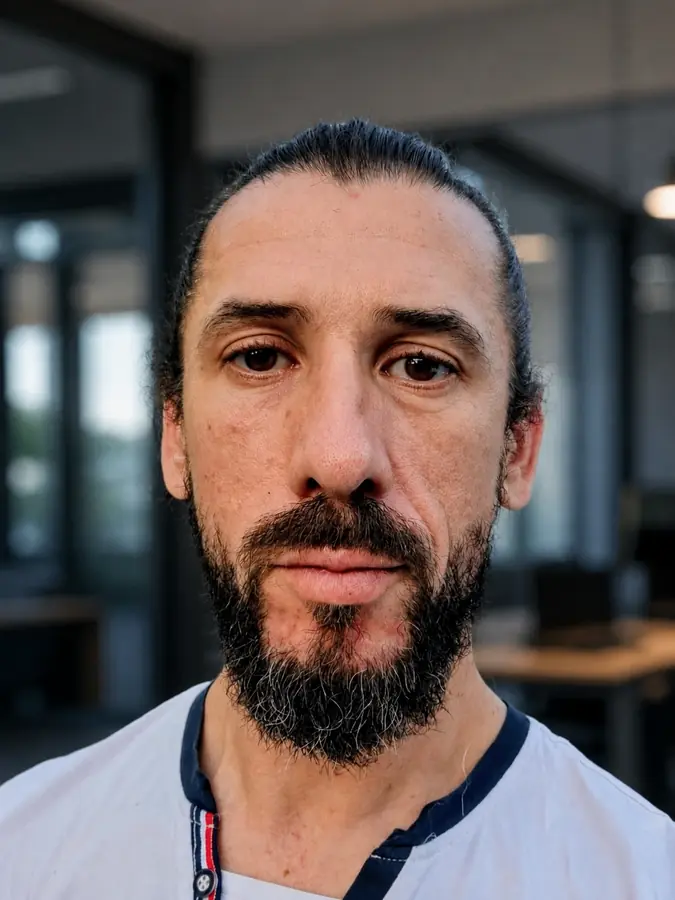
Founder and editor-in-chief of Triunghi.md. Ion (Nalyk) Calmîș has worked at the intersection of journalism and technology in the Republic of Moldova for over two decades — a road that began in Ungheni, as a reporter at the newspaper Unghiul. He is CTO of Studio Technologies, the company behind the platforms of some of the country's most-read newsrooms (unimedia.info, jurnal.md, jurnaltv.md, tvrmoldova.md), and Head of AI Ecosystem at Esempla Systems (Moldova's GovStack infrastructure); he co-founded the newsroom Replica Media. At Triunghi.md he puts that experience — and artificial intelligence, at scale — in the service of local journalism built on source triangulation (People, Documents, Data) and on impartiality.

Twitter / X

Latest

367 ARTICLES
A file with enrolment documents, a lower-secondary graduation certificate and a pen, laid out on a school desk in front of a blackboard, illustrating lyceum admission.
EDUCATION & HEALTH

Lyceum admission 2026 in Ungheni: eight lyceums, the full calendar and how the competition average is calculated

The Ungheni Education Department opened admission to the 10th grade for the 2026–2027 school year on Monday, 13 July. Eight lyceums in the district receive files — five in the town of Ungheni and one each in Pîrlița, Sculeni and Măcărești — while Cornești has no lyceum, so its graduates must look elsewhere. Files are submitted until 22 July, online or on paper, and a pupil may apply to several lyceums at once. Here is the list of institutions, the two-stage calendar, the required documents, how the competition average is calculated for the real and humanities profiles, and who is admitted without competition.

Ion Calmis·15 July 2026· News
1/3 · reporting underway· got a tip? write to us →
The hands of an elderly person holding a mobile phone on a kitchen table, beside a cup and a notebook
NATIONAL

«Takes note»: what Parliament actually decided about phone scams — and why the anonymous SIM card stays legal until 2027

On 2 July, Parliament adopted a decision on the report of the inquiry commission into phone scams. We read its text in the state registry: article 1 says it «takes note» of the report. The National Anti-Fraud Focal Point has not been established — it has been recommended, and the government has 90 days, until 30 September, to report on what it has done. The two bills that would end the anonymity of SIM cards and oblige operators to block spoofed calls are still in first reading. Meanwhile, one thing already works: over 80% of the attempts reported to 112 were foiled.

Ion Calmis·15 July 2026· ExplainerWHAT'S AT STAKE
A disused rural medical building with broken windows and crumbling plaster, in a yard overgrown with weeds
LOCAL

840,000 lei from three disused medical buildings. Nobody wanted the former hospital in Bușila

On 23 June, Ungheni District Council put three property complexes up for auction. The primary document reveals what they actually were: all three are former health facilities — a former family doctors' office at Curtoaia, the former physiotherapy block at Cornești, and the former hospital at Bușila. The first two sold for 840,000 lei, and the smallest of them fetched 4.7 times its valuation. For the former hospital, not a single bidder registered — and the regulations allow it to fall, in time, to half the price now being asked. The buyers' names are not public.

Ion Calmis·15 July 2026· AnalysisWHAT'S AT STAKE
An administrative sign at the entrance to a locality, on a country road, with hills and houses in the background
LOCAL

Cornești was 180 people short. It wanted two villages from a neighbouring commune — and the State Chancellery annulled its merger in five days

The Ungheni Territorial Office of the State Chancellery ordered the town of Cornești to repeal its decision to merge. The reason, taken from the document: the perimeter was unlawful — the town wanted to take the villages of Mircești and Poiana out of the commune of Boghenii Noi, and the law does not permit a commune to be dismembered. The arithmetic explains the haste: the town and the village of Cornești together have 2,820 inhabitants, 180 below the legal threshold of 3,000. The council repealed within five days — but at the same sitting it sent the villages to Parliament by another route and relaunched the merger, this time with Bumbăta. All three, 11 votes to nil.

Ion Calmis·14 July 2026· AnalysisWHAT'S AT STAKE
The corridor of a rural health centre, with consulting-room doors and an empty waiting chair beside the window
LOCAL

18 in favour, 11 abstentions: five villages lose their health centre, and the decision does not say what happens to the doctor

On 18 June, Ungheni District Council voted to merge the district's health centres — from 11 down to 6. Mănoilești, Valea Mare, Cetireni, Rădenii Vechi and Petrești lose their own institution. The plan is a mechanical application of a national threshold: the centres that survive are exactly those with more than 6,000 people on their lists. But it was the only contested vote of the whole sitting — 11 of the 29 councillors present abstained — and at that same sitting the council extended the contracts of the heads of two centres it was in the act of dissolving.

Ion Calmis·14 July 2026· AnalysisWHAT'S AT STAKE
A kitchen tap with a thin stream of water running into a metal sink
PUBLIC SERVICES

40.01 lei per cubic metre: the new water tariff applies from today. And electricity — the explanation given in public — has fallen by 19%

The new water tariff in the town of Ungheni took effect today, 14 July, when the regulator's decision was published in the Official Gazette. A family using 5 cubic metres a month will pay roughly 106 lei more per year. The explanation given in public — the cost of electricity to pump water from the Prut — does not hold: in the regulator's own figures, electricity fell by 19.4% and accounts for just 9% of the cost. More than three quarters of the tariff you pay is wages. The decision can be challenged for 30 days.

Ion Calmis·14 July 2026· ExplainerWHAT'S AT STAKE
A mechanic seen from behind, beneath a car raised on a hydraulic lift in a vehicle inspection bay; metal shelves stacked with boxed car parts in the background
NATIONAL

«x lei» — that is what the government wrote where the price of approving an EU-imported car should be

Parliament has passed, in first reading, a law requiring type approval for every vehicle brought into the country and every car part placed on the market. Moldova has no such system today — and in the government's own tariff table, all eight services read «x lei». The only figure in the document is the European benchmark: 80–180 euros for an individual approval. The law takes effect only on 1 January 2029, and the Public Services Agency — the very body that will carry out the approvals — told the ministry that «the impact of the draft law on the national public budget cannot be positive».

Ion Calmis·14 July 2026· ExplainerWHAT'S AT STAKE
A contactless payment validator mounted on a pole inside a bus, showing a card pictogram and the message «Please validate your card or ticket» on its screen.
PUBLIC SERVICES

Ungheni's transport operator says double-charging is impossible. Its own website promises less — and nowhere does it say how you get your money back

Under the official notice about paying by card on the bus, people in Ungheni say they were charged twice and three times over, and one passenger says he paid 28 lei for a 6-lei ride. The operator guarantees on Facebook that «it is impossible to be charged twice». On its own portal, the guarantee is far narrower. We read the regulation approved by the local council, the operator's contract and the payment services law: the procedure by which a wrongly charged passenger gets their money back is written nowhere — but the law gives them firm deadlines, both with the operator and with the bank.

Ion Calmis·14 July 2026· Analysis
Dozens of graduates in black gowns and mortarboards, wearing white stoles, applaud lined up along a red carpet in the college courtyard on a sunny summer day.
EDUCATION & HEALTH

Ungheni's Medical College has turned out 125 nurses — its largest class in four years, in a district that has lost 94

The class of 2026 collected its diplomas on 14 July: 125 graduates, in four groups. The number climbs year after year — 85 in 2023, 119 in 2024, 119 in 2025 — and it arrives in the very district that has 59 mid-level medical staff per 10,000 inhabitants against 94 nationally. How many of the class stay home is unknown: neither the hospital nor the health centre publishes its nursing vacancies, and the state's 96,000-lei grant is written for villages.

Ion Calmis·14 July 2026· Analysis