
CATEGORY

National

50 articles
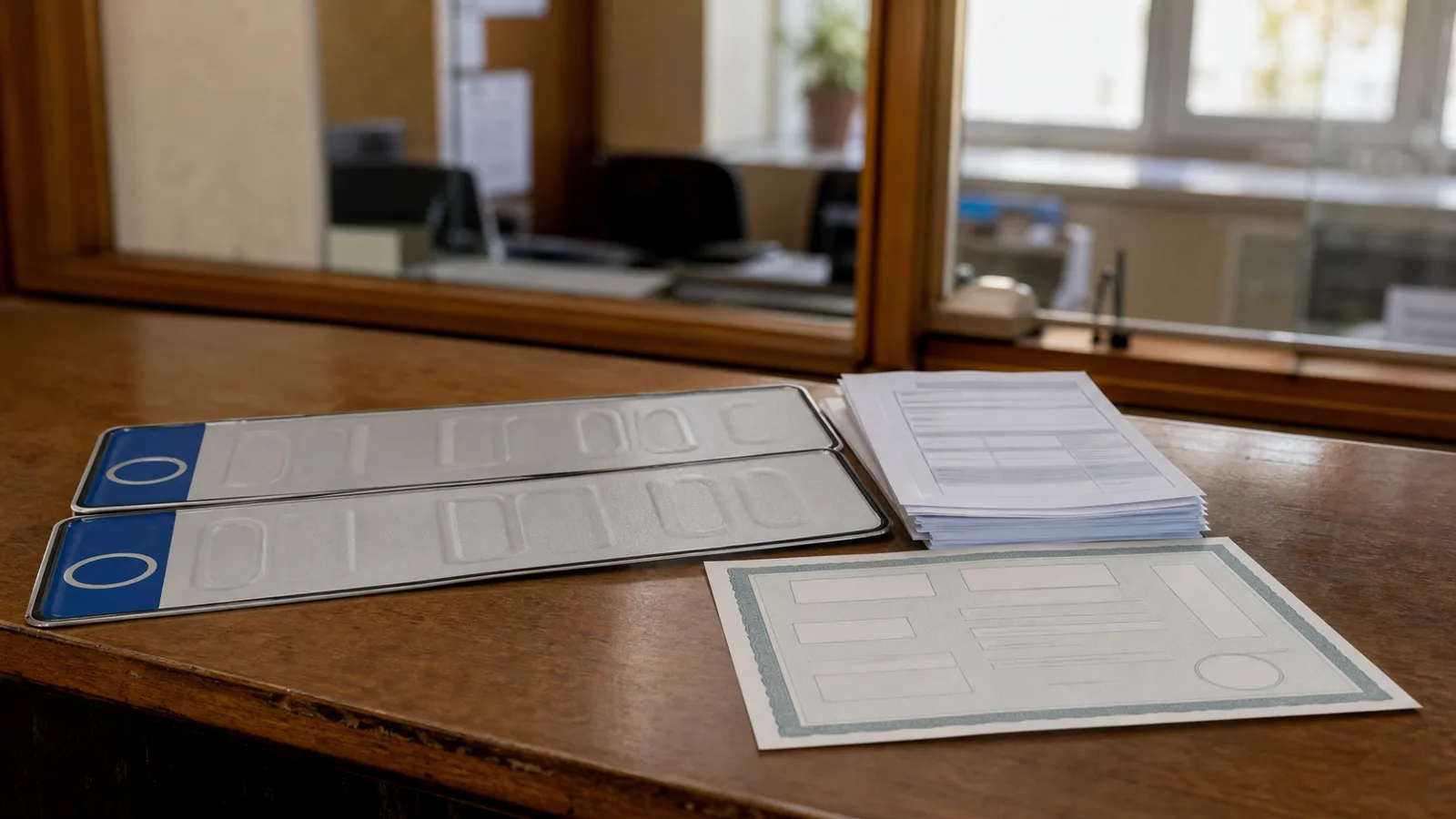
Moldovan car license plates and a stack of vehicle documents on a counter in a public-services office.
NATIONAL

Imported car with no original papers? Ungheni drivers no longer travel to Chișinău or Bălți to register it

Since late June, the Public Services Agency has simplified the registration of imported cars that lack original documents or have only a copy of the registration certificate. The step that forced owners to drive the car to one of three identification offices — in Chișinău, Bălți or Cahul — and wait up to three days has been dropped: technical identification is now done at any subdivision that registers vehicles, including in Ungheni.

Ion Calmis·3 July 2026· ExplainerWHAT'S AT STAKE
2/3 confirmed · PEOPLE — pending· got a tip? write to us →
Symbolic illustration: an empty college classroom with desks and a blackboard in morning light; on the teacher's desk, a book and a few lei banknotes — suggesting the scholarship as the stake of education.
NATIONAL

73 empty teaching posts and ever fewer nurses: what the scholarship reform really brings Ungheni

The government has approved raising scholarships by at least 40% from 1 September, with the biggest increases in medicine, education and STEAM — exactly the professions Ungheni district lacks most acutely, with 73 vacant teaching posts and 94 fewer nurses in eight years. Except that the lever sits with the universities in Chișinău: students at the town's two colleges get a much smaller rise, of 1,280–1,495 lei, and a scholarship student is never obliged to end up at a teaching post in Sculeni.

Ion Calmis·2 July 2026· ExplainerWHAT'S AT STAKE

2/3 confirmed · PEOPLE — pending· got a tip? write to us →
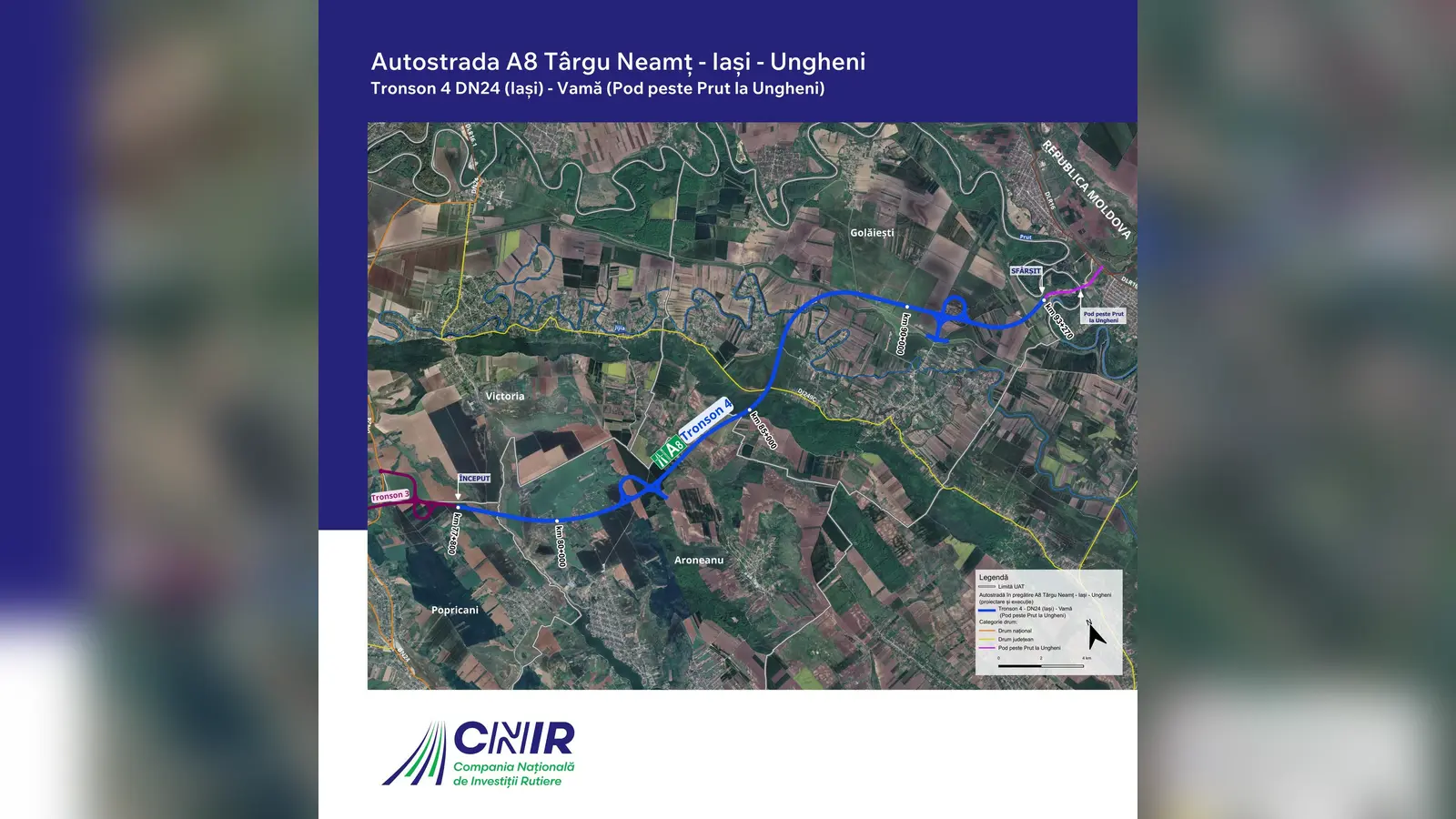
Official map of section 4 of the A8 motorway: the blue route from DN24 (Iași) to the customs point, through Victoria, Aroneanu and Golăiești, up to the edge of the Republic of Moldova; the bridge over the Prut at Ungheni marked in magenta.
NATIONAL

The A8 motorway reaches the Prut and crosses to our bank: Moldova's first motorway kilometres, paid for by Romania

On 2 July, in Bucharest, the contract was signed for the final section of the “Union” Motorway (A8) — the 15.5 km between Iași and the Prut, but also, for the first time, 4.7 km of motorway on the territory of the Republic of Moldova, from the future bridge at Ungheni to the town's bypass. The works on the Moldovan bank, worth around 64 million euros, are fully covered by the Romanian side, through the European SAFE programme. It is the missing piece in the file of the Ungheni bridge — but the motorway stops at Ungheni, not at Chișinău, and the timeline remains long.

Ion Calmis·2 July 2026· ExplainerWHAT'S AT STAKE
Symbolic illustration: a worker's hands in an agricultural field and a phone showing a digital registration form, suggesting seasonal work moving into an electronic register.
NATIONAL

Ungheni farmers learn to register their day labourers online: the e-Zilier platform is now mandatory, and from 2027 fieldwork could get more expensive

At the Ungheni District Council, representatives of the Ministry of Labour and of the Farmers' Federation trained the district's agricultural producers on e-Zilier — the electronic register in which, since 1 June 2026, every seasonal worker must be logged before picking up a hoe, with an electronic signature and under threat of a fine if they are not entered in time. The platform promises less red tape and, for the first time, pension credit for day labourers. The local stakes are high: the district works some 30,000 hectares but has only around 1,200 formal agricultural employees — a sign that the bulk of fieldwork is precisely the seasonal kind the platform is bringing into the open. Hanging over it all is a separate tax proposal for 2027 that would raise contributions for day labourers from 0% to 21%.

Ion Calmis·2 July 2026· ExplainerWHAT'S AT STAKE

2/3 confirmed · DATA — pending· got a tip? write to us →
Symbolic illustration: a bright nursery room with small cots, toys and large windows, with no children in the frame — suggesting new places for the little ones.
NATIONAL

Three Ungheni kindergartens get nursery groups under a national programme: “Andrieș”, “Delia” and “Licurici”

The government has added three nursery projects for the municipality of Ungheni to the Single Programming Document — new groups for children under three at the “Andrieș”, “Delia” and “Licurici” kindergartens. They are 3 of the 99 projects funded across the country, and the town had prepared them since January, when a public consultation estimated a shortfall of 150–200 nursery places. The stakes are higher than they seem: although the district now has half as many births as a decade ago, demand for nurseries has shifted to the town, where parents need a safe place so they can return to work. The flip side: the programme is open only to localities of at least 3,000 residents, so the district's villages are left out.

Ion Calmis·1 July 2026· ExplainerWHAT'S AT STAKE
Symbolic illustration: a bright, empty school corridor with a schoolbag left on a bench, in soft morning light — evoking concern for children's safety without showing any faces.
NATIONAL

Criminal record certificate and psychiatric clearance for anyone working with children: what the proposed law changes in Ungheni's schools — and why it is contested

A bill from the Ministry of Labour and Social Protection, now in first reading in Parliament, seeks to bar from working with children anyone convicted of offences against them — but also those under criminal proceedings, with suspension from duty as soon as prosecution begins. At every hiring in a school, kindergarten, sports club or camp, a detailed criminal record certificate, a sworn declaration and a psychiatric certificate would become mandatory. In the Ungheni district, the measure affects a network of over 1,270 teachers — at a moment when the district is entering the new year with dozens of vacant posts. The bill has firm backing from the Ombudsman for children's rights, but also two serious objections: the presumption of innocence and the risk of stigmatising people who ever consulted a psychiatrist.

Ion Calmis·1 July 2026· ExplainerWHAT'S AT STAKE
Symbolic illustration: a strip of river separating two banks, a bridge and a road fading into the distance, in cold morning light — a metaphor for the border and the road toward exploitation.
NATIONAL

Immediate help for trafficking victims, without waiting for a criminal case: what the government-approved bill changes for a border district like Ungheni

The government has approved a package that breaks an old condition: support for trafficking victims will no longer depend on their status in a criminal case — assistance comes as soon as there are 'reasonable indications' that a person was exploited. The bill, drafted by the Ministry of Justice to align the law with a European directive due 15 July 2026, now goes to Parliament. Against this backdrop, Moldova remains on 'Tier 2' in the U.S. trafficking report, with 149 victims identified in 2024 — fewer than in 2023. For Ungheni, a border district on the Prut and on the route of work abroad, the real stake is for protection to reach the villages too, where services arrive with difficulty.

Ion Calmis·1 July 2026· ExplainerWHAT'S AT STAKE
2/3 confirmed · PEOPLE — pending· got a tip? write to us →
Symbolic illustration: the interior of a modern car at dusk, seen from the rear seat toward the windshield; a red emergency button glows on the overhead console, with a stylized signal radiating from it toward a cold map in the background showing a winding road and a border river. No identifiable people, no real accident scene.
NATIONAL

87 dead in ten years on Ungheni's roads: the «car that calls 112 by itself» reaches Parliament

Moldova is laying the groundwork for eCall — the technology that, in a crash, automatically dials 112 and transmits the point of impact, even if no one in the car can still make the call. The bill that introduces it into the 112 Service Law is due for a first reading; it is not yet law, and it takes effect only in 2027. In the Ungheni district, where road accidents killed 87 people and injured more than 400 over a decade, the promise is the «golden hour». But the benefit lands slowly: eCall comes only on new EU-approved cars, and more than 80% of Moldova's cars are older than ten years.

Ion Calmis·1 July 2026· ExplainerWHAT'S AT STAKE
2/3 confirmed · PEOPLE — searching· got a tip? write to us →
A modern radiotherapy machine — a medical linear accelerator — in an empty, clean clinical room with cold, bluish light; the treatment table in the centre, without patients or staff. Illustrative image.
NATIONAL

105 km to radiotherapy: a law on modern anti-cancer technologies passed its first reading, but for Ungheni the distance stays the same

On 26 June, Parliament voted in the first reading on a bill that, for the first time, defines the «particle accelerator» in law and extends its use beyond radiotherapy — towards the production of radiopharmaceuticals and research. It is a framework for authorisation and safety, not money for machines. Beyond the text, the stake for a person from Ungheni is a harsh geography: all radiotherapy in Moldova is carried out in a single place, at the Oncological Institute in Chișinău, some 105 km from Ungheni. The Ungheni District Hospital only detects and refers, and the recent wave of chemotherapy «closer to home» bypassed the district. Twenty kilometres across the Prut, Iași has radiotherapy — and free accommodation for patients.

Ion Calmis·29 June 2026· ExplainerWHAT'S AT STAKE