
AUTHOR
Ion Calmîș

Ion Calmîș

Founder and Editor-in-Chief

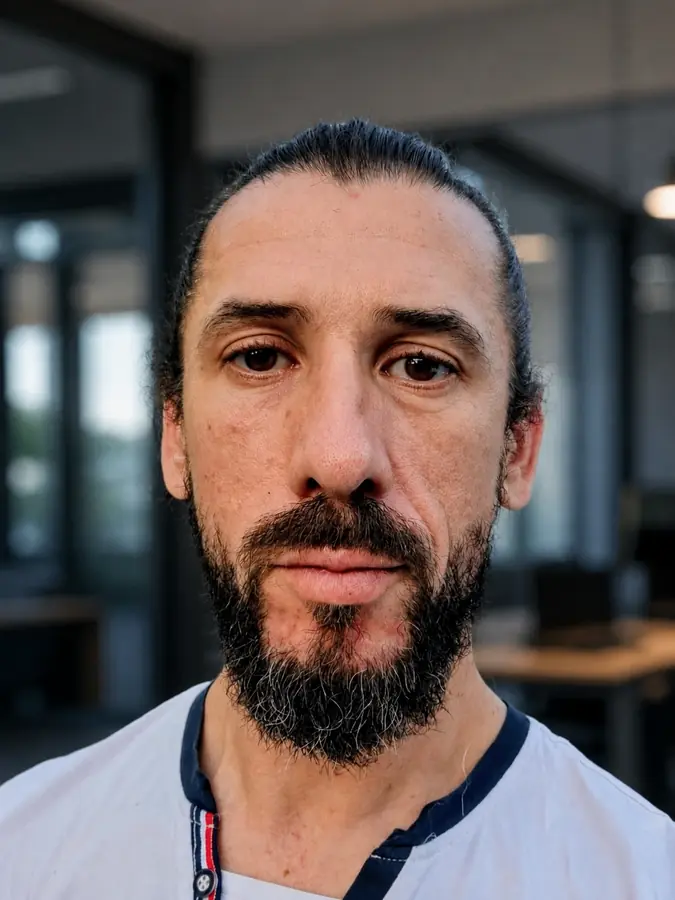
Founder and editor-in-chief of Triunghi.md. Ion (Nalyk) Calmîș has worked at the intersection of journalism and technology in the Republic of Moldova for over two decades — a road that began in Ungheni, as a reporter at the newspaper Unghiul. He is CTO of Studio Technologies, the company behind the platforms of some of the country's most-read newsrooms (unimedia.info, jurnal.md, jurnaltv.md, tvrmoldova.md), and Head of AI Ecosystem at Esempla Systems (Moldova's GovStack infrastructure); he co-founded the newsroom Replica Media. At Triunghi.md he puts that experience — and artificial intelligence, at scale — in the service of local journalism built on source triangulation (People, Documents, Data) and on impartiality.

Twitter / X

Latest

367 ARTICLES
Silvia Zagoreanu, in a blue blouse, presents a report at a meeting table beside two members of the IGF Board of Directors; folklore sashes and insignia lie on the table.
LOCAL

Ungheni twins with Izmit in Turkey and opens a world folklore office at its Palace of Culture

Quietly, Ungheni has climbed onto the map of cultural diplomacy: in May it hosted Moldova's first international caravan of the World Folklore Union (IGF), opened an office of the organisation at its Palace of Culture, and signed a twinning agreement with Izmit, a city in Turkey. Now the director of the Palace of Culture, Silvia Zagoreanu — Moldova's representative in IGF — has presented the results to the union's Board of Directors, meeting in Poland.

Ion Calmis·27 June 2026· Explainer
2/3 confirmed · DATA — pending· got a tip? write to us →
The students of the «Brain Power» team, with two mentors in orange T-shirts, behind their competition booth: trophies, diplomas and the flag of the Republic of Moldova on the table; in the background, balloons spelling 28675 and a banner with the name of the «Elada» high school.
EDUCATION & HEALTH

Two teams from Ungheni district compete among 74 at an international robotics event in Istanbul

«Brain Power», the robotics team of the «Elada» theoretical high school in the village of Măcărești, and «Techno Storm», from the District Centre for Educational Support and Performance in Ungheni, are competing at the «Istanbul Premier Event» — an international FIRST Tech Challenge competition held from 26 to 28 June with 74 teams. Of the four Republic of Moldova teams in Istanbul, two come from Ungheni district. For «Brain Power», which won the Design Award at the national championship in Chișinău in February, this is a first international outing.

Ion Calmis·26 June 2026· News
Illustration: clear water flowing from a metal tap next to a domestic water meter, in cool light, no people in the frame.
PUBLIC SERVICES

Water tariff in Ungheni stays at 38.25 lei/m³: the operator dropped a 4.52-lei increase

On 26 June, the Ungheni Municipal Council adopted an official position backing the maintenance of current tariffs for water, sewerage and wastewater treatment charged by "Apă-Canal Ungheni" SRL — 38.25 lei per cubic metre. The operator, wholly owned by the municipality, had first filed calculations with ANRE for a 4.52-lei/m³ increase (almost 12%), then opted to keep the price. The decision does not freeze the tariffs on its own, however: the price of water in Ungheni is approved by ANRE, and the councillors' position will be forwarded to the agency.

Ion Calmis·26 June 2026· News
An urban plan unrolled on a table, with differently coloured zones for housing, commerce and green space, against the silhouette of a small town. Symbolic image.
LOCAL

Two zoning plans change what can be built on Romană 35 and Alexandru cel Bun 30, in central Ungheni

On Friday, 26 June, the Ungheni Municipal Council met in session, and Mayor Vitalie Vrabie publicly stated an urban-planning credo — the city should not be built up „on every vacant lot”, and residential, commercial and recreational zones must be clearly delimited. Behind the message stand two Zonal Urban Plans (PUZ) that have just gone through public consultations and touch exactly that subject — what and how gets built on individual plots downtown: Romană 35 (which amends the general plan at the level of UTR 11) and six parcels on Alexandru cel Bun 30 (UTR 10), documents drawn up by private design firms. A PUZ is the instrument that rewrites, plot by plot, a city's building rules — which is why the word „delimitation” weighs more than it seems.

Ion Calmis·26 June 2026· Explainer
2/3 confirmed · DATA — pending· got a tip? write to us →
Young people talking with company representatives at booths in a bright job-fair hall.
ECONOMY & FEZ

The Avanti association gathered 200 young people and 20 employers at a career fair in Ungheni

On 25 June, the “Avanti” association ran the “LevelUP Career Fest 2026” career fair at the Ungheni District Youth Centre: nearly 200 young people and more than 20 employers, direct conversations, CVs handed in on the spot, and hands-on sessions on job-hunting with digital tools. The association’s bet — to show young people real locals who stayed and made it. Germany’s ambassador, the mayor and the district president dropped by too.

Ion Calmis·26 June 2026· News
A damaged street surveillance camera with a cracked casing, tilted on a pole next to a bus shelter in evening light. Symbolic image.
LOCAL

Two minors smashed a CCTV camera at a bus stop in Ungheni. The bill falls mostly on the parents, plus a fine of up to 900 lei

Ungheni City Hall made public a case from the evening of 9 May, at the bus stop on Bernardazzi Street 10 — two minors allegedly smashed a surveillance camera, were identified from the footage, and the file was sent to the police. Beyond the institution's message of accountability, the practical question is another: who pays for the damage? The law is clear — repairing public property damaged by a child falls, under civil law, on the parents regardless of age, while damaging property is, at this value, an offence carrying a 900–1,800 lei fine, not a crime. On top of that, a parent can be fined separately for failure to supervise.

Ion Calmis·26 June 2026· Explainer
2/3 confirmed · DATA — pending· got a tip? write to us →
A family doctor in a white coat works at a new laptop bearing an Interreg sticker, next to a printer, in a consulting room at the Ungheni Health Centre.
EDUCATION & HEALTH

A Romania–Moldova project equips 15 family doctors in Ungheni with laptops. The real stake isn't the devices, but catching the «silent» cancers early

Fifteen family doctors in the Ungheni district have received laptops and printers through «PREVENT», a cross-border project funded by the European Union, in partnership with the city of Iași and the «Grigore T. Popa» University of Medicine. The equipment is the visible part; the stated goal is another — to shift family medicine from treating disease to preventing it, with a focus on the cancers that don't hurt until it is too late: cervical, breast and colon. The project, worth about 415,000 euros, runs until April 2027.

Ion Calmis·26 June 2026· Explainer
1/3 · reporting underway· got a tip? write to us →
A participant speaks while standing at the PLASTICWISE technical workshop in the meeting room of the Ungheni District Council, with other participants seated around a table and project materials in front of them.
LOCAL

More than 40,000 people in Ungheni drink water from the Prut. A Romania–Moldova project has started looking for microplastics in the river, and the workshop was held in Ungheni itself

PLASTICWISE, a cross-border project funded by the European Union, is monitoring plastic pollution in the Prut — the river from which the town of Ungheni draws its drinking water. On 25 June, partners from Romania and Moldova met at the Ungheni District Council and went down to the bank of the Prut, by «Micul Cluj» Park. The measurement results are not yet public — the study is still under way. And how dangerous microplastics in drinking water really are remains, according to the World Health Organization, a question without a final answer.

Ion Calmis·26 June 2026· Explainer
A yellow surveying GPS receiver on a tripod and a total station stand in a green field at the edge of a village, against the backdrop of a public building, a fence and red-roofed houses. A symbolic image.
NATIONAL

The state is investing 96 million lei in the cadastre of public property. 16 localities in the Ungheni district are included — not «all the town halls», as the announcement implied

A national project funded from the state budget, within the EU-backed Growth Plan, will delimit and register public property in 275 localities across Moldova by 2028. The cadastre agency's leadership visited the Ungheni district between 16 and 26 June. The official statement speaks of «275 town halls», but the government document says otherwise — «localities»: from the Ungheni district, 16 of its 74 localities are covered. The stake is not technical: without a correctly registered plot or building, a town hall cannot tax it, pledge it, sell it or legally develop it.

Ion Calmis·26 June 2026· ExplainerWHAT'S AT STAKE
1/3 · reporting underway· got a tip? write to us →